A prolific guitarist whose distinctively funky, blues-steeped jazz style has graced well over a thousand recordings across the popular music spectrum, the legendary Phil Upchurch has also recorded 27 albums of his own leadership, as well as movie soundtracks. Jazz enthusiasts love and respect Phil Upchurch for his singular approach to composition. In developing his sound, Phil demonstrates no allegiance to any of his contemporaries and is indisputably one of the best in his field. He goes from classical to jazz to contemporary funk as easy as walking from one room to another. He is also an amazing electric bassist. In honor of Upchurch’s instrumental mastery, D’Angelico Guitars is soon to release a Second Edition of his signature Phil Upchurch Guitar. Adding to his media profile is Phil’s newfound second career as a fresh face for television advertising. Phil's most recent on-camera commercials have been Secured Horizon, "AARP," Tropicana and Verizon Wireless. He also has had, Cameo film appearances in, “His Eyes Are Watching God” and White Men Can’t Jump” to name a few.
Phil Upchurch has been a prominent figure in the blues, soul, R&B and jazz circles for more than 50 years. In addition to his work with the legendary Jimmy Smith, Upchurch has performed and recorded, in the United States and internationally, with some of the music industry’s biggest names. His talents have teamed him with musical legends such as Quincy Jones, Bob Dylan, Julio Iglesias, Ray Charles, Ramsey Lewis, Carmen McRae, George Benson, Donny Hathaway, Chaka Khan, Michael Jackson, Carmen McRae, Marlena Shaw, Eddie Harris, Brother Jack McDuff, Joe Williams, Stan Getz, Cannonball Adderley, Herbie Hancock, Grover Washington, Jr. and Wynton Kelly, among many others.
Phil Upchurch is a native of Chicago, IL, where he first appeared on stage at 8 years of age in a piano recital. He began playing professionally at age 16 in 1957. Immediately upon graduating high school, he pursued this path with a passion. Self-taught as a musician, Phil started touring with jazz, gospel and rhythm & blues artists of the day. Gaining widespread recognition and acclaim, Phil furthered his early career by recording with major R&B artists at Mercury, Chess, Vee-Jay and Brunswick - all major Chicago record companies. These sessions led him to become a first-call studio musician for two decades.
In 1961, he scored a Top 20 hit with "You Can't Sit Down," later played by President Bill Clinton during his first inauguration at a “Jam Session” on national television. From 1965 to 1967, Upchurch served in the United States Army as part of the Special Services Unit in Germany. Throughout this time, Phil stayed connected to his music but began to hone his skills as a photographer, capturing some of his most admired images during this period. After completing his military duty, he returned to music in earnest, recording and traveling with the phenomenal spirited gospel-soul ambassadors, The Staple Singers.
Read more
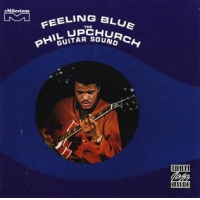
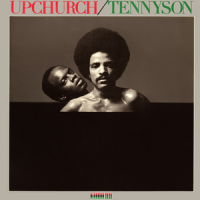
Thereafter, Phil began an important association with Chicago’s legendary R&B, Jazz, Blues and Rock & Roll record company, Chess Records. He recorded two albums as a leader there (Upchurch and The Way I Feel, both in 1969), worked as an in-house session guitarist with label greats such as Muddy Waters, Etta James and The Dells, and was a member of the final incarnation of producer Charles Stepney’s progressive psychedelic soul-rock band The Rotary Connection, recording the now-classic “I Am the Black Gold of The Sun (a vocal version of a Stepney instrumental, “Black Gold,” that Phil first recorded on his Upchurch LP). Phil later recorded for two other internationally renowned jazz labels: Blue Thumb Records (the double LP Darkness, Darkness in ’72 followed by Lovin’ Feeling in ’73) then a one off collaboration with keyboardist Tennyson Stephens on Kudu/ CTI in ’75.
Phil Upchurch also had a special relationship with another Chicago legend of Soul, Curtis Mayfield, who featured Phil’s sweet weepin’ blues sound on his top-selling soundtrack to the film’s, “Superfly,” “Claudine,” “Let’s Do It Again” and “Sparkle”
In 1974, Phil began a 7-year association with George Benson on the album Bad Benson (which included his standout compositions “No Sooner Said Than Done” and “Full Compass”). Two years later, Upchurch was a key component to Benson’s multi-platinum-selling pop breakthrough album, Breezin’- to this day one of the largest selling jazz albums in history. And once again, Phil was showcased as a composer with the lively “Six to Four.” Upon the success of the album and subsequent tour, Upchurch moved to Los Angeles in 1978 to expand his musical talents and collaborations. He resumed studio work, toured in Japan with producer/bandleader Quincy Jones’ Orchestra and also did road and session work with jazz greats The Crusaders.
Upchurch continued to tour and record both as a leader and sideman during the 1980's and 1990's. In the 1980's, he traveled extensively with jazz organ king Jimmy Smith and recorded with singers Carmen McRae and Joe Williams, among many others. During this time, he also learned to read music by studying the transcriptions of the great Andres Segovia. The 1990's saw the release of his 20th album and the creation of the first Phil Upchurch Guitar, made by the Vestax Corporation of Japan. Also, Mel Bay Books released Upchurch's first book, "12x12," a collection of twelve Upchurch solos.
In 2006, Phil Upchurch married actress/songstress Sonya Maddox and, for the first time in his career, recognized his bride as his writing partner. “The timbre of her voice and her style of language rings perfectly with my intricate combination of chords,” he states. “Sonya completes me." Phil & Sonya share a Christian Music Marriage Ministry, assisting gifted young musicians in realizing their objective of studying music at a college of their choice through the Jimmy Smith Foundation, which Phil founded, partnered with The Jackie Robinson Foundation. Phil & Sonya are devout members of the Crenshaw Christian Center under the spiritual leadership of Apostle Frederick K.C. Price, D.D. Through their WONDERVISION company, they are also producing a book of Phil’s photography, a book and documentary on his life, and a solo CD for Phil.
For the first time in Phil Upchurch’s career, he is devoting more time to his original music, putting aside the “Sideman” and standing in his own light. He is soon to release, his new CD, Autobiography and Film of his life.
His first love of photography has come full circle. His first national exhibit – with Sonya as curator - was November 17, 2005-January 21, 2006 at the California African American Museum: “Honoring the Photographic Works of Legendary Guitarist Phil Upchurch.”
From the Phil Upchurch Website
Phil’s musical journey began in Chicago, where he was born on July 19, 1941. He first appeared on stage at 8 years of age in a piano recital. His father, a jazz pianist, gave him a ukulele at age 13 in 1954, sparking a lifelong devotion to music. He quickly mastered guitar, bass, and drums, laying the foundation for his versatility across genres. He began playing professionally at age 16 in 1957.
Influenced by Oscar Peterson and Jimmy Smith, he caught the attention of neighborhood singing groups, including the Kool Gents and The Dells, while still in high school. His first road gig after graduating from Marshall High School in 1958 was with the Spaniels, performing their hit “Good Night Sweetheart.”
Gaining widespread recognition and acclaim, the self-taught musician furthered his early career recording at major Chicago record labels Mercury, Brunswick, and Vee-Jay with prominent R&B artists, and became a linchpin of Chess Records sessions, playing for jazz artists like Ramsey Lewis and John Klemmer, blues icons such as Muddy Waters and Howlin’ Wolf, soul greats including The Dells and Etta James. These sessions led him to become a first-call studio musician for two decades. In 1960, Phil recorded his first hit, “You Can’t Sit Down (Pts. 1 & 2),” which sold over one million copies and earned a gold disc. Later, President Bill Clinton played this song during his first inauguration on a nationally televised jam session.
In 1963, Upchurch was also part of the studio band that backed Cassius Clay (Muhammad Ali) on a spoken word/comedy album titled I Am the Greatest on Columbia Records. The project featured Clay delivering humorous monologues, poems, and boasts about his boxing career. The album included tracks such as “I Am the Greatest,” “Will the Real Sonny Liston Please Fall Down,” “I Am the Double Greatest” and “You Isn’t Heard Nothing Yet.”
From 1965 to 1967, Phil served in the U.S. Army as part of the Special Services Unit in Germany, assigned as a radio operator. He performed as a musician in the 3rd Infantry Division Glee Club staying connected to his music but began to hone his skills as a photographer, capturing some of the most admired images during this period. As a youngster, he had been accepted to the Art Institute of Chicago for his fine art and photography talents.
After completing military duty, he recorded and traveled with the phenomenal gospel soul ambassadors The Staple Singers. Thereafter, Phil began an important association with Chess Records. He recorded two albums as a leader Upchurch and The Way I Feel in 1969 and worked as an in-house session guitarist with greats Muddy Waters, Etta James, and the Dells. He was also a member of the final incarnation of Charles Stepney’s progressive psychedelic soul rock band, The Rotary Connection in which Phil recorded “I Am The Black Gold of the Sun,” a vocal version of a Stepney’s instrumental version Black Gold first recorded on Phil’s Upchurch LP. Phil later recorded for two other internationally renowned jazz labels Blue Thumb Records and a collaboration with keyboardist Tennyson Stephens on Kudi/CTI in 1975.
In 1976, he became the first musician in Chicago to establish a professional home recording studio, Central Sounds West, where many popular artists recorded — cementing his role as a pioneer of independent production.
Career Collaborations and Recordings
Phil had a very special relationship with fellow Chicagoan and soul legend Curtis Mayfield who featured Phil’s sweet weeping blues sound on his top-selling soundtracks to the films Superfly, Claudine, Let’s Do It Again and Sparkle. He worked closely with Donny Hathaway on all of Hathaway’s solo studio and live albums, a highlight being Hathaway’s “This Christmas” where Phil said the song was “absolutely the premiere holiday song written by an African American.”
In 1974, Phil began a seven-year association with George Benson serving as rhythm guitarist and bassist beginning with the album Bad Benson which included his standout compositions “No Sooner Said Than Done” and “Full Compass.” Two years later Upchurch was a key component to Benson’s multi-platinum-selling pop breakthrough album Breezin’, one of the biggest selling jazz albums in history, where he composed the lively “Six To Four.” Following the success of George Benson’s album and subsequent tour, Upchurch moved to Los Angeles in 1978 to expand his musical talents and collaborations. There he resumed studio work, toured in Japan with the Orchestra of producer/leader Quincy Jones who he first met as part of Jesse Jackson’s Operation Push Band in Chicago, and did session work with jazz greats The Crusaders.
Called on again by Quincy at the end of the 1970’s, Upchurch worked with Michael Jackson playing the signature rhythm guitar part on the Jackson penned “Working Day and Night” on his Off the Wall album. At 20 million in sales, Off The Wall is arguably one of the bestselling albums of all times.
Upchurch collaborated extensively for a decade in the 1980s including recording and traveling with jazz organist jazz organ king Jimmy Smith and recorded with singers Carmen McRae and Joe Williams among many others. During this time, he also learned to read music by studying the transcriptions of the great Andrés Segovia. The 1990s saw the release of his 20th album and the creation of the first Phil Upchurch Guitar made by the Vestax Corporation of Japan.
Upchurch conceptualized and led the all-star band The Guitar Summit, a benefit recording for the Inner City Music Foundation, providing underprivileged children access to music education. The ensemble featured Eric Gale, Al McKay, David T. Walker, Wah Wah Watson, bassist James Jamerson Jr., and drummer James Gadson.
Guitar Legacy and Honors
Over the course of his career, he endorsed and collaborated with some of the most respected instrument makers in the industry, and in 1989, Hidesato Shiino, President of Vestax Japan, approached Phil about creating the Phil Upchurch Guitar, hand-crafted by some of the finest luthiers and violin makers in Japan. Working closely with D’Angelico Guitars in Japan, Phil helped design the Vestax Phil Upchurch models — UP-1, UP-2, and UP-3 — based on the craftsmanship of the D’Angelico New Yorker.
Among his honors was the 1997 Rhythm and Blues Foundation Pioneer Award bestowed upon him by George Benson and Bonnie Raitt. A Foundation performance grant allowed him to fulfill his dream of recording with a 20-piece ensemble, the “Phil Harmonic Orchestra” in 1998. He was honored as a Lifetime Member of the American Federation of Musicians (AFM) Local 47 in Los Angeles, and in 2017, celebrated 50 years of NAMM (National Association of Music Merchants) participation, a testament to his enduring commitment to the craft and the community of artists he inspired.
He also served as a judge for the Los Angeles Music Center’s Spotlight Awards, evaluating performances in the Jazz Guitar Division, where he mentored and encouraged young musicians.
In 2005, an exhibition of his work “Beyond Expectations: The Photography of Jazz Legend Phil Upchurch” (curated by his wife Sonya Upchurch) was displayed at the California African American Museum (CAAM) in Los Angeles. He published two books, an instructional book Mel Bay Presents Phil Upchurch: 12x12 — 12 Original Blues and Guitar Solos, and Author Shaye What It’s Like to Be A Musician.
In 2006, Phil Upchurch married actress/songstress Sonya Maddox who he stated, “The timbre of her voice and her style of language rings perfectly with my intricate combination of chords. Sonya completes me.” That same year, Upchurch founded the Jimmy Smith Memorial Scholarship Fund, partnering with the Jackie Robinson Foundation, to assist gifted young musicians in realizing their objective of studying music at a college of their choice.
Show less