Home » Jazz Articles » Live Review » Joe Magnarelli at Smalls Jazz Club
Joe Magnarelli at Smalls Jazz Club
Smalls Jazz Club
New York, NY
September 1, 2020
One hundred days may not sound like a particularly long time in the annals of jazz or, for that matter, any human endeavor. Nevertheless, in the midst of a seemingly endless pandemic that has upended every aspect of our lives, Smalls Jazz Club's persistence in presenting live jazz in a streaming format constitutes a bastion of stability and a major lifeline for jazz in New York City. Pianist Spike Wilner, the resourceful owner of Smalls, has remained steadfast in his determination to keep the club going and his comrades gainfully employed.
"Jazz musicians will not be denied," Joe Magnarelli declared mid-set on the hundredth day, an event sponsored by Tony and Patti Ledonne. (Patron sponsorship of daily sets is an essential part of Wilner's efforts to sustain Smalls. Another is inviting those who watch and listen at home to make a contribution.) By that point in the proceedings, the trumpeter's quintet had demonstrated that, despite all manner of obstacles, the music and its practitioners are still alive and kicking. While one might experience a sense of detachment in viewing the presentation on a computer screen, the energy the band generated was palpable.
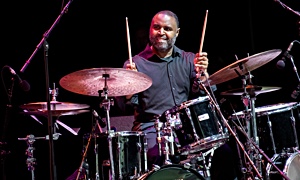
Throughout a set divided between the leader's original compositions and Great American Songbook favorites, Magnarelli and company showed no signs of rust from the months away from the bandstand. The quintet demonstrated a responsiveness normally found in a working band, a capacity to listen and react accordingly in terms of dynamics and degrees of intensity. In particular, bassist Neal Miner and drummer Andy Watson knew how to lay back just a little, rather than crowding or diverting attention away from the relatively relaxed stages of improvisations by Magnarelli, alto saxophonist Nick Hempton and pianist Anthony Wonsey. Conversely, Miner and Watson made the band feel tighter, edgier, and more concentrated when the soloists turned up the heat.
While 2020 has been filled with opportunities to check out Magnarelli on new records (The New York—Paris Reunion Quintet's Live at the Bird's Eye Club, Basel (Albore Jazz), Steve Fidyk's Battle Lines (Blue Canteen Music) and Andy Fusco's Remembrance (SteepleChase Records) are highly recommended), hearing and seeing him in real time, blowing in the middle of a crack rhythm section and matching wits with Hempton was the real deal. Regardless of the material and tempo, he always managed to sound spontaneous, logical and utterly sincere. During "Don't Blame Me" combinations of phrases—long, short, truncated—and differences in emphasis were impressive because of the ways in which he made them fit together. "Persistence" contained some lines that crowded one another and others which were separated by brief pauses. Magnarelli was on from the first note of a "Limehouse Blues" solo, repeatedly offering passages that joyfully skittered and danced.
Both Hempton's and Wonsey's improvisations were essential to the band's character. Hempton integrated a live-wire tone, an impressive command of the instrument, a penchant for blues references, and a keen sense of organization. Throughout "Don't Blame Me" and "Persistence" he evinced an awareness of the songs' contours, a lively relationship with the rhythm section, and managed to sound sportive even while consistently building momentum. On the road to a stirring climax, Wonsey's "Don't Blame Me" work included relaxed single note lines played a little behind the beat, a prominently placed blues lick, longer, complicated runs, variations of a repetitive phrase and some chunky chords.
After the last note of "Limehouse Blues," the set's finale, sounded, Magnarelli thanked Spike Wilner and the staff at Smalls, and encouraged everyone living in these trying times to "stay positive."
 FOLLOW David A. Orthmann
and get notified whenever a new article published.
FOLLOW David A. Orthmann
and get notified whenever a new article published.
David hears the melody of "Salt Peanuts" in the voices of wild turkeys walking through his back yard.
About Joe Magnarelli

Tags
PREVIOUS / NEXT


Joe Magnarelli Concerts
Become a Sustaining Member

Since 1995, All About Jazz has championed jazz as an art form and supported the musicians who create it. Over three decades, it has grown into one of the world's leading jazz resources, serving hundreds of thousands of readers, musicians, presenters and industry professionals each month.
Help Build the Future of All About Jazz
Your support helps us continue building All About Jazz for the next generation—expanding our editorial coverage, preserving jazz history, developing new community features and creating better ways to discover the music and the people behind it.
Become a sustaining member for as little as $20 per year and you'll immediately enjoy an ad-free experience along with access to subscriber features and future articles for a full year.
Together, we're not simply sustaining All About Jazz—we're building its future. Thank you for being part of the journey.