Home » Jazz Articles » Album Review » Stephen Byth: Growth in Stasis
Stephen Byth: Growth in Stasis
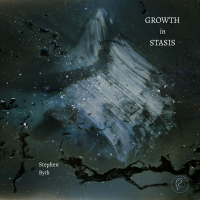
Primarily a tenor saxophonist, Byth proves equally adept at shaping compositions that give his musicians room to maneuver. His quartet features pianist Yessaï Karapetian, bassist Simón Willson and drummer Angus Mason, a responsive unit whose collective instincts are matched by impressive individual performances. Karapetian's harmonic imagination and fluid soloing are especially rewarding, while Willson and Mason navigate shifting rhythms with precision and an appealing looseness.
Four selections expand the quartet with guest musicians on trumpet, alto saxophone, trombone and bass clarinet, adding orchestral depth and contrasting colors. These arrangements are among the album's greatest strengths. Byth makes effective use of the additional voices, introducing countermelodies, unexpected harmonic turns and shifting textures that continually refresh the material.
The influence of Wayne Shorter occasionally surfaces in Byth's harmonic choices and compositional approach, particularly his fondness for melodies that take unexpected directions. Nevertheless, the music has an identity that extends beyond its influences.
The brief opener, "Seed of Thought," offers a spunky jazz-vamp introduction before "All Is Not Lost," and "The Light in Everything" reveals the ensemble's lyrical sensibilities and finely calibrated interaction. Byth's spirited soloing occasionally suggests a meeting point between Michael Brecker's technical firepower and John Coltrane's probing intensity. "Cutting Ties" and "New Eyes" bring greater rhythmic urgency, allowing the musicians to stretch out without compromising the compositions' designs. Karapetian is a near-flawless foil for Byth throughout, responding with imaginative harmonic choices and incisive improvisations. "Freedom (!/?)" is another highlight, balancing written passages with spontaneous exchanges.
"Time Is Now" lowers the temperature without diminishing the intensity, as the horn players negotiate off-kilter themes that converge into surging unison phrases. The title track explores the contrast between motion and restraint, while "Upon Reflection" provides a fitting conclusion, favoring subtlety over grand gestures.
Not every piece makes an equally strong impression, and some ideas are more compelling in execution than others. Yet there is no filler, and even the less memorable passages benefit from the ensemble's resourcefulness. The arrangements reveal additional details with repeated listening, while the soloists consistently rise to the occasion.
Ultimately, Growth in Stasis succeeds through its balance of compositional ambition and inspired musicianship. Byth avoids making complexity an end in itself, allowing the compositions and collective interplay to carry the day. An accomplished and enjoyable debut, it introduces a composer and saxophonist with plenty to say.
 FOLLOW Glenn Astarita
and get notified whenever a new article published.
Glenn is a senior writer and editor at All About Jazz.
Track Listing
Seed of Thought; All Is Not Lost; The Light in Everything; Cutting Ties; New Eyes; Freedom (!/?); Illusions; Time Is Now; Growth in Stasis; Upon Reflection.
Personnel
Stephen Byth
saxophone, tenorYessaï Karapetian
synthesizer
Simón Willson
bassAngus Mason
drumsAlexandra Ridout
trumpet
Alfredo Colón
saxophoneCaleb Smith
trombone
John Ellis
saxophoneAdditional Instrumentation
Yessaï Karapetian: piano; Stephen Byth: clarinet, bass clarinet.
Album information
Title: Growth in Stasis | Year Released: 2026 | Record Label: Earshift Music
About Stephen Byth
Tags
PREVIOUS / NEXT


Become a Sustaining Member

Since 1995, All About Jazz has championed jazz as an art form and supported the musicians who create it. Over three decades, it has grown into one of the world's leading jazz resources, serving hundreds of thousands of readers, musicians, presenters and industry professionals each month.
Help Build the Future of All About Jazz
Your support helps us continue building All About Jazz for the next generation—expanding our editorial coverage, preserving jazz history, developing new community features and creating better ways to discover the music and the people behind it.
Become a sustaining member for as little as $20 per year and you'll immediately enjoy an ad-free experience along with access to subscriber features and future articles for a full year.
Together, we're not simply sustaining All About Jazz—we're building its future. Thank you for being part of the journey.