Home » Jazz Articles » My Blue Note Obsession » George Braith: George Braith: The Complete Blue Note Ses...
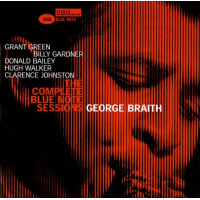
George Braith: George Braith: The Complete Blue Note Sessions - 1963-64

The tone you get from playing two saxes with one mouth is like the merger of a kazoo, a harmonica and a car horn.
 Playing two saxophones at once is a gimmick, and not a very good one. It can be done, and maybe if your name is Rahsaan Roland Kirk, you can even sell a few records doing it. But it's not a great artistic achievement, and the sound you get is mostly tinny and obnoxious.
 Which brings us to George Braith.
In 1963 and '64, Braith recorded his first three albums as a band leader, all for Blue Note: Two Souls in One, Soul Stream and Extension. Braith obviously liked Kirk's weird gimmick of playing two saxophones simultaneously. He not only copied this strange technique, he even found himself an organ player to team with, just as Kirk had done. (Kirk had Brother Jack McDuff; Braith chose Billy Gardner.)
The result? Let's just say the tone you get from playing two saxophones with one mouth is like the merger of a kazoo, a harmonica and a car horn. Yes, you can play a melody. Yes, you can improvise. Yes, you can even accompany yourself and play odd-sounding chords. But no one is ever going to stop listening to Sonny Rollins or John Coltrane to listen to George Braith wrestle with two saxophones.
Still, sometimes you take chances on unknown music just to see what it's like. As it turns out, you can buy all three of George Braith's Blue Note recordings on one 2-CD set called, naturally, The Complete Blue Note Sessions. If you do, you'll learn three things:
1. A gimmick is a gimmick. Listening to Braith play an alto sax and soprano sax simultaneously does not have great appeal. Hear it once, you don't have to hear it again. Or maybe it's just me.
2. When Braith plays just ONE sax, he's actually pretty good. Clearly this is something he learned as he went along. His later records had fewer two-sax songs, and they're better for it.
3. Billy Gardner on organ and Grant Green on guitar are really, really good. And since both appear on all three of Braith's Blue Note albums, that's almost reason enough to get them. Almost. It turns out that no amount of crazy noodling by Braith can disguise the fact that this organ-guitar combo has soul.
One perfect example: An unlikely rendition of "Mary Had a Little Lamb." Yeah, THAT song. Braith successfully mangles the tune on the first chorus, just to be original, then he drops one sax to play pure bop. Nicely done. And then Gardner and Green come roaring out of the gate and burn the place down. Even better.
Another example: "Boop Bop Bing Bash," a Billy Gardner original that is six minutes of bop heaven. It's no coincidence that Braith plays only one sax. Apparently Braith really could be a terrific saxman when he wasn't trying to be avant-garde and weird. This cut is a perfect example.
There are other nice tunes here, too, including a reworking of "The William Tell Overture" into something called "Billy Told." It's clever and lively and, yes, a real organ-guitar-sax jazz gem.
If all of George Braith's recordings were this good, The Complete Blue Note Sessions would be a 5-star experience. Alas, it took Braith a while to learn that sometimes less really is more.
Rating: 2.5 stars (out of 5) Availability: Only 3 used copies available on Amazon at the time of this writing Cost: $20 (or $15 for the MP3 version)
About George Braith
Tags
PREVIOUS / NEXT

Become a Sustaining Member

Since 1995, All About Jazz has championed jazz as an art form and supported the musicians who create it. Over three decades, it has grown into one of the world's leading jazz resources, serving hundreds of thousands of readers, musicians, presenters and industry professionals each month.
Help Build the Future of All About Jazz
Your support helps us continue building All About Jazz for the next generation—expanding our editorial coverage, preserving jazz history, developing new community features and creating better ways to discover the music and the people behind it.
Become a sustaining member for as little as $20 per year and you'll immediately enjoy an ad-free experience along with access to subscriber features and future articles for a full year.
Together, we're not simply sustaining All About Jazz—we're building its future. Thank you for being part of the journey.