Home » Jazz Articles » Extended Analysis » Dave Liebman: Dave Liebman/Richie Beirach: Unspoken
Dave Liebman: Dave Liebman/Richie Beirach: Unspoken
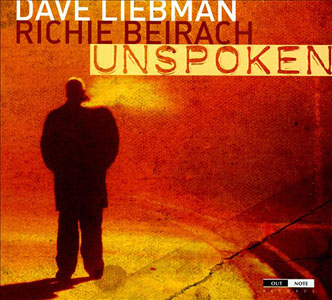 Dave Liebman / Richie Beirach
Unspoken
OutNote Records
2011
It's one thing for individual artists' voices to be instantly recognizable, another thing entirely when a readily identifiable language evolves amongst them, one that's absent when they're apart. There's no mistaking the bop-rooted expressionism that saxophonist Dave Liebman imbues with oblique lyricism, whether with his longstanding group on Turnaround: The Music of Ornette Coleman (Jazzwerkstatt, 2010) or in a new collection of largely old friends on Five on One (Pirouet, 2010). Nicknamed "The Code," pianist Richie Beirach's personal marriage of jazz vernacular with that of classical composers including Béla Bartók, Alexander Scriabin and Anton Webern dates back to solo recordings such as Eon (ECM, 1975) through recent release Round About Bartók (ACT, 2001). But when The Code gets together with 2011 NEA Jazz Master Liebman, something special happens—something that transcends individuality and enters the realm of collective idiom.
Collaborating frequently over the decades in groups such as Lookout Farm and Quest, geography has largely kept them apart since the mid 1990s until a reformed Quest—on Redemption (Hatology, 2007) and Re-Dial (OutNote, 2010)—and Beirach's recent retirement from teaching in Germany seems to have created more opportunities for these two soul brothers to work together. KnowingLee (OutNote, 2010) took their longstanding duo in a different direction with the addition of saxophonist Lee Konitz, but as undeniably fine as that set was, Unspoken represents a welcome return to the unadorned format first heard on the criminally out-of-print Forgotten Fantasies (A&M, 1977).
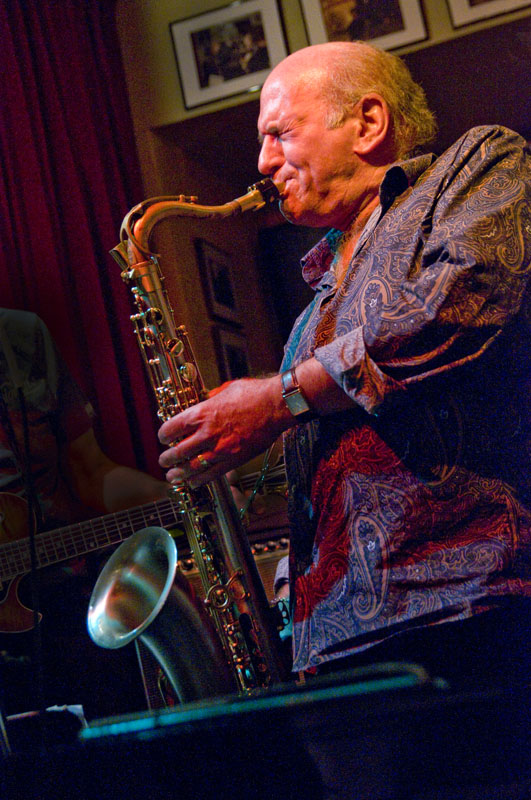 Nearly 35 years later, the language that Liebman and Beirach have been honing has become nothing if not more recondite. Even when tackling an overworked but deserving chestnut such as Jerome Kern's "All the Things You Are," the familiar melody is couched in the pianist's expansive reharmonization, becoming an ever-present but tenuous thread at constant risk of unraveling. But it's the opening "Invention"—Beirach's arrangement of Aram Khatchaturian's "Adagio," from the ballet Gayaneh, written in 1942 but most popularized by film director Stanley Kubrick in 2001: A Space Odyssey (1968)—that speaks to this duo's remarkable empathy, as the pianist's sustaining introductory notes create a soft landscape over which Liebman's soprano slowly moves towards its equally recognizable theme. Time—as is true with everything about this duo—is fluid, allowing the music to breathe with rarely paralleled freedom and unconscious unity of intent.
 Beirach's originals such as "Awk Dance"—with a groove that only the most temporally secure are apt to find, made all the more difficult for shifting in and out of double time—contrast with "Tender Mercies," described by the saxophonist as one of his "simplest ballads" but, traveling from dark dissonance to brooding beauty, seems anything but, beyond the relatively limited range of Liebman's wooden flute.
The saxophonist's closing medley best describes the breadth of this duo, as Beirach channels Olivier Messiaen with a touch that's both delicate and firm on "Hymn for Mum," before Liebman enters equally elegantly, switching to tenor for an a capella intro to "Prayer for Mike" that, in its visceral wails and multiphonic bursts, feels more like catharsis, though it does settle into a more plaintive tone when Beirach reappears.
A paradox of form and freedom, angst and calm, and fire and, if not exactly ice, then at least cool, Unspoken refers, no doubt, to the direct and uncanny line of communication built between Liebman and Beirach over the course of nearly 50 years, where no words need be said to create a language that speaks volumes.

Richie Beirach
Tracks: Invention; All the Things You Are; Ballad 1; Awk Dance; New Life; Waltz for Lenny; Tender Mercies; Transition; Hymn for Mom/Prayer for Michael.
Richie Beirach: piano; Dave Liebman: tenor and soprano saxophones, wood flute.
Photo Credit
Dave Liebman: John R. Fowler
Richie Beirach: Richard Conde
 FOLLOW John Kelman
and get notified whenever a new article published.
FOLLOW John Kelman
and get notified whenever a new article published.
With the realization that there will always be more music coming at him than he can keep up with, John wonders why anyone would think that jazz is dead or dying.
Personnel

Dave Liebman
saxophoneAlbum information
Title: Dave Liebman/Richie Beirach: Unspoken | Year Released: 2011 | Record Label: OutNote Records
About Dave Liebman
Tags
PREVIOUS / NEXT


Become a Sustaining Member

Since 1995, All About Jazz has championed jazz as an art form and supported the musicians who create it. Over three decades, it has grown into one of the world's leading jazz resources, serving hundreds of thousands of readers, musicians, presenters and industry professionals each month.
Help Build the Future of All About Jazz
Your support helps us continue building All About Jazz for the next generation—expanding our editorial coverage, preserving jazz history, developing new community features and creating better ways to discover the music and the people behind it.
Become a sustaining member for as little as $20 per year and you'll immediately enjoy an ad-free experience along with access to subscriber features and future articles for a full year.
Together, we're not simply sustaining All About Jazz—we're building its future. Thank you for being part of the journey.