Home » Jazz Articles » Album Review » Cecil Taylor Orchestra Humane: At Iridium 2004
Cecil Taylor Orchestra Humane: At Iridium 2004

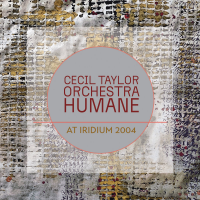
Taylor's hallmark intensity remained undiminished at the Iridium residency. Contemporary accounts suggest that these performances functioned less as conventional free-jazz engagements than as laboratories for large-scale compositional thinking. The music confirms that Taylor's technical command and imaginative reach were fully intact. His pianism—still astonishing in its velocity, density, and articulation—operated not as a dominant voice but as one element within a highly responsive ensemble. Musicians such as Harri Sjostrom, Dominic Duval, and Jackson Krall did not accompany so much as extend and refract Taylor's language.
Across the residency, the music remained rigorously demanding, requiring sustained concentration and resisting conventional jazz syntax. These performances reaffirmed Taylor's status not as a historical figure but as an artist in continuous development. As Philip Freeman notes in the accompanying materials, the listener encounters "more music than you would have ever imagined" within these sessions.
Trumpeter Taylor Ho Bynum, a participant in the ensemble, later described the project as an attempt to "orchestrate" Taylor's 10 fingers across a large ensemble—translating his pianistic language into collective sound without sacrificing individual agency. In the absence of conventional notation how did Taylor organize a large ensemble?
Taylor did not distribute standard scores; instead, he dictated specific pitch sequences, intervallic cells, and dense clusters directly at the piano. Musicians were required to transcribe or internalize this material in real time. Bynum observed that the ensemble effectively "spontaneously orchestrated" Taylor's pianism: trumpets might mirror the rapid leaps of his right hand, while low brass and bass instruments articulated the ծանր, rumbling strata associated with his left.
These structures remained fluid. Material assigned to one section on a given evening could be reassigned, inverted, or recontextualized the next. The music thus occupied a space between composition and continual recomposition.
Performance practice at Iridium further blurred these boundaries. Taylor often began away from the keyboard—circling the instrument, placing percussive objects on the strings, and delivering fragments of his idiosyncratic poetry. These phonetic explorations prefigured the musical logic that followed. When he finally engaged the keyboard, the result was frequently a volcanic surge of energy, catalyzing dense ensemble responses.
Yet by 2004 the orchestra had achieved a notable equilibrium between turbulence and space. Moments of extreme density—what some listeners have described as "sonic overload"—would recede into sparse, chamber-like passages. Within these, players such as Bobby Zankel or Steve Swell engaged in sharply etched, pointillistic exchanges with the piano. What emerges, at its most compelling, is a form of "composed spontaneity."
It is difficult to reconstruct the physical experience of this music as heard in the Iridium's intimate basement space. Contemporary reports suggest an environment that was visceral, immersive, and at times overwhelming. Traditional jazz markers—functional harmony, walking bass, regularized swing—are largely absent. Instead, the music aligns as much with post-war European art music as with jazz, while retaining an intensity that at moments approaches the physical force of amplified rock.
Taylor's large ensemble was not a chaotic assemblage but a disciplined collective capable of articulating a unified, singular voice without suppressing individual identity. This was a significant achievement within large-ensemble free music.
How does the listener deal with all this music? Philip Freeman in his biography of Taylor (In The Brewing Luminous (Wolke Verlag, 2024) makes the point that is relevant: "To really appreciate any single piece of Cecil Taylor's music is to listen to it over and over. Let it hit you like a flood the first time. Wash yourself in the waves of the notes. Then come back—a day later, perhaps. Play It again and this time listen as carefully as possible. Focus on his opening gambits, and trace their paths through what follows ... If/when you get lost, listen a third time. A fourth. A fifth. At some point, it will unfold before you like a flower, and the beauty of his conception will be fully audible."
Finally, what we are left with is a whole week of sound, a whole cosmos built and unbuilt each night—Taylor's great vision, his fierce and tender architecture of freedom, rising in the Iridium's low-lit chamber like some mythic city of sound, shimmering, dissolving, returning again.
Track Listing
March 23, 2004 (Set 1); March 23, 2004 (Set 2); March 24, 2004 (Set 1); March 24, 2004 (Set 2); March 25, 2004 (Set 1); March 25, 2004 (Set 2); March 26, 2004 (Set 1); March 26, 2004 (Set 2); March 26, 2004 (Set 3); March 27, 2004 (Set 1); March 27, 2004 (Set 2); March 27, 2004 (Set 3); March 28, 2004 (Set 1); March 28, 2004 (Set 2).
Personnel
Cecil Taylor Orchestra Humane
band / ensemble / orchestra
Cecil Taylor
piano
Taylor Ho Bynum
cornet
Amir ElSaffar
trumpet
Stephen Haynes
cornetTobias Netta
trumpetJeff Hoyer
trombone
Steve Swell
trombone
Bill Lowe
trombone, bass
Bobby Zankel
saxophone, altoWill Connell Jr.
saxophone, alto
Elliott Levin
saxophoneSabir Mateeen
saxophone, tenor
Dominic Duval
bass
Jackson Krall
drums
J.D. Parran
woodwindsAlbum information
Title: At Iridium 2004 | Year Released: 2026 | Record Label: Burning Ambulance Music
About Cecil Taylor Orchestra Humane
Tags
PREVIOUS / NEXT


Become a Sustaining Member

Since 1995, All About Jazz has championed jazz as an art form and supported the musicians who create it. Over three decades, it has grown into one of the world's leading jazz resources, serving hundreds of thousands of readers, musicians, presenters and industry professionals each month.
Help Build the Future of All About Jazz
Your support helps us continue building All About Jazz for the next generation—expanding our editorial coverage, preserving jazz history, developing new community features and creating better ways to discover the music and the people behind it.
Become a sustaining member for as little as $20 per year and you'll immediately enjoy an ad-free experience along with access to subscriber features and future articles for a full year.
Together, we're not simply sustaining All About Jazz—we're building its future. Thank you for being part of the journey.