Home » Jazz Articles » Scott Colley
Jazz Articles about Scott Colley
About Scott Colley
Komeda Project: Requiem

by Budd Kopman
With the magnificent Requiem, pianist Andrzej Winnicki and saxophonist Krzysztof Medyna solidify and enhance their reputations as the prime promoters of the essential music of the Polish pianist and composer Krzysztof Komeda (1931-1969). Komeda is widely recognized as the founder of modern Polish, and in a wider sense, European modern jazz. That he worked in Poland under Communist oppression is important. At its heart, jazz refuses to be pigeonholed, and it both allows and demands that its practitioners be utterly ...
Continue Reading...Komeda Project: Requiem
by Jakob Baekgaard
There's an awareness which is located deep within human nature that we're subject to both positive feelings as well as destructive impulses: Love and death, Eros and Thanatos, exist side by side. All great art is a mirror of the human condition and nobody understood better than the Polish composer and pianist Krzysztof Komeda that life as well as music is composed of light and darkness.
The dual nature of Komeda's music is captured perfectly in one of his masterpieces, ...
Continue Reading...Scott Colley: Architect Of The Silent Moment

by Budd Kopman
A work that presents a deeply mined and singular mood, Architect Of The Silent Moment is subdued yet coolly intense. The album presents a unified musical vision built on bass vamps and grooves with little true melodic development or harmonic changes, allowing the soloists much freedom within each defined section. While the prevailing feeling created is one of introspection and thoughtfulness, elation and clarity break through many times. This is not music that presents obvious, clear forms ...
Continue Reading...Scott Colley: Architect of the Silent Moment
by Fred Bouchard
For bassist Colley's Architect of the Silent Moment, a conceptual construct (more poetically, a fantasia) for small ensemble, the oft-quoted dictum has rarely seemed more apposite: “Less is more. Colley starts with a core quartet of Ralph Alessi (trumpet), Craig Taborn (keyboards) and Antonio Sanchez (drums), and guests emerge and disappear throughout the subtle, largely written, 54-minute work. Dave Binney's alto fleshes out dodge-and-weave frontlines that recall Shorter/Davis, and wails his lone caterwaul on “From Within. Mouth-harpist Gregoire Maret limns ...
Continue Reading...Scott Colley: Architect of the Silent Moment
by AAJ Italy Staff
Un pezzo di downtown newyorchese trasferito sulle sponde del Tevere che, durante il tragitto virtuale, perde asperità e frenesie tipiche della grande mela per assorbire la gioiosa indolenza capitolina. Potrebbe essere questa la fotografia di presentazione di Architect of the Silent Moment, l’album licenziato dal quartetto del compositore e contrabbassista Scott Colley, supportato per l’occasione da una manciata di prestigiosi ospiti. Ma se le assai apprezzate qualità tecniche del contrabbassista hanno avuto modo di emergere in più di 150 incisioni ...
Continue Reading...Scott Colley: Music Architect
by R.J. DeLuke
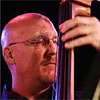
Scott Colley can be found adding his big-toned, always appropriate contra bass to a number of settings. He's been a staple on the New York music scene for some time now, with older established musicians like Pat Metheny, Andrew Hill, John Scofield, Joe Lovano, Michael Brecker, Clifford Jordan, Herbie Hancock and many, many more. But also with colleagues like Ravi Coltrane, Chris Potter, David Binney or Craig Taborn. He's also recorded steadily, something many bassists can't say. From ...
Continue Reading...Scott Colley: Architect of the Silent Moment
by Stephen Wood
Scott Colley's ability to fuse free-form improvisation, complex meters, grooving melodies, rock harmonies and atonality has solidified his position as a New York jazz musician of the new generation. Unfortunately we live in a plagued era in which musical complexity is worth just as much as--if not more than--musical accessibility and the communication of ideas. Architect of the Silent Moment suffers from at least three of the symptoms endemic to this ailment.Symptom 1: Overplaying. Much of the record ...
Continue Reading...Album Showcase





Trending
 Inside AAJ
Giving Thanks & Spreading the Jazz Joy
 Preview
Record Store Day Black Friday 2026 Jazz Releases
 History of Jazz
A Chronological History of Jazz
 Opinion
Bomb Shelter Bebop
 Radio & Podcasts
Six new releases from Michael Pagan Big Band, Ron Vincent,...
 Interview
Avishai Cohen on "Jack Johnson"
 Live Review
Gregory Porter and China Moses at JAZZMI 2026: Two Voices,...
Featured Video
Premium
VOTE!