Home » Jazz Articles » Albert Ayler
Jazz Articles about Albert Ayler
About Albert Ayler

Albert Ayler: New York Eye And Ear Control Revisited

by Chris May
The development of so-called free jazz in New York during the first half of the 1960s was topped and tailed by three landmark recordings: Ornette Coleman's Free Jazz (Atlantic, 1961), John Coltrane's Ascension (Impulse, 1966) and Albert Ayler's New York Eye And Ear Control (ESP, 1966). Of the three discs, only New York Eye And Ear Control broke away completely from jazz's normative structure of theme/solos/theme. Commissioned as an art-film soundtrack, Ayler's recording was also the product of an altogether ...
Continue Reading...Albert Ayler Quartet with Don Cherry: European Recordings Autumn 1964 Revisited

by Chris May
Many attempts have been made to locate the source of tenor saxophonist Albert Ayler's muse in American history and culture. Among the less outlandish suggestions are the field hollers of slaves toiling on Southern plantations and the Pentecostal church's tradition of talking in tongues. Given the importance Ayler's parents placed on him attending church as a child, and his own abiding interest in spiritual matters, talking in tongues could well figure. The most likely source, however, yet the one most ...
Continue Reading...Albert Ayler & New York Contemporary Five: Revisited, Remastered, Resplendent

by Chris May
The Swiss-based ezz-thetics label was launched in 2019 by Hat Hut Records' founder, Werner X. Uehlinger, and its Revisited strand is a jazz aficionado's dream. The series is devoted to landmark avant-garde recordings from the 1960s, and ezz-thetics does more than simply reissue them. Peter Pfister, Uehlinger's longtime mastering Jedi, improves the audio quality of the discs so substantially that listening to them is, at times, almost like hearing the music anew. Among the albums in the Revisited catalogue are ...
Continue Reading...Albert Ayler Quintet: 1966: Berlin, Lörrach, Paris & Stockholm. Revisited

by Mark Corroto
It may sound odd to describe the music that Albert Ayler's quintet performs here as the musical equivalent of comfort food, but these sounds can be associated with security and nostalgia. They are a reminder of the spark ignited by this tenor saxophonist from Cleveland. Ayler, maybe more than any artist of his day, paved the way for free jazz by linking it to the music of New Orleans, African-American spirituals, marching bands, and national anthems. If no Ayler, then ...
Continue Reading...Albert Ayler. Un ardito sogno futuristico

by Giuseppe Segala
Come una meteora, Albert Ayler ha attraversato il firmamento della musica neroamericana, dal 1962 al 1970. E ha lasciato il segno. Una traccia presente e attiva tutt'oggi, nell'operato di numerosi musicisti che dedicano il proprio lavoro all'improvvisazione e alla ricerca di un'autenticità dell'espressione artistica. L'apparizione del sassofonista nel mondo del jazz, una vera epifania, impressionò molti, tra cui John Coltrane, che lo supportò anche in senso finanziario. Trane fu profondamente colpito dal carattere, dal suono di Ayler, dalla ...
Continue Reading...Albert Ayler: Albert Ayler 1965: Spirits Rejoice & Bells Revisited

by Mark Corroto
Being that 2020 is more than half a century since Albert Ayler (1936-70) recorded this music, the best way to approach might be through what the Zen Buddhists call Shoshin. Roughly translated as “beginner's mind," or the ability to experience things as if for the first time. Since we cannot transport ourselves back to 1965, taking a posture of readiness and being open to experience the revelatory nature of this music might be the best plan of attack.
Continue Reading...Albert Ayler Trio: 1964: Prophecy Revisited
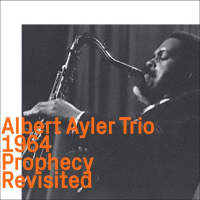
by Mark Corroto
Albert Ayler is often quoted as saying “Trane was the Father, Pharoah was the Son, I am the Holy Ghost," referring to John Coltrane, “Pharoah Sanders," and himself. It might be better said that Ayler was John The Baptist, the musical prophet that proclaimed the coming of free jazz. Like many a prophet, his end was agonizing. Ayler drowned in the East River in 1970, after a very brief eight year recording career. Coltrane knew then what many ...
Continue Reading...
Trending
 In Tribute To...
Points of View: Celebrating Dave Holland
 In Tribute To...
John Coltrane At 100: A Global Perspective
 Interview
Boney James: A Simple Man And A Lifetime Study
 Interview
Miles Okazaki's Monkathon: The Complete Thelonious...
 Musician 2 Musician
Steve Coleman on Dave Holland
 Reanimating Conversations Past
John Scofield: Meant To Be
 Live Review
Isaiah Collier Plays Coltrane: Live at Jazz Alley in Seattle
Premium
VOTE!