Home » Jazz Articles » Live Review » Tommy Halferty's Whirlpool At Scott's Jazz Club
Tommy Halferty's Whirlpool At Scott's Jazz Club
Courtesy No More Workhorse
Conspicuous by its absence was a trumpeter—a wise move, perhaps designed to sidestep comparisons, to avoid the pitfall of mimicry, and to engineer an original approach to Davis’ proto-ambient, jazz-fusion classic.
In the centenary year of Miles Davis' birth, homages will take many forms. There will be the inevitable re-releases, box sets, books, and an ocean of opinion pieces. Concerts paying tribute to jazz's greatest chameleon are sure to visit most of the significant waystations of the trumpeter's storied career. But when the dust settles on 2026, it is likely that there will have been few tributes to Davis quite as powerful as that delivered by Irish guitarist Tommy Halferty's Whirlpool, on a wet January night in Belfast.
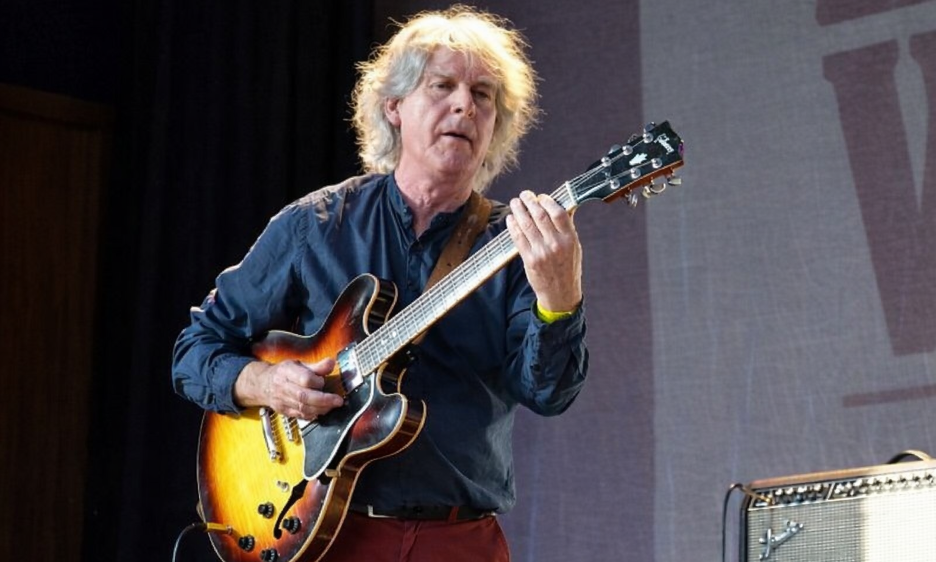
The veteran Derry guitarist turned the clock back to 1969 and Davis' seminal Columbia album In A Silent Way. With Darragh O'Kelly on keyboards, Derek Whyte on electric bass, and Brendan Doherty on drums, Halferty had assembled some of the country's finest, most versatile musicians. Conspicuous by its absence was a trumpeter—a wise move, perhaps designed to sidestep comparisons, to avoid the pitfall of mimicry, and to engineer an original approach to Davis' proto-ambient, jazz-fusion classic.
In true showbiz style, however, Halferty and co kept Scott's Jazz Club audience waiting for the main event. The hors d'oeuvres took the form of an hour of Halferty originals and boldly recalibrated covers. With its strong backbeat and repetitive bass figures, Ron Carter's "Eighty-One"—from Davis' E.S.P. (Columbia, 1965)—was ideally suited to Halferty's gritty jazz-rock interpretation. The guitarist's opening salvo, a visceral collage of choppy riffs, sliding chords and fleet-fingered runs, was met by a charged blues solo from O'Kelly and an agile blues-funk reply from Whyte. Throughout, Doherty brought buoyant swing to the mix.
One of Halferty's most enduring projects has been the trio with French brothers, Jean-Phillipe Lavergne and drummer Christophe Lavergne ( active since 1987). It was to Jean-Phillipe's upbeat swinger "Ally Up" that the quartet next turned. This provided Doherty's first opportunity to stretch out with an artful display of free-form swing. For Halferty, as for many guitarists, John McLaughlin was an important early reference point. The English guitarist's "Marbles" provided grist to the quartet's mill, with Halferty in inspired form. Over searing rhythms, he navigated his strings with frenetic energy and boundless imagination, the quartet's power and nuance finely harnessed by the venue's excellent sound system.
A brace of Halferty originals closed out the first set. The brushes-driven ballad "Step" brought sparkling interventions from Whyte, O'Kelly and the leader. The caressing lyricism of this tune—dedicated to Halferty's granddaughter—was in contrast to the energized, though highly melodic, "Retour," with Halferty and O'Kelly sharing the spoils in some style.
Following the break, Doherty launched the "In A Silent Way" suite with the familiar cantering hi-hat rhythm. Chattering cymbal and Whyte's bass ostinato coursed through Halferty's burrowing improvisation and O'Kelly's ethereal comping. Around the ten-minute mark, guitarist and keyboardist swapped roles, with a little blurring around the edges as to lead and comping lines. A seamless transition to the pastoral reverie—composed by Joe Zawinul—cast a mesmerizing spell— broken in dramatic fashion by Doherty's urgent rim-shot pulse.
With this renewed impetus, Halferty once again unleashed scurrying lines peppered with riffing motifs, sharp, bent-string exclamations, and edgy arpeggios. Davis' original roadmap was clearly adhered to via the signposts of recurring motifs, melting ambient textures and wickedly insinuating grooves, but even forewarned—as many in the audience familiar with the album surely were—the transitions from one segment to the next were dramatic. Doherty's shift from unerring rhythmic pulse to sudden explosive release was thrilling. Over a unison vamp, the drummer worked his kit with a contagious freedom that ignited the audience's enthusiasm.
From that soaring high to a return to the dreamlike ambiance—inspired by Zawinul's memories of his Austrian childhood—the defining role of producer Teo Macero in editing and arranging In A Silent Way came into sharp relief.
Davis never performed the album live in its entirety, already moving on to the heavier sounds of Bitches Brew (Columbia, 1970). And so, it is left to others, to the likes of Halferty, O'Kelly, Whyte and Doherty to shape this timeless masterpiece to their own vision. That is probably the only sort of homage that Davis—who had little interest in nostalgia—would have respected.
Halferty's Whirlpool should have left the stage with the applause, cheers and whistles of approval ringing in their ears. After all, how could you follow a potent performance of such transcendent music? The answer was with the lyrical warmth of Antonio Carlos Jobim's "Wave," which brought uplifting closing statements from all.
At 80, Halferty is still going strong and playing better than ever. Twenty years hence the jazz community will be marking the centenary of the Derry guitarist—a modern great. And if this evening's performance was anything to go by, he may yet be there to lead the party, ripping it up like a man half his age.
 FOLLOW Ian Patterson
and get notified whenever a new article published.
FOLLOW Ian Patterson
and get notified whenever a new article published.
Ian is dedicated to the promotion of jazz and all creative music all over the world, and to catching just a little piece of it for himself.
About Tommy Halferty

Tags
PREVIOUS / NEXT

Become a Sustaining Member

Since 1995, All About Jazz has championed jazz as an art form and supported the musicians who create it. Over three decades, it has grown into one of the world's leading jazz resources, serving hundreds of thousands of readers, musicians, presenters and industry professionals each month.
Help Build the Future of All About Jazz
Your support helps us continue building All About Jazz for the next generation—expanding our editorial coverage, preserving jazz history, developing new community features and creating better ways to discover the music and the people behind it.
Become a sustaining member for as little as $20 per year and you'll immediately enjoy an ad-free experience along with access to subscriber features and future articles for a full year.
Together, we're not simply sustaining All About Jazz—we're building its future. Thank you for being part of the journey.