Home » Jazz Articles » Album Review » Tim Morse: The Fourth Crossing
Tim Morse: The Fourth Crossing
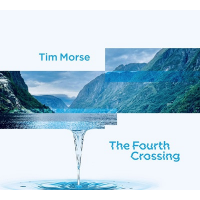
That approach is apparent immediately on "Submerged," where slowly unfolding keyboards establish the album's spacious character, giving way to haunting soundscapes during the bridge. "Vibration" adds more movement and rhythmic definition, punctuated by rock beats and darting synth notes, while "Assembly Line" works from repeating electronic patterns and shifting keyboard figures set against contrasting currents of sound. Morse rarely overloads the arrangements, preferring to let individual themes emerge gradually before introducing a new element or changing direction.
The strongest pieces are those where atmosphere and melody find the right balance. "Eternal" brings a warmer character to the proceedings, providing an effective contrast as Morse develops a hummable melodic phrase. He closes with "The Celestial Cathedral," where electric piano phrasings and choral textures bring the album to a suitably expansive conclusion.
There is plenty to admire in Morse's command of keyboards and his ability to create an atmosphere without cluttering the music. At the same time, listeners familiar with his recent work may find The Fourth Crossing covering territory he has already explored, and some pieces establish an intriguing mood without developing much beyond it. However, it is an enjoyable and well-crafted album with several strong moments.
 FOLLOW Glenn Astarita
and get notified whenever a new article published.
Glenn is a senior writer and editor at All About Jazz.
Track Listing
Submerged; Vibration; Assembly Line; Dreamcatcher; Hieroglyphics; Eternal; Confusion in Aisle 14; Structure; The Fourth Crossing; Zephyr; Space Station Lounge; The Celestial Cathedral.
Personnel

Tim Morse
keyboardsAlbum information
Title: The Fourth Crossing | Year Released: 2026 | Record Label: Cymbalick Music
About Tim Morse
Tags
PREVIOUS / NEXT


Become a Sustaining Member

Since 1995, All About Jazz has championed jazz as an art form and supported the musicians who create it. Over three decades, it has grown into one of the world's leading jazz resources, serving hundreds of thousands of readers, musicians, presenters and industry professionals each month.
Help Build the Future of All About Jazz
Your support helps us continue building All About Jazz for the next generation—expanding our editorial coverage, preserving jazz history, developing new community features and creating better ways to discover the music and the people behind it.
Become a sustaining member for as little as $20 per year and you'll immediately enjoy an ad-free experience along with access to subscriber features and future articles for a full year.
Together, we're not simply sustaining All About Jazz—we're building its future. Thank you for being part of the journey.