Home » Search Center » Results: Pete Brown
Results for "Pete Brown"
About Pete Brown
Results for pages tagged "Pete Brown"...
Pete Brown

Born:
Pete Brown was born in Surrey on Christmas Day, 1940 to a Jewish family who had fled London to escape the Blitz. With a keen interest in the war, what was happening and its aftermath, Pete moved back to London in 1951. Here he attended a Jewish Grammar School but was expelled when enforced religion took its toll. Pete began writing poetry in 1955, initially inspired by Dylan Thomas, Gerard Manley Hopkins and later the US Beats. For many years he moved between menial jobs until he got his first break and his work began to get published, primarily in America. Pete met poet, Mike Horovitz at the Beaulieu Jazz Festival in 1960 and joined his travelling arts group, New Departures
For Pete's Sake
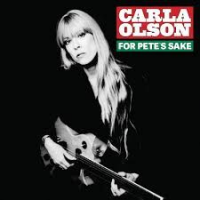
By Carla Olson
Label: Sunset Blvd. Records
Released: 2026
Track listing: Education; Careless Dancing; With My Black Cat By My Side; Read Me My Rights;
Racing Against The Sand; You Heard Me; Don't Leave Your Love Behind; Lost And
Found In Lockdown Nine Lives; With My Black Cat By My Side
Ivor Cutler: A Life Outside The Sitting Room

by Bruce Lindsay
The following is an excerpt from Chapter 6 (A Life of Whimsical Fantasies) and 9 (A Life on the Page), from Ivor Cutler: A Life Outside The Sitting Room (Equinox Publishing, 2022). Chapter 6: A Life of Whimsical Fantasies Ivor's love of jazz, formed during his teens and early-20s, remained strong and he visited ...
Pete Brown: White Rooms & Imaginary Westerns, Part 2

by Duncan Heining
Part 1 | Part 2 1966 was an important year in British popular music. Bob Dylan, performing with the Hawks, was booed for “going electric" at Manchester Free Trade Hall. The Rolling Stones topped the charts for the first time with “Paint It Black." The Beatles, fresh from the John Lennon “Bigger than Jesus" ...
Pete Brown: White Rooms & Imaginary Westerns, Part 1

by Duncan Heining
Part 1 | Part 2 Poet, lyricist, rock musician, producer and scriptwriter--Pete Brown has covered a lot of bases in his six decades in music and literature. His career embodies that era that began with the Beatles' “Love Me Do" in October 1962 and ended in January 1969 with the band playing live on ...
Poetry and Jazz: A Chronology

by Duncan Heining
My intention here is to offer a detailed but inevitably incomplete chronology of poetry and jazz. The focus is solely on the combination of the two art forms in performance, not on poetry about jazz or jazz musicians or poetry inspired by jazz but not performed to music. My definition of 'poetry' is fairly broad and ...
Presenting Problem

by Duncan Heining
Jazz often appears to exist within its own cultural and artistic paradigm, isolated from other arts and in its own discreet musical corner. Worse still from the perspective of those who would hope to make a living from it, it often seems that more people want to play the music than listen to it or, more ...
Columbia Years 1968-1969

by Maurizio Comandini
La piccola ma intraprendente casa discografica statunitense, Light in the Attic, in collaborazione con la major Sony/Columbia, piazza un uppercut formidabile che toglie il velo ad uno dei misteri meglio preservati della discografia del secolo scorso. Vengono infatti pubblicati per la prima volta i cinque brani che Betty Davis, nata Betty Mabry e sposata con Miles ...
Chris Spedding: Songs Without Words

by Duncan Heining
Recorded for Harvest in 1970, Songs Without Words was only originally released in Japan. At the time, Chris Spedding was a much sought after guitarist in jazz and rock with one of the most impressive of CVs--Mike Westbrook, Michael Gibbs, Jack Bruce, Ian Carr's Nucleus, Pete Brown and Frank Ricotti amongst others. The reason for its ...
Graham Bond: Wading in Murky Waters

by Duncan Heining
Organist and saxophonist Graham Bond was the most important and influential musical pioneer to emerge from British jazz in the 1960s. High praise indeed, but in his case it is warranted. His legacy might be defined less by the music he recorded and more by the impact he had on subsequent generations of musicians. However, that ...
Album Showcase



Trending
 Inside AAJ
Giving Thanks & Spreading the Jazz Joy
 Preview
Record Store Day Black Friday 2026 Jazz Releases
 Profile
801 Live at 50: A Short-Term Experiment with a Long-Lasting...
 History of Jazz
A Chronological History of Jazz
 Opinion
Bomb Shelter Bebop
 Radio & Podcasts
Six new releases from Michael Pagan Big Band, Ron Vincent,...
 Interview
Avishai Cohen on "Jack Johnson"
VOTE!