Home » Search Center » Results: JazzWax by Marc Myers
Results for "JazzWax by Marc Myers"
Tubby Hayes: Split Kick

The year 1972 was the beginning of the end for Tubby Hayes. The British multi-instrumentalist, who was most often featured on the tenor saxophone, was a jazz giant, despite coming up in the '50s without the benefit of New York, Chicago and Los Angeles woodshedding. Something of a cross between Stan Getz and Hank Mobely on ...
Dizzy Gillespie: Perceptions

Earlier this week, I posted on two superb orchestral albums by Dizzy Gillespie in 1960—A Portrait of Duke Ellington (arranged by Clare Fischer) and Gillespiana (arranged by Lalo Schifrin). Both albums for Verve featured exciting scores with Gillespie soloing. As my friend and saxophonist Bill Kirchner reminded me in an email, Gillespie's orchestral adventures for the ...
Jimmy Rowles: Kinda Groovy!

Jimmy Rowles was the dean of West Coast jazz pianists. Not only was he a tasty favorite of jazz giants in Los Angeles in the 1940s, including Lee and Lester Young, he was a preeminent recording studio pianist with Swing Era bandleaders, top jazz recording artists and leading vocalists. To give you an idea of how ...
Video: Bobby Jaspar, 1957

On French TV in 1957, Bobby Jaspar, the Belgian jazz saxophonist and flutist, was joined by Martial Solal on piano, Sacha Distel on electric guitar, Pierre Michelot on bass and Kenny Clarke on drums. This video shows just how superb Jaspar was on the flute, playing There Will Never Be Another You... And yes that's ...
Dizzy Gillespie's Peak: 1960
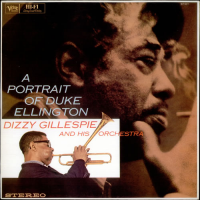
From his first recorded solo on King Porter Stomp with the Teddy Hill Orchestra in 1937, Dizzy Gillespie projected a circus-like sense of drama on his trumpet. Throughout the 1940s, Gillespie pushed hard to stand out, co-inventing the complex bebop style mid-decade. By combining stage wit with taut musical daring, Gillespie stood out and attracted fans. ...
Dizzy Gillespie + Sonny Stitt: '58

In May 1958, the Dizzy Gillespie Quintet was on tour in Europe when they stopped in Belgium to perform at Expo 58—the Brussels World's Fair. The musicians—Dizzy Gillespie (tp), Sonny Stitt (ts, as-), Lou Levy (p), Ray Brown (b) and Gus Johnson (d)—were at their peak. Jazz had won new-found respect worldwide and the musicians were ...
Johnny Mandel: Krazy Kat

By the late 1940s, most of the marquee big bands fronted by Swing Era bandleaders featured bebop arrangements. Bebop's popularity at the end of the decade owed a great deal to the increased influence of jazz disc jockeys, concert promoters and writers who championed the new music. Developed mid-decade by African-American musicians such as Charlie Parker, ...
Bob Freedman on Grover Washington, Jr.: Aria

Last week I caught up with saxophonist and pianist Bob Freedman, who arranged for Maynard Ferguson (And We Listened from Ferguson's Message From Newport) and plenty of other bands, including Toshiko Akiyoshi's sextet on United Notions (1958), which I posted about last Wednesday. Bob told me a wonderful story about arranging for Grover Washington Jr.'s Aria ...
Nat King Cole and Frankie Laine
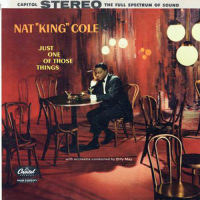
By the time Frank Sinatra arrived at Capitol Records in March 1953, Nat King Cole had been with the label since its start in 1942. During those years, in the mid-1940s, Cole set the standard for the relaxed, swinging jazz singer, starting with his appearance in the 1944 film Swing in the Saddle, singing By the ...
Album Showcase



Trending
 Jazz Raconteurs
Julius Hemphill: Marty Ehrlich and Tim Berne Remember a...
 In Tribute To...
John Coltrane At 100: A Global Perspective
 History of Jazz
John Coltrane in Detroit: A Brief History
 Live Review
Detroit Jazz Festival 2026: A Gathering in a Great Jazz City
 Profile
Sequoia Snyder: Growing in the Light of the Masters
 Interview
Jasur Khalilov: From Falak to Fusion
 Reanimating Conversations Past
Charlie Haden: Anatomy of a Jazz Classic
VOTE!