Home » Search Center » Results: Ezz-Thetics
Results for "Ezz-Thetics"
Eric Dolphy: Outward Bound To Out To Lunch Revisited

by John Eyles
Ask any jazz aficionado for their favourite jazz albums of the '60s and the chances are that, alongside such decade-defining choices as Jimmy Giuffre's Free Fall (Columbia, 1963), John Coltrane's A Love Supreme (Impulse, 1965), Andrew Hill's Point of Departure (Blue Note, 1965) and Albert Ayler's Spiritual Unity (ESP, 1965), they will select Eric Dolphy's Out ...
Ornette Coleman: Ornette At 12, Crisis To Man On The Moon, Revisited

by John Eyles
The re-release albums on Ezz-thetics, by jazz legends from the 1940s, '50s and '60s, have been widely praised, particularly for their sound quality which is invariably much improved compared to the originals or later rereleases. Another impressive aspect of these re-releases is the behind-the-scenes detective work which has tracked down rarities by some iconic musicians. One ...
Albert Ayler: Summertime To Spiritual Unity Revisited

by Chris May
This landmark reissue contains consummately remastered cuts of the killer (among killers) track from Albert Ayler's relatively unknown My Name Is Albert Ayler (Debut 1964) plus the justly celebrated Spiritual Unity (ESP-Disk, 1965) in its entirety. Summertime To Spiritual Unity Revisited starts with “Summertime" from the 1964 album. In his survey The Jazz ...
Joe Harriott: Free Form & Abstract Revisited

by Stefano Merighi
La serie “revisited" della ezz-thetics, prodotta da Werner Uehlinger, ha raggiunto ormai un cospicuo numero di CD, tale da costituire un effettivo e riassuntivo corpo sonoro, a disposizione per ri-sistematizzare la storia del jazz d'avanguardia degli anni Sessanta del secolo scorso. Certe edizioni però sono più importanti di altre, nel senso che meritavano sul ...
Horace Silver: Live New York Revisited

by Stefano Merighi
Benchè il profilo artistico di Horace Silver sia preso a modello in modo paradigmatico per definire lo stile hard bop nel jazz moderno, è altresì interessante notare come Silver, sin dalle sue prime uscite, abbia sempre cercato di evitare gli schemi predeterminati che soprattutto le etichette discografiche cercavano di replicare dopo aver trovato la formula del ...
Miles Davis: Miles Davis With Tadd Dameron Revisited

by Chris May
1949 was a year of massive change for Miles Davis, and not in a good way. It began, in January, with him fronting the first of the recording sessions, made with a nonet, that became generically known as The Birth Of The Cool and which, if he had achieved nothing else of note, would have secured ...
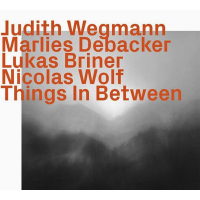
Judith Wegmann, Marlies Debacker, Lukas Briner, Nicolas Wolf: Things in Between
by Alberto Bazzurro
Alternando in maniera molto svizzera (tre dei quattro musicisti coinvolti sono in effetti elvetici, con l'eccezione della sola Marlies Debacker, belga) brani per due pianoforti (i pari, con prefisso 2) ad altri con l'aggiunta di due batterie (brani dispari, prefisso 4), i primi in mani femminili, le seconde maschili, questo singolare quartetto ci regala un album ...
Matthew Shipp: Invisible Light - Live São Paulo

by Mark Corroto
Think About seeing someone perform with what looks to you like effortless joy. It may be how they glide across a stage, evenly cutting carrots, or nonchalantly pocket a foul ball. I hope you have noticed Matthew Shipp's studied casualness these past thirty-plus years of music making. His entire oeuvre of recordings and performances have set ...
Archie Shepp: The Way Ahead, Kwanza, The Magic Of Ju-Ju Revisited

by Mark Corroto
Allow me to expand on a much restated quote from Albert Ayler: “Coltrane was The Father, Pharoah was The Son, and I was... The Holy Ghost." If we remain with the Christian iconography, that makes Archie Shepp, Simon Peter, or the Apostle Peter whom Jesus called the rock upon which he built his church. Christened by ...
John Coltrane: Song Of Praise: New York 1965 Revisited

by Mark Corroto
Witness [ wit-nis ] an individual who, being present, personally sees or perceives a thing; a beholder, spectator, or eyewitness. Have you ever considered yourself a witness to history? If you answered in the affirmative, let me posit that it was only after time and reflection that this notion occurred to you. Did the ...
Album Showcase
Trending
 Interview
Scott Kinsey: Thought Distortions and the Art of the Left...
 Groove Orbit
801 Live at 50: A Short-Term Experiment with a Long-Lasting...
 Interview
Enrico Rava: The Secret Corners of a Master
 Radio & Podcasts
Six new releases from Michael Pagan Big Band, Ron Vincent,...
 Opinion
Bomb Shelter Bebop
 Interview
Fred Lipsius: The Blood, Sweat & Tears Sax Voice Still...
 Interview
Avishai Cohen on "Jack Johnson"
Featured Video
VOTE!