Home » Search Center » Results: ECM Records
Results for "ECM Records"
Miroslav Vitous: Universal Syncopations II

by Budd Kopman
At least one underlying context of the ECM label has been to present jazz where the line between improvisation and composition/arrangement is blurred. When the improvisations are not “jazzy" as the term is commonly understood, it begins to be difficult to discern where the composition ends and the improvisation begins. This is not ...
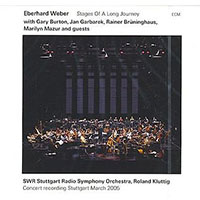
Eberhard Weber: Stages of a Long Journey
by Jerry D'Souza
Eberhard Weber has had a distinguished career as a bassist. He pioneered the use of electronics with the bass, and while that enhanced the dimension and the dynamic, he did not let it obscure the harmony and sensibility of his music. Weber turned 65 in 2005. His birthday was celebrated in Stuttgart with two ...
Miroslav Vitous: Universal Syncopations II
by Jerry D'Souza
Miroslav Vitous is the centrifugal force of Universal Syncopations II. He composed, arranged, directed, produced, engineered and archived the music, which was recorded between November 2004 and April 2005. Vitous uses different combinations to play his music. He moves from a trio to a quintet and, where necessary, has overdubbed orchestral parts or has multi-tracked vocals ...
Louis Sclavis: L'imparfait des langues

by Budd Kopman
L'imparfait des langues represents an attempt by reedman Louis Sclavis to challenge himself compositionally by incorporating new features into his working musical vocabulary while increasing the level of unpredictability. The resulting work is, perhaps surprisingly, the closest thing to a “jazz" album that he has produced. While encouraging change, Sclavis nevertheless has a ...
David Torn: Prezens
by Budd Kopman
With Prezens, guitarist and electronics magician David Torn returns to ECM with his first album since Cloud About Mercury (ECM, 1987). In the intervening twenty-year absence, Torn has made a number of albums for other labels, and has also composed movie soundtracks. The music was created by a working band that spent years ...
Gianluigi Trovesi: Vaghissimo Ritratto

by Budd Kopman
Gianluigi Trovesi's music features a mixture of styles that is the result of exposure to and reverence of European music, specifically Italian (both popular and classical) and American jazz. Fugace (ECM, 2003) stressed the jazz aspect, particularly its blues origins, as well as its collision with and effect on European music, specifically Italian popular music.
Stephan Micus: On the Wing
by Erik R. Quick
Stephan Micus is a German-born multi-instrumentalist and inveterate ethnic musicologist. He currently resides in Majorca where, aside from the splendid climate, the airport is well-equipped and prepared to take the adventuresome traveler almost anywhere at any time. Micus utilizes the latter frequently in planning his musical landscapes. Micus has traveled extensively throughout Asia and Europe and, ...
Christian Wallumrod Ensemble: The Zoo is Far
by John Kelman
Like many Scandinavian musicians, pianist Christian Wallumrod leads a double life. As a collaborator with artists including singer Sidsel Endresen, saxophonist Karl Seglem and guitarist Jon Eberson, he's an electric player capable of fitting into more jazz-centric (albeit often Nu Jazz) contexts. On his all-acoustic ECM discography, however, he's led a series of groups exploring a ...
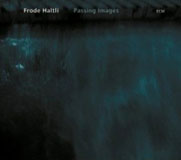
Frode Haltli: Passing Images
by John Kelman
Abandoning the contemporary classicism of Looking on Darkness (ECM, 2002), Norwegian accordionist Frode Haltli's Passing Images looks, instead, to traditional Norwegian music for its inspiration. But Haltli, like accordionists Pascal Contet and Guy Klucevsek, stretches the boundaries of his instrument's capabilities--rarely takes things literally. His unfettered musical aesthetic, and the players that he's chosen to work ...
Miroslav Vitous: Universal Syncopations II
by John Kelman
The integration of orchestration and improvisation can take many forms. In the case of woodwind multi-instrumentalist Tim Garland's The Mystery (Audio-b, 2007), it's about clearly delineated form, with soloists working within defined structures. For bassist Miroslav Vitous the process is more complex. Universal Syncopations II expands on the premise of Universal Syncopations (ECM, 2003), integrating real-time ...
Album Showcase




Trending
 Inside AAJ
Giving Thanks & Spreading the Jazz Joy
 Preview
Record Store Day Black Friday 2026 Jazz Releases
 Profile
801 Live at 50: A Short-Term Experiment with a Long-Lasting...
 History of Jazz
A Chronological History of Jazz
 Opinion
Bomb Shelter Bebop
 Radio & Podcasts
Six new releases from Michael Pagan Big Band, Ron Vincent,...
 Interview
Avishai Cohen on "Jack Johnson"
VOTE!