Home » Jazz Articles » Album Review » Scorch Trio: Brolt
Scorch Trio: Brolt

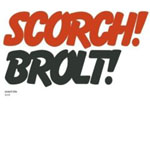
The best free improv still possesses shape, and Brolt's six pieces all possess a certain logic, even as the trio creates dense soundscapes from unfettered collective spontaneity. "Olstra" begins as a blistering duet between Bjorkenheim and Nilssen-Love that recalls the more liberated, skronking explorations of guitarist Nels Cline. But, like Cline, there's more here than meets the eye. Bjorkenheim's lines are structured around specific harmonic concepts, jagged though they are; when Flaten's heavily processed bass enters a third of the way into its ten minutes, it doesn't exactly settle Nilssen-Love's vicious turbulence, but it does focus it, with an actual groove and spare motif emerging to keep the piece constrained within its loosely structured framework.
Scorch Trio may lean towards improvisation's harsher edges, but it's not a relentless, flat-out sonic assault. "Basjen" begins with Flaten's growling bass, recalling 1970s-era King Crimson and its thundering bassist John Wetton. But Nilssen-Love's subtler, albeit still industrial-tinged percussion works alongside Bjorkenheim's electric viola da gimbri (which is either a typographical error meaning it is the 15th century viola da gamba, or it is a bowed hybrid of the Moroccan three-stringed, lute-like gimbri) to create a more ethereal interlude before Nilssen-Love reenters, maelstrom-like, on "Hys," where the angular rock stance of Bjorkenheim's free play leans towards a blues-centricity suggestive of how power trios like Cream might have sounded had their emphasis been on completely free improvisation, rather than long, vamp-like jams.
Dark though it is, "Gaba" approaches the closest thing to beauty on Brolt, though it ultimately turns into another tumultuous piece of spontaneous invention, with Bjorkenheim's viola da gimbri the dominant voice. But when Bjorkenheim returns to guitar on the seemingly anarchistic "Graps," he once again demonstrates that, as extreme as his playing can be, it's more than simple catharsis—based, instead, around spartan ideas that provide context for the entire trio.
If Hendrix had a more extensive language, if Terje Rypdal had stuck with his freer playing on Jan Garbarek albums like Afric Pepperbird (ECM, 1970) and if Nels Cline were to possess an indescribably palpable Nordic edge, then you might have a fair approximation of the sound and approach of Raoul Bjorkenheim. But despite the dominance of the guitarist's voice in terms of motivic development, make no mistake: Scorch Trio is a democratic collective, and the contributions of Flaten and Nilssen-Love are equally definitive in sculpting the raw, assaultive and viscerally cleansing sound of Brolt.
Track Listing
Olstra; Basjen; Hys; Gaba; Graps; Bluring.
Personnel
Raoul Bjorkenheim: electric guitars, electric viola da gimbri; Ingebrigt Haker Flaten: electric bass, electronics; Paal Nilssen-Love: drums, percussion.
Album information
Title: Brolt | Year Released: 2008 | Record Label: Rune Grammofon
About Scorch Trio
Tags
PREVIOUS / NEXT
Become a Sustaining Member

Since 1995, All About Jazz has championed jazz as an art form and supported the musicians who create it. Over three decades, it has grown into one of the world's leading jazz resources, serving hundreds of thousands of readers, musicians, presenters and industry professionals each month.
Help Build the Future of All About Jazz
Your support helps us continue building All About Jazz for the next generation—expanding our editorial coverage, preserving jazz history, developing new community features and creating better ways to discover the music and the people behind it.
Become a sustaining member for as little as $20 per year and you'll immediately enjoy an ad-free experience along with access to subscriber features and future articles for a full year.
Together, we're not simply sustaining All About Jazz—we're building its future. Thank you for being part of the journey.