Home » Jazz Articles » Album Review » Nils Berg & Norrbotten Big Band: Paid To Cry
Nils Berg & Norrbotten Big Band: Paid To Cry
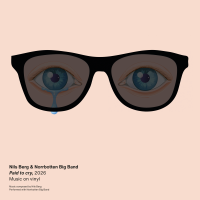
With the advent of the self-help industries and coaching in life, one might intuit they should leave grieving to the professionals as well. After all, they provide a template to follow. Berg reflects on this in album notes. "The question came from somewhere physical, a moment when my body gave way completely, the kind of ugly, heaving cry I hadn't been close to since childhood." "Music can hold grief and celebration at the same time," he continues, "and Paid To Cry exists in exactly that space." Still, the music he conjures up with the group is an open invitation—not an octalogue that lays down the law of grief. Besides, tears of joy are in there too.
Neither sadness nor mourning, the mood on the recent HOOB Records release is effervescent. This is a very special collaboration, even though the Norrbotten Big Band compiled a long list of top musicians they lent their robust backing to (Johan Lindstrom, VEIN, Josefine Lindstrand, Genevieve Artadi). Berg's past occupations, including his long-running Nils Berg Cinemascope, were equally adventurous in mapping the Swedish jazz, folk, and pop scenes. For this 40-minute LP, they take the listener out of the ordinary, striving for the wondrous through instrument solos somersaulting above the Norrbotten Big Band's thumping march. Also here, the Nordic cool causes a break in the weather as it encounters a warm ocean current of the New Orleans jazz orchestras. The Afro-Creole tradition mixes modes of slow processional music, solemn in its restraint. In its dual structure, the musical form transitions from the dirge, when the mourning brass band accompanies the deceased to the burial grounds, to the second line. Then, the dirge makes way for the jitterbug. After the body is "cut loose," the music bursts into an up-tempo celebration that invites the neighbourhood to join in and pay their respects.
However far apart this tradition might seem from the Swedish composer, his musical palette is enriched by such counterpoint to Romantic requiems, in his exploration of the music's cathartic potential. When raw emotional intensity finds a suitable container in the Nordic constraint, there is never a short supply of verve—to the contrary. There is anticipation ("The Bigger Seed"), the intimidating air of ceremony ("Eyes on the Prize [Paradise]"), a personal farewell ("Blues for Siw"—even though it is described as a tribute to a revue queen), and a sentimental spree with a four-legged companion ("Hunden"). Cry if you want—the composer seems to advise—although that is not mandatory. There is a particular emphasis on treating the big band as a single organism. And there is definitely a point there with the breathing, swelling, the subdued serenity that acts like a busy undergrowth for soloing tubas, trumpets, flutes, and trombones. Calls and responses are frequent triggering mechanisms to wake this behemoth up. What is particularly rewarding is distinctiveness. Each track rules its own department, accounting for a unique scale and take on the emotional vulnerability texture. "Jag skulle bara hem" (I was going home) is a good example of this blend, as we can almost hear the melody crocheting the complete fabric.
Being literally paid to cry, Oscar-ready performances are often imbued with over-the-top theatrics. The glimmering single tear rolling down a made-up cheek. Paid to Cry explores the spectrum—from a subtle weeping bass clarinet to a unison lament. We do not attend a funeral. We go through phases of keening—the traditional Irish form of vocal lament performed at a wake. Do not expect an album brimming with mournful glissandos, normally associated with the tear-jerking tactics, as each composition favours an original approach. The trumpet may call out the gathering of mourners, yet instead of an immediate outcry, clarinets, piano, flugelhorns, and the double bass voice their concerns consecutively. Even the subtle reprise in the closing "Legan" of the introductory composition ("Paid to Cry"), shies away from an obvious display of affect, providing a longing departure for this relatively brief set of musical postcards. The last one shows a jazz orchestra at a stately event, with its polished brass instruments reflecting an audience moved to tears as the performance draws to a close.
 FOLLOW Maciej Stasiowski
and get notified whenever a new article published.
FOLLOW Maciej Stasiowski
and get notified whenever a new article published.
A jazzophile, although open to all sort of cross-pollinations with rock, ambient, new classical.
Track Listing
Paid To Cry; Eyes On The Prize (Paradise); Jag Skulle Bara Hem; The Wood Hotel; Hunden; The Bigger Seed; Blues For Siw; Legan.
Personnel

Nils Berg
saxophone, tenor
Norrbotten Big Band
band / ensemble / orchestra
Joakim Milder
saxophoneJohan Christoffersson
saxophoneJan Thelin
saxophoneMats Garberg
fluteRobert Nordmark
drumsPer Morberg
saxophoneJacek Onuszkiewicz
trumpetDan Johansson
trumpetBo Strandberg
trumpetMagnus Ekholm
trumpet
Kristian Persson
trombone
Michal Tomaszczyk
tromboneMats Aleklint
tromboneBjörn Hängsel
trombone
Britta Virves
pianoPetter Olofsson
bassSebastian Ågren
drumsAdditional Instrumentation
Joakim Milder: conductor; Nils Berg: tenor sax, bass clarinet, Mellotron; Johan Christoffersson: alto sax, alto flute, soprano sax; Janne Thelin: alto sax, clarinet, contrabass clarinet, bass clarinet; Mats Garberg: flute, piccolo, tenor sax; Robert Nordmark: tenor sax, clarinet, bass clarinet; Per Moberg: baritone sax, flute; Jacek Onuszkiewicz: trumpet, flugelhorn; Dan Johansson: trumpet, flugelhorn; Bo Strandberg: trumpet, flugelhorn; Magnus Ekholm: trumpet, flugelhorn; Michal Tomaszczyk: trombone & flugabone; Kristian Persson: trombone; Mats Äleklint: trombone; Björn Hängsel: bass trombone, tuba; Britta Virves: piano; Petter Olofsson: double bass; Sebastian Ågren: drums, Mellotron.
Album information
Title: Paid To Cry | Year Released: 2026 | Record Label: Hoob Records
About Nils Berg
Tags
PREVIOUS / NEXT
Become a Sustaining Member

Since 1995, All About Jazz has championed jazz as an art form and supported the musicians who create it. Over three decades, it has grown into one of the world's leading jazz resources, serving hundreds of thousands of readers, musicians, presenters and industry professionals each month.
Help Build the Future of All About Jazz
Your support helps us continue building All About Jazz for the next generation—expanding our editorial coverage, preserving jazz history, developing new community features and creating better ways to discover the music and the people behind it.
Become a sustaining member for as little as $20 per year and you'll immediately enjoy an ad-free experience along with access to subscriber features and future articles for a full year.
Together, we're not simply sustaining All About Jazz—we're building its future. Thank you for being part of the journey.