Home » Jazz Articles » Album Review » Mali Obomsawin: Automatic
Mali Obomsawin: Automatic

Obomsawin, a citizen of the Odanak community of Abenaki Nation in Quebec, Canada, used archival and field recordings for her first album, Sweet Tooth (Self Produced, 2022), but for this album had access to hundreds of hours of ethnological recordings of the Abenaki language from the 1950s that Dartmouth College had previously held exclusively. The recordings are often manipulated, spliced and distorted until they are imbedded organically into the compositions, breaking down the idea of a "folk song" or "ethnological study." Instead, the voices are integrated with the other instruments, interacting as instrumental components in their own right. "Behind Automatic is a deep awareness about institutions' predatory relationship with Native material," Obomsawin noted. "I wanted to make a record that institutions couldn't own."
After a brief bass and vocal introduction over archived recordings on "Nawa," the album kicks into overdrive with a heavy rock rhythm on "Automatic." The voice of Obomsawin's great-grand relative Malian is heard weaving in and out of the music, horns and guitar squealing and plucking until it all dies away to the sound of a record on the turntable, setting the tone for the album, one where ancestral voices inhabit and breathe life into the songs.
Obomsawin's bass playing throughout the album drives the music, sometimes punctuating or challenging the beat, but always with a strong sense of melody. At other times, as with "Moi, quand j'y suis," her tribute to Charles Mingus—another artist who used their music as a fierce response to an oppressive establishment—her sound is reflective and measured. Her voice is another instrument that she uses to great effect, sometimes wordlessly singing, other times mixing with the archived voices until they blend together as one. This is especially poignant on the final number, "Venez," where the recorded voices sound as if they are singing a hymn, and as Obomsawin joins in, the voices fade out until only her voice is heard.
Although she has released several collaborative recordings since her 2022 debut Sweet Tooth, Automatic is the true follow-up to that album. Outside of sharing several musicians (Taylor Ho Bynum on cornet and co-producing, Allison Burik on bass clarinet and Noah Campbell on tenor saxophone), Automatic also shares a sound and sensibility with Sweet Tooth but is more expansive. The addition of Andrew Broder providing electronics and turntables, a couple more horns with Adam O'Farrill on trumpet and Yuma Uesaka on tenor, and Zack O'Farrill on drums and Magdalena Abrego on electric guitar, broadens and deepens the musical palette for her new compositions.
The horn work on the album is exceptional, moving from loose and free to tight and harmonious, often in the same song. Burik's lead-in bass clarinet on "Triage" is particularly elegant, and there are moments on "O'temin" and "Kojua II" where the horns are both haunting and intense.
This is, in many ways, a radical and confrontational album. It challenges the established ideas and labels of jazz music, Native music, folk music. Instead, it is just music: powerful and profound music. It does not need a label beyond that.
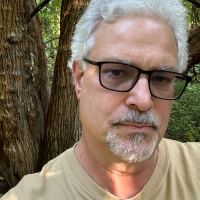 FOLLOW Don Ball
and get notified whenever a new article published.
Don Ball is retired from the National Endowment for the Arts, where he worked for nearly 24 years, focusing on programs such as the NEA Jazz Masters.
Track Listing
Nawa; Automatic; Triage; O'temin; Moi, quand j'y suis; Malian; Kojua II; Venez
Personnel

Mali Obomsawin
bass, acoustic
Taylor Ho Bynum
cornet
Adam O'Farrill
trumpet
Allison Burik
saxophone, alto
Yuma Uesaka
saxophone, altoNoah Campbell
saxophoneMagdalena Abrego
guitar
Zack O'Farrill
drumsAdditional Instrumentation
Andrew Broder: turntables, electronics.
Album information
Title: Automatic | Year Released: 2026 | Record Label: Out Of Your Head Records
About Mali Obomsawin
Tags
PREVIOUS / NEXT

Become a Sustaining Member

Since 1995, All About Jazz has championed jazz as an art form and supported the musicians who create it. Over three decades, it has grown into one of the world's leading jazz resources, serving hundreds of thousands of readers, musicians, presenters and industry professionals each month.
Help Build the Future of All About Jazz
Your support helps us continue building All About Jazz for the next generation—expanding our editorial coverage, preserving jazz history, developing new community features and creating better ways to discover the music and the people behind it.
Become a sustaining member for as little as $20 per year and you'll immediately enjoy an ad-free experience along with access to subscriber features and future articles for a full year.
Together, we're not simply sustaining All About Jazz—we're building its future. Thank you for being part of the journey.