Tulio Araujo releases his sixth album Awerejê, merging his Brazilian Pandeiro with modern arrangements of Jazz standards


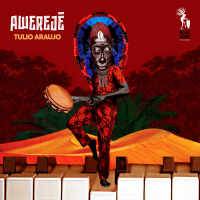
Brazilian percussionist Tulio Araujo, known by his dedication to the Pandeiro, just released the sixth album of his career. Different than the previous recordings, based on his originals, this time he focused on special arrangements of Jazz standards.
Awerejê is a Brazilian indigenous word from Tupi Guarani language branch that means fusion, blending. No other concept would be more perfect to illustrate what you can listen in all nine tracks that, with bold arrangements, renews compositions by masters such as Ray Noble, Miles Davis, Johnny Green, Richard Rogers, John Coltrane, Herbie Hancock and Chick Corea. Since Scott Feiner’s tragic death, Tulio started to wonder the depth of the term “pandeiro jazz”, created by him.
“It’s interesting to notice that both of us spent our careers developing the idea of adding the pandeiro to the Jazz environment, but we actually didn’t record Jazz standards. When somebody ask me what is my music or what do exactly I do, I always find myself struggling to explain the concept of it. So I felt that this is the right time to fix that gap. People in Brazil don’t quite understand what is Jazz, even if my originals has all the aspects of modern jazz, full of improvisations, they would still not quite understand where the “jazz” is, since they connect the term to a specific repertoire,” says Araujo.
Driven by these thoughts, Tulio started to gather some of his favorite standards that could summarize this idea of making pandeiro fit in jazz. “The most important aspect of this album is that I didn’t try to transcribe or mimic the drums, but to adapt the core or the rhythms. To make it work, I dove into some kind of a reverse engineering, restoring the African origins, making an important connection with Brazilian history too, since we are made of the same cultural mixture: Africans, Indigenous and Europeans,” he adds. The order of the tracks suggests a chronological journey, starting with the first compositions from 1930’s, passing by the '40s Bebop and ending on the '70s and '80s modernity.
Tulio assembled a special team for this project. The arrangements were written by his old friends and colleagues, Felipe Vilas Boas and Deangelo Silva, who also recorded guitars, pianos and synths. Later, Bruno Vellozo, Yan Vasconcelos, Mariah Carneiro, Jorge Continentino, Evan Megaro, Larissa Umaytá and Henrique Azul joined the team. The cover artwork was made by the talented designer Senegâmbia and the album was released by the Brazilian label Blue Cave Records.
Awerejê is a Brazilian indigenous word from Tupi Guarani language branch that means fusion, blending. No other concept would be more perfect to illustrate what you can listen in all nine tracks that, with bold arrangements, renews compositions by masters such as Ray Noble, Miles Davis, Johnny Green, Richard Rogers, John Coltrane, Herbie Hancock and Chick Corea. Since Scott Feiner’s tragic death, Tulio started to wonder the depth of the term “pandeiro jazz”, created by him.
“It’s interesting to notice that both of us spent our careers developing the idea of adding the pandeiro to the Jazz environment, but we actually didn’t record Jazz standards. When somebody ask me what is my music or what do exactly I do, I always find myself struggling to explain the concept of it. So I felt that this is the right time to fix that gap. People in Brazil don’t quite understand what is Jazz, even if my originals has all the aspects of modern jazz, full of improvisations, they would still not quite understand where the “jazz” is, since they connect the term to a specific repertoire,” says Araujo.
Driven by these thoughts, Tulio started to gather some of his favorite standards that could summarize this idea of making pandeiro fit in jazz. “The most important aspect of this album is that I didn’t try to transcribe or mimic the drums, but to adapt the core or the rhythms. To make it work, I dove into some kind of a reverse engineering, restoring the African origins, making an important connection with Brazilian history too, since we are made of the same cultural mixture: Africans, Indigenous and Europeans,” he adds. The order of the tracks suggests a chronological journey, starting with the first compositions from 1930’s, passing by the '40s Bebop and ending on the '70s and '80s modernity.
Tulio assembled a special team for this project. The arrangements were written by his old friends and colleagues, Felipe Vilas Boas and Deangelo Silva, who also recorded guitars, pianos and synths. Later, Bruno Vellozo, Yan Vasconcelos, Mariah Carneiro, Jorge Continentino, Evan Megaro, Larissa Umaytá and Henrique Azul joined the team. The cover artwork was made by the talented designer Senegâmbia and the album was released by the Brazilian label Blue Cave Records.
For more information contact All About Jazz.
Track Listing
Ka'Aguy (Abertura); Cherokee (Ft. Larissa Umaytá); Milestones; Body And Soul (Ft. Evan Megaro & Yan Vasconcelos); My Favorite Things; Equinox; Actual Proof (Ft. Berimbaucomtudo, Mariah Carneiro & Jorge Continentino); Spain (Para Chick); Pykui (Encerramento).
Personnel

Tulio Araujo
pandeiroFelipe Vilas Boas
guitarDeangelo Silva
pianoBruno Vellozo
bassJorge Continentino
fluteMariah Carneiro
vocals
Berimbaucomtudo
percussionLarissa Umaytá
percussionEvan Megaro
pianoYan Vasconcelos
bass, acousticAlbum information
Title: Awerejê | Year Released: 2023 | Record Label: Blue Cave Records
About Tulio Araujo
Tags
Recording
All About Jazz
Michael Ricci
United States
Tulio Araujo
Ray Noble
Miles Davis
Johnny Green
John Coltrane
Herbie Hancock
Chick Corea
Scott Feiner