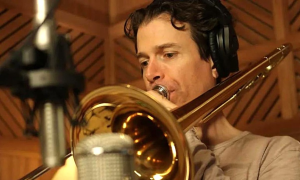
Trombonist, Composer, And Jazz Provocateur Andrew Danforth Effortlessly Blends Disparate Textures In Extraordinary New Album
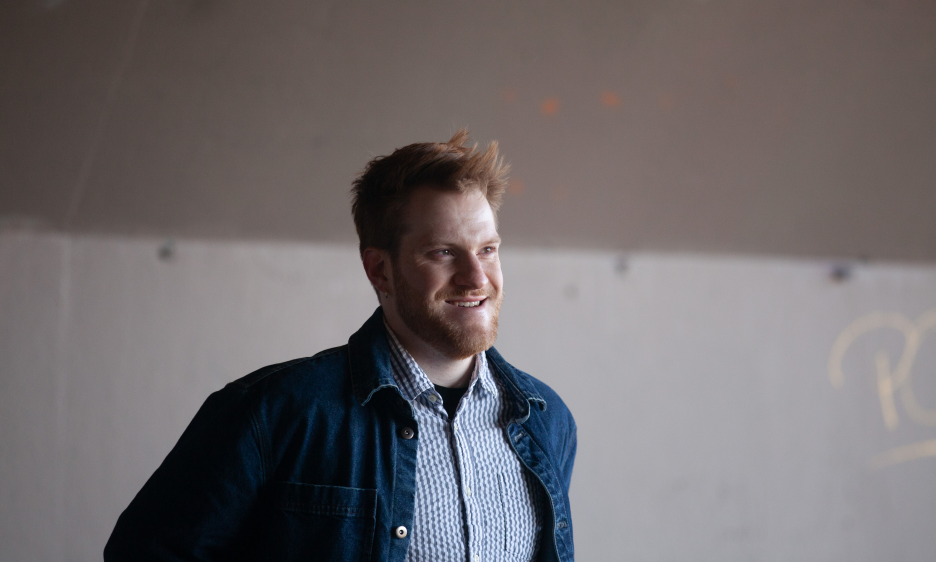
Courtesy Andrew Danforth

A futuristic mix of progressive jazz, rock, and electronica, See the Space as New springs from traditional foundations while blazing exquisite new paths.
—Adhyâropa Records
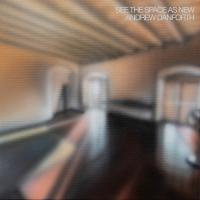
Adhyâropa Records is thrilled to announce See the Space as New(ÂR00218), the new album by the sonically adventurous trombonist and composer Andrew Danforth, featuring virtuosic contributions from Spencer Hoefert and Logan Butler on guitars, Isaac Beaumont on basses, and the reliably astounding Jay Sawyer on drums. A futuristic mix of progressive jazz, rock, and electronica, See the Space as New springs from traditional foundations while blazing exquisite new paths. Available now as a CD or digital download and the first single 'Leader' is streaming everywhere.
While Danforth’s music peers at the horizon, his background is deeply rooted in tradition. Hailing from Indiana and a proud product of the Indianapolis jazz scene as well as the IU School of Music, Danforth has since performed with several notable big bands, pop artists, and Broadway shows, as well as the The Indianapolis Symphony Orchestra, where his father has been the principal horn for 37 years. His previous album, Homegrown, was written in a more traditional jazz vein as a paean to his Indianapolis roots and was called, “an articulate, harmonic, beautiful vision that ends entirely too soon… an intimate and bare display of Danforth’s sublime trombone prowess.”
See the Space as New represents a point of departure for Danforth. “This record is definitely more compositionally and orchestrationally oriented towards rock textures and forms; for starters the ensemble includes two guitars, electric bass, synthesizer,” Danforth says. “It goes in a different direction than my previous material though this wasn’t a matter of intention, it just happened that a lot of the music I was listening to was progressive rock and alternative rock, and that’s what started to inform my voice more and more.”
The title track and album opener introduces Danforth’s new soundworld perfectly: first in hints, then waves, and finally in total immersion, from bassist Isaac Beaumont’s ruminative cadenza to the trombone/electric guitar duo that dominates the building textures over the course of the proceeding several minutes, adding synthesizer and sound design and cosseted in Sawyer’s sparkling cymbal and drum work, until suddenly receding into cold, trebly guitar arpeggios and the intimate, close-miked sound of Danforth's horn. Seven minutes and change into the proceedings and we’re only a step into a world of precise sonic contrast, impeccable musicianship, and fascinatingly woven sonic tapestries.
“What I wanted to capture was this idea of space and light, darkness and shadows,” Danforth says. “The title ‘See the Space as New’ refers to the idea of seeing someone's shadow, knowing someone’s there, and when the shadow is gone, light enters the space. Despite the archetypical associations of light and darkness, in that empty space left behind there’s also a sadness, a period of reflection that accompanies the light that fills the space they leave behind. These contrasts are what I was playing with in this tune and throughout the album.”
Describing a recording process more closely akin to a pop album than a first-take-best-take jazz project, Danforth describes feeling right at home. “This is really where I live, and the kind of music-making I’m fascinated with, it’s just taken me until now to figure out how to do it within a jazz context. It’s still rooted in the tried-and-true approach familiar to me as a jazz musician; for example, we never tracked drums and bass separately. There was always a band in the room together, reacting and listening to one another. But there were so many extra parts I was hearing and envisioning, and those were built and compiled later. I don’t give too much emphasis to genre in and of itself,” he adds, “but I am fascinated by the idea of approaching composition and tune structure from a rock perspective, and especially in how music is orchestrated and arranged.”
The album’s producers were as critical to the album’s sound as the instrumental collaborators. “George Schatzlein, who’s in the band Plastic, was key to making a lot of the more experimental things happen,” says Danforth, “as well as Chris Botta who I worked with for 5 or 6 days in the studio after tracking to edit, mix, and hone the sound of the album. And David Gibson was actually the first musician I asked to take part in this recording. He took me under his wing when I moved to New York three years ago. I respect his opinion so much and he was essential for decoding what I had in mind for this music.”
The instrumental collaborators Danforth assembled here were themselves integral to his vision. Isaac Beaumont’s punchy, confident bass playing is the foundation the variegating textures rests on, his acoustic bass often exchanged for an electric or even a Hofner for an even more specifically rock-adjacent sound. The twin guitars of Spencer Hoefert and Logan Butler define and place the sound of the album in a thoroughly modern context and belie Danforth’s influences from across the spectrum of American pop and jazz music. But in particular, it is the spectacular drumming of Jay Sawyer that underpins every aspect of this release. “I asked Chris (Botta), ‘What do you think this record is? Is it rock? Is it jazz? Is it pop?’ And his answer was that the genre of a record is primarily dictated by the drummer, and Jay is definitely coming from a jazz vocabulary.”
The album’s first single and track 4 centerpiece ‘Leader’ perfectly exemplifies this characterization. Sawyer lays down a 6/8 fusion groove heavy on backbeat and richly textured, like a Purdie Shuffle as imagined by Tony Williams. The melody is a stop-start journey of surprises, here the trombone at unison with guitars in a crest of sound, here again as a delicate, sparse texture punctuated mainly by Beaumont’s Hofner bass (recalling no less than McCartney’s virtuosic lines, particularly the snakey, active line in ‘Something’). Suddenly the music bursts out again, and is propelled by an insistent, descending line in the guitars, until powering over a precipice into improvisations, first from Logan Butler’s lightning-fingered fuzz tone guitar but most distinctively from Danforth himself. Comfortable in any context – his jazz and classical bona fides are by now well established – here, in a musical environment of his own creation, his creative instrumental voice is really given space to flourish. Exploring the full range of his instrument, Danforth uses jabs, swoops, and a powerfully gritty tone to inspire the band to an ecstatic climax before returning the melody and a satisfying, ambient denouement.
The album closes with the elegiac ‘Meditation for Cubby,’ the album’s third and final single. “Bookending with the opening track ‘See the Space as New,’ this track describes the sensation that came over me as I entered an empty room in my apartment of a friend who had left. I couldn’t help but reflect in that moment about what had been there, and what else could be coming into that room now. New things, new people, new possibilities. I wanted to transform that feeling of sadness into something else, and this music was the result.” To achieve the track’s gorgeous sense of accumulating wonder, Danforth and Botta employed a bit of studio magic; overdubbing and splicing Danforth’s multitracked trombone sound to achieve a shimmering, phased effect similar to what singers like Elliott Smith and Phoebe Bridgers do with their voice. “It created a cascading sound, like dust in the air sparkling as it’s illuminated by light beams entering through a window, and is one of my favorite moments on the record. It’s probably the closest representation of the idea of seeing spaces in a new way.”
For more information contact Adhyâropa Public Relations.
Track Listing
See the Space as New; Dealing; in-between; Leader; Mr. Andrew; Exhausted; Dry March; Unlucky; Meditation for Cubby
Personnel

Andrew Danforth
tromboneSpencer Hoefert
guitarLogan Butler
guitar, electricIsaac Beaumont
bass, acoustic
Jay Sawyer
drumsAlbum information
Title: See the Space as New | Year Released: 2026 | Record Label: Adhyâropa Records