
Home » Jazz News
Video / DVD News
Timely announcements covering new album releases, tours, concert series, special events, job postings, crowdfunding campaigns and more. You can find more news by searching our website, viewing our news stream, seeing what's trending or reading our blog posts. Subscribe to our news RSS feed and/or embed AAJ news content on your website or blog. Learn about our news service here. Submit news here.
Attila Zoller and Don Friedman

Source:
JazzWax by Marc Myers
Attila Zoller is another guitarist who's fame has unfairly faded with time among jazz fans. Like guitarist Gabor Szabo, Zoller was a Hungarian refugee who escaped Soviet invasion. He found his way to Austria in 1948 and moved to the U.S. in 1959 to perform, record and teach. He also had enormous influence over the jazz fusion movement that would start in the late 1960s and flower in the '70s. Among his many fascinating avant-garde albums were three recorded with ...
Continue
Reading...
Man Who Came to Dinner

Source:
JazzWax by Marc Myers
One of my favorite Thanksgiving movies is The Man Who Came to Dinner, with Monty Woolley and Bette Davis. The plot, in a nutshell: A cranky, world-renowned author (Woolley) injures his back and must spend the holidays with his cosmopolitan assistant (Davis) confined to a house in small-town Ohio, ordering people around and causing trouble for those he cares about most. This cheery and cozy wartime film has all the charm of a fireplace. Directed by William Keighley, the film ...
Continue
Reading...
Once Upon a Summertime

Source:
JazzWax by Marc Myers
One of the most difficult songs to sing well is Once Upon Summertime. Written in 1954 by Michel Legrand, French music producer Eddie Barclay and French songwriter Eddy Marnay, the slow waltz originally was entitled La Valse des Lilas (or The Lilac Waltz). In the late 1950s, the song was given English lyrics by Johnny Mercer to make the melody accessible to singers in the American and English markets. Blossom Dearie was first to record the song with Mercer's words ...
Continue
Reading...
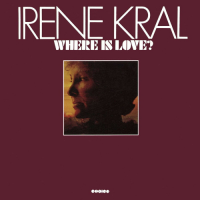
Irene Kral: Live in 1977
Source:
JazzWax by Marc Myers
In 1975 and '78, singer Irene Kral released what were arguably her finest small-group albums—Where Is Love and Gentle Rain, respectively, for the Choice label. She was accompanied only by pianist Alan Broadbent. [Photo above of Irene Kral with daughters Jodi, left and Melissa, from Being Irene Kral's Daughter by Jodi Burnett] A month after the second album was recorded and a bunch of months before it came out in 1978, Kral and Alan appeared with bassist Frank De La ...
Continue
Reading...
Blossom Dearie on Dusty

Source:
JazzWax by Marc Myers
One of my favorite Blossom Dearie albums is That's Just The Way I Want to Be. Recorded in London in early 1970 for the European Fontana label, the album features all hip, pop originals, most of which you've never heard before. Blossom is impossibly vulnerable and delicate on the record. Nestled among the album's gems is my favorite Blossom Dearie song—Dusty Springfield. Last week, I was emailing with singer and poet Arlene Corwin in Sweden, and it turns out she ...
Continue
Reading...
Tiny Grimes on Prestige

Source:
JazzWax by Marc Myers
In the 1950s, musicians who could play jazz, blues and R&B increased their income considerably. Guitarist Tiny Grimes was one of those who could switch around depending on the recording and touring opportunity. For much of the early and mid-1950s, Grimes was on the road extensively fronting an R&B group called Tiny Grimes and His Rocking Highlanders. In 1957 and '58, the blues went through a revival of sorts as rock 'n' roll grew increasingly popular. In '58, Chuck Berry, ...
Continue
Reading...
StLJN Saturday Video Showcase: The "lost" ensembles of Miles Davis

Source:
St. Louis Jazz Notes by Dean Minderman
This week, let's take a look at some history related to the most important jazz musician to come from the St. Louis area, Miles Davis. As a bandleader, Davis had many celebrated groups over the years, such as the “Birth of the Cool" nonet; the six-piece ensemble that recorded Kind of Blue; the first “great quartet" of the 1950s featuring John Coltrane; and its successor in the 1960s with Tony Williams, Ron Carter, Herbie Hancock, and Wayne Shorter. All of ...
Continue
Reading...
Buddy & Ella Johnson: Walk 'Em

Source:
JazzWax by Marc Myers
Back in the early 1950s, R&B was still largely unknown by white radio listeners and record buyers. Marketed to adults in Black urban neighborhoods on jukeboxes in corner bars and clubs, R&B's dance beat picked up where swing left off and modern jazz began. Swing dancing faded after World War II as marriage rates climbed. Many swing bands also cut back on touring in the late '40s due to fewer clubs thanks to higher taxes on venues that allowed dancing. ...
Continue
Reading...
Album Showcase



Trending
 Award / Grant
How Can Album Notes Compete For A Grammy Nomination?
 Performance / Tour
Smoke Jazz Club Announces October Line-up Including...
 Recording
Macedonian Saxophonist Hristijan Risteski Releases...
 Music Industry
Harvard’s Ming Mei Residency Concert Features...
 Recording
Drummer-bandleader Brandon Sanders Carries Basketball...
 Recording
Jelly Roll Morton - 'New Orleans Joys: The Earliest...
 Recording
Dan Papirany Trio Captures Lyrical Interplay On New...
VOTE!



