Bossa Breeze: Meditation On Memory And Inheritance

'Bossa Breeze' is a testament that tradition is not a museum piece but a living rhythm.
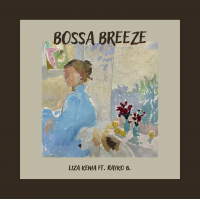
Lalo Schifrin’s music carried the weight of exile, memory, and reinvention—and it was precisely this blend of tradition and innovation that moved Alex Sino to write lyrics for his 1966 instrumental composition “Bossa Antique,” transforming it into the song “Bossa Breeze.”
Grammy Winner, Alex Sino, on the question of why he chose a sixty-year-old instrumental composition written by Lalo Schifrin, answered with his own lyrics:
Lalo Schifrin, born Boris Claudio Schifrin in Buenos Aires in 1932, was the son of a Jewish father of Eastern European descent who emigrated to Buenos Aires, and a Catholic mother born in Buenos Aires. From an early age, Lalo absorbed this dual inheritance: the melancholy strains of synagogue music and the discipline of European classical tradition, alongside the vibrant rhythms of Buenos Aires. Schifrin’s career became legendary: he studied at the Paris Conservatoire under Olivier Messiaen, played jazz in Parisian clubs with Astor Piazzolla, and later moved to New York, where he collaborated with Dizzy Gillespie before conquering Hollywood with scores like “Mission: Impossible" and “Dirty Harry." His genius lay in bridging worlds—baroque counterpoint with bebop, tango with modern jazz, sacred echoes with cinematic urgency.
For Alex Sino, a Latin and crossover Music producer and an emigre to the United States from Ukraine, Schifrin’s music was more than sound—it was heritage reborn in art. The Jewish-Ukrainian roots resonated with Alex’s own fascination for cultural survival and transformation. Lalo Schifrin’s music struck him as a dialogue between exile and belonging, between the old world and the new.
Moved by this, Alex wrote lyrics to Lalo Schifrin's instrumental composition, shaping it into the song “Bossa Breeze.” The title itself suggests a release: the breeze carrying memory across continents, turning sorrow into lightness. Where Schifrin’s instrumental spoke in tones of longing, Alex’s words gave it human breath and poetic clarity, honoring both the ancestral pain and the joy of survival. Lalo Schifrin’s life was a testament to how heritage can be transfigured into universal art. His Jewish European roots were not just background—they were the pulse beneath every score, every melody. Alex Sino’s act of writing lyrics to “Bossa Antique” was not merely homage; it was a continuation of Schifrin’s mission: to let memory sing, to let exile dance, to let tradition breathe as a breeze across time.
Producing a song, Alex Sino teamed up with Terry Heimat, a conductor, composer, arranger, and multi-instrumentalist, with whom they produced several critically acclaimed albums. Among them are Domus Solis and Alma Libre. Together with Terry, Milton Salcedo, and Rayko Battista, they arranged the song with a new vision and added a hip-hop part.
“Bossa Breeze" is a living testament to how music transcends borders and identities. What began as Lalo Schifrin’s instrumental meditation six decades ago has been reborn through Alex Sino’s lyrics, Terry Heimat Production, and the voices of a truly multicultural ensemble. The lead voice belongs to Liza Kenia, a Georgian‑born singer who lives in New York, whose artistry was recognized early when she became a child prodigy and finalist on The Voice Kids at just fifteen. She is joined by Rayco B. Batista, a Cuban‑born rapper from Miami and singer, who featured along with Diego Torres, Shakira, Lenny Agutin, and Luis Enrique, whose rhythmic fire adds a contemporary pulse; Terry Heimat, a Ukrainian-born Producer, Conductor, and Arranger; Kostia Lucky, a Ukrainian‑born virtuoso-violinist who lives in Miami, and whose playing carries both virtuosity and the echoes of Eastern European tradition; the principal cellist of the Zhangjiajie Philharmonic Orchestra (China) Denis Dmitriev who adds a deep, warm palette to the track's sound, and Milton Salcedo, the Grammy Award‑winning Colombian pianist and arranger whose touch anchors the piece with elegance and depth of Latin tradition.
Together, they embody the very theme of Bossa Breeze: the gaps in memory, the fragments of childhood voices and images, carried across continents and cultures. The song becomes not only a revival of Schifrin’s melody but also a celebration of global heritage, where Argentinian, Georgian, Cuban, Ukrainian, and Colombian artistry converge to give new listeners a shared experience of memory, exile, and renewal. It is precisely this multicultural resonance that makes “Bossa Breeze" timeless—an echo of the past, reborn in the present, and carried forward like a breeze into the future.
The producers chose to move away from the traditional bossa arrangement and sound, reshaping the track with a fresh direction. The verses and chorus ride a driving rock rhythm section, while the rapping features a hip‑hop beat that gives the groove its distinctive edge. The only direct nod to bossa jazz comes from the lead vocal of Liza Kenia and Milton Salcedo’s masterful keyboard work, whose refined, jazz‑inflected touch pays subtle homage to the genre’s roots.
The lyrics, arrangement, and production of “Bossa Breeze" transform Lalo Schifrin’s original melody into a meditation on memory, inheritance, and the continuity of sound across generations. Schifrin’s composition was an instrumental experiment—Baroque counterpoint refracted through Brazilian rhythm, with the Sino-Heimat team adding rock and urban sounds. Alex Sino’s words give it a human voice, grounding the abstract in lived experience.
The story of “Bossa Breeze” is the story of Schifrin himself: a man of many worlds—Jewish of Eastern Europe, Buenos Aires, Paris, New York, Hollywood—who believed music could reconcile the past and the present. “Bossa Breeze" is a reminder that tradition is not a museum piece but a living rhythm.
“Bossa Breeze" is not simply a lyrical adaptation—it is a re‑voicing of Schifrin’s experiment in memory and tradition. Sino’s words connect listeners to their own generational past, while the multicultural ensemble ensures the song resonates across cultures. In this way, the lyrics embody the very spirit of Schifrin’s music: timeless, borderless, and forever reborn.
Bossa Breeze: a song by Lalo Schifrin and Alex Sino
It’s a pause between your thoughts,
Not the notes, but something turns to
To a tune you chase but can’t find.
But you feel it just the same
Like you remembering a language
No one taught you by its name.
Spinning lids on a checkered floor,
Carousel in the mother’s smile
Barefoot steps in secret miles.
You don’t always hear it clearly.
But it’s been with you for years,
And it follows me, sweet and strange
Through every season’s range.
It’s a song that never fades.
Ghosts of laughter down the hall,
Where toy soldiers rise and fall.
Fairy melts in the afternoon.
And your wooden railway train
Drifting slow like candy rain.
Spinning lids on a checkered floor
Carousel in the mother’s smile
Barefoot steps in secret miles.
You don’t always hear it clearly.
But it’s been with you for years
And it follows me, sweet and strange
Through every season’s daily range.
Grammy Winner, Alex Sino, on the question of why he chose a sixty-year-old instrumental composition written by Lalo Schifrin, answered with his own lyrics:
You don’t always hear it clearly
But it’s been with you for years,
And it follows me, sweet and strange
Through every season’s range.
Lalo Schifrin, born Boris Claudio Schifrin in Buenos Aires in 1932, was the son of a Jewish father of Eastern European descent who emigrated to Buenos Aires, and a Catholic mother born in Buenos Aires. From an early age, Lalo absorbed this dual inheritance: the melancholy strains of synagogue music and the discipline of European classical tradition, alongside the vibrant rhythms of Buenos Aires. Schifrin’s career became legendary: he studied at the Paris Conservatoire under Olivier Messiaen, played jazz in Parisian clubs with Astor Piazzolla, and later moved to New York, where he collaborated with Dizzy Gillespie before conquering Hollywood with scores like “Mission: Impossible" and “Dirty Harry." His genius lay in bridging worlds—baroque counterpoint with bebop, tango with modern jazz, sacred echoes with cinematic urgency.
For Alex Sino, a Latin and crossover Music producer and an emigre to the United States from Ukraine, Schifrin’s music was more than sound—it was heritage reborn in art. The Jewish-Ukrainian roots resonated with Alex’s own fascination for cultural survival and transformation. Lalo Schifrin’s music struck him as a dialogue between exile and belonging, between the old world and the new.
Moved by this, Alex wrote lyrics to Lalo Schifrin's instrumental composition, shaping it into the song “Bossa Breeze.” The title itself suggests a release: the breeze carrying memory across continents, turning sorrow into lightness. Where Schifrin’s instrumental spoke in tones of longing, Alex’s words gave it human breath and poetic clarity, honoring both the ancestral pain and the joy of survival. Lalo Schifrin’s life was a testament to how heritage can be transfigured into universal art. His Jewish European roots were not just background—they were the pulse beneath every score, every melody. Alex Sino’s act of writing lyrics to “Bossa Antique” was not merely homage; it was a continuation of Schifrin’s mission: to let memory sing, to let exile dance, to let tradition breathe as a breeze across time.
Producing a song, Alex Sino teamed up with Terry Heimat, a conductor, composer, arranger, and multi-instrumentalist, with whom they produced several critically acclaimed albums. Among them are Domus Solis and Alma Libre. Together with Terry, Milton Salcedo, and Rayko Battista, they arranged the song with a new vision and added a hip-hop part.
“Bossa Breeze" is a living testament to how music transcends borders and identities. What began as Lalo Schifrin’s instrumental meditation six decades ago has been reborn through Alex Sino’s lyrics, Terry Heimat Production, and the voices of a truly multicultural ensemble. The lead voice belongs to Liza Kenia, a Georgian‑born singer who lives in New York, whose artistry was recognized early when she became a child prodigy and finalist on The Voice Kids at just fifteen. She is joined by Rayco B. Batista, a Cuban‑born rapper from Miami and singer, who featured along with Diego Torres, Shakira, Lenny Agutin, and Luis Enrique, whose rhythmic fire adds a contemporary pulse; Terry Heimat, a Ukrainian-born Producer, Conductor, and Arranger; Kostia Lucky, a Ukrainian‑born virtuoso-violinist who lives in Miami, and whose playing carries both virtuosity and the echoes of Eastern European tradition; the principal cellist of the Zhangjiajie Philharmonic Orchestra (China) Denis Dmitriev who adds a deep, warm palette to the track's sound, and Milton Salcedo, the Grammy Award‑winning Colombian pianist and arranger whose touch anchors the piece with elegance and depth of Latin tradition.
Together, they embody the very theme of Bossa Breeze: the gaps in memory, the fragments of childhood voices and images, carried across continents and cultures. The song becomes not only a revival of Schifrin’s melody but also a celebration of global heritage, where Argentinian, Georgian, Cuban, Ukrainian, and Colombian artistry converge to give new listeners a shared experience of memory, exile, and renewal. It is precisely this multicultural resonance that makes “Bossa Breeze" timeless—an echo of the past, reborn in the present, and carried forward like a breeze into the future.
The producers chose to move away from the traditional bossa arrangement and sound, reshaping the track with a fresh direction. The verses and chorus ride a driving rock rhythm section, while the rapping features a hip‑hop beat that gives the groove its distinctive edge. The only direct nod to bossa jazz comes from the lead vocal of Liza Kenia and Milton Salcedo’s masterful keyboard work, whose refined, jazz‑inflected touch pays subtle homage to the genre’s roots.
The lyrics, arrangement, and production of “Bossa Breeze" transform Lalo Schifrin’s original melody into a meditation on memory, inheritance, and the continuity of sound across generations. Schifrin’s composition was an instrumental experiment—Baroque counterpoint refracted through Brazilian rhythm, with the Sino-Heimat team adding rock and urban sounds. Alex Sino’s words give it a human voice, grounding the abstract in lived experience.
The story of “Bossa Breeze” is the story of Schifrin himself: a man of many worlds—Jewish of Eastern Europe, Buenos Aires, Paris, New York, Hollywood—who believed music could reconcile the past and the present. “Bossa Breeze" is a reminder that tradition is not a museum piece but a living rhythm.
“Bossa Breeze" is not simply a lyrical adaptation—it is a re‑voicing of Schifrin’s experiment in memory and tradition. Sino’s words connect listeners to their own generational past, while the multicultural ensemble ensures the song resonates across cultures. In this way, the lyrics embody the very spirit of Schifrin’s music: timeless, borderless, and forever reborn.
Bossa Breeze: a song by Lalo Schifrin and Alex Sino
Verse 1
Life begins where silence ends.It’s a pause between your thoughts,
Not the notes, but something turns to
To a tune you chase but can’t find.
Verse 2
A song of mine that has no messageBut you feel it just the same
Like you remembering a language
No one taught you by its name.
Chorus
Bossa breeze through attic doorsSpinning lids on a checkered floor,
Carousel in the mother’s smile
Barefoot steps in secret miles.
You don’t always hear it clearly.
But it’s been with you for years,
And it follows me, sweet and strange
Through every season’s range.
Verse 3
It sings of nothing, but it still plays.It’s a song that never fades.
Ghosts of laughter down the hall,
Where toy soldiers rise and fall.
Verse 4
Crayon skies and paper moons,Fairy melts in the afternoon.
And your wooden railway train
Drifting slow like candy rain.
Chorus
Bossa breeze through attic doorsSpinning lids on a checkered floor
Carousel in the mother’s smile
Barefoot steps in secret miles.
You don’t always hear it clearly.
But it’s been with you for years
And it follows me, sweet and strange
Through every season’s daily range.
For more information contact Two for the Show Media.
Track Listing
Bossa Breeze (a song by Lalo Schifrin and Alex Sino)
Personnel

Alex Sino
poet / spoken word
Terry Heimat
composer / conductor
Kostia Lucky
violin
Rayko B
vocals
Liza Kenia
vocals
Lalo Schifrin
arranger
Milton Salcedo
piano
Denis Dmitriev
celloAdditional Instrumentation
Produced by Pier 5 and Terry Heimat Studios; Producers: Alex Sino and Terry Heimat; Arrangement: Terry Heimat, Alex Sino, Rayko B. Batista, Milton Salcedo; Sound Producer: Terry Heimat for Terry Heimat Studios; Mixing and Mastering: Terry Heimat for Terry Heimat Studios; Graphic and Cover Design: Sveta Perotti; Music by: Lalo Schifrin (based on the instrumental track “Bossa Antique”, 1966); Original Lyrics by: Alex Sino
Album information
Title: Bossa Breeze | Year Released: 2025 | Record Label: Pier 5
About Liza Kenia
Tags
Recording
Two for the Show Media
Dr. Alex Sino
United States
New York
New York City
Liza Kenia and Rayko B.
Lalo Schifrin
Alex Sino
Terry Heimat
Milton Salcedo