Home » Jazz Articles » Multiple Reviews » Mark O'Leary: Flux and Shamanic Voices
Mark O'Leary: Flux and Shamanic Voices
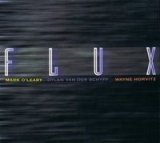 Mark O'Leary/Dylan Van Der Schyff/Wayne Horvitz
 Flux
FMR
2007
O'Leary has recorded before with pianists—on Chamber Trio with Matthew Shipp and on Closure with Uri Caine (both on Leo Records, 2005)—but the meeting with Seattle-based pianist Wayne Horvitz, that was recorded on Seattle, is completely different. Unlike the former recordings that attempted to create a resolutely modern jazz vibe, this recording, true to its title, instead attempts—and succeeds beautifully—in creating a gentle, flowing ambiance. It delivers minimalist and spare textures, in which Horvitz and the Canadian drummer Dylan van der Schyff use their instruments for color and timbral depth, and in which O'Leary's playing is contemplative and subdued.
The 15 short tracks dissolve into each other like a series of expressionist sonic miniatures, often abstract with no discernible solos or clear rhythmic patterns or melodic themes. But still they deliver rich and nuanced textures. The intimate interplay between O'Leary, Horvitz and Van Der Schyff has a true emotional impact and the coherent and patient feeling of this recording offers a unique and rewarding listening experience.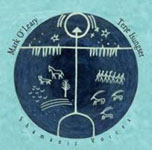 Mark O'Leary/Terje Isungset
Shamanic Voices
FMR
2007
This meeting with Norwegian master percussionist Terje Isungset is a much more versatile session, and one of the best in O'Leary's rich history of musical meetings. Isungset possesses an idiosyncratic musical language that often uses natural elements—wood, ice, wind, stone—as sources for a sophisticated language that combines ancient folk leanings with unfettered improvisation. For this meeting, recorded in O'Leary's home base in Cork, the guitarist came equipped with four different guitars and electronics, while Isungset stuck to his varied set of ordinary percussion instruments plus stones and wood.
Isungset opens the session with percussive ripples, with no clear rhythm, opting for raw sounds that stimulate O'Leary's response. On the first two tracks, O'Leary doesn't entirely succeed in finding true interplay with Isungset, but by the third tune the two have found substantial common ground. O'Leary begins a gentle folkish acoustic guitar, and then moves to fast atmospheric lines on the electric instrument, while Isungset lays down avant-tribal rhythms. Isungset cleverly uses spare minimal sounds to accentuate O'Leary meditative plucking on "Altar Of Stones," but he also knows how to use minimal metallic sounds to create a mysterious and threatening drama on "Vardlokker."
You can feel the influence of 1970s and 1980s ECM releases on O'Leary, and his acoustic guitar pays dues to Ralph Towner and even to Steve Eliovson, while his playing on the electric guitar suggests a close studying of the discography of Terje Rypdal. But the meeting with Isungset does not deliver the often chilly, overly mannered feel of many ECM releases. This one offers risk, mystery, drama and free expression, by two musicians who in their own ways keep striving to perfect their art.
Tracks and Personnel
Flux
Tracks: Entrance; Be Careful What You Wish For; Vacant; Contextual; Vadalfjol; Beyond The Abyss; Verdant; Flux; Evolution; Cantus; If You Ask Me; New England Chronicles; Pensive; Other Room; Rubikon.
Personnel: Mark O'Leary: guitar; Dylan Van Der Schyff: drums, percussion; Wayne Horvitz: piano, prepared piano.
Shamanic Voices
Tracks: Rainmaker; Vardlokker; Natturer; Skjold; Faoi draoicht; White moon; Fire Ritual; Fifth world; Oracle; Altar of stone; Seidr; Dancing with the Wolf.
Personnel: Mark O'Leary: electric guitar, electric baritone guitar, acoustic 12-string baritone guitar, tabletop guitar, e-bow, electronics, samples; Terje Isungset: drums, percussion, wood stones, voice.
 FOLLOW Eyal Hareuveni
and get notified whenever a new article published.
FOLLOW Eyal Hareuveni
and get notified whenever a new article published.
Eyal Hareuveni is an Israeli journalist who lives in Jerusalem.
About Mark O'Leary

Tags
PREVIOUS / NEXT

Become a Sustaining Member

Since 1995, All About Jazz has championed jazz as an art form and supported the musicians who create it. Over three decades, it has grown into one of the world's leading jazz resources, serving hundreds of thousands of readers, musicians, presenters and industry professionals each month.
Help Build the Future of All About Jazz
Your support helps us continue building All About Jazz for the next generation—expanding our editorial coverage, preserving jazz history, developing new community features and creating better ways to discover the music and the people behind it.
Become a sustaining member for as little as $20 per year and you'll immediately enjoy an ad-free experience along with access to subscriber features and future articles for a full year.
Together, we're not simply sustaining All About Jazz—we're building its future. Thank you for being part of the journey.