Home » Jazz Articles » Album Review » Louise Baranger: Louise Baranger Plays The Great American Songbook
Louise Baranger: Louise Baranger Plays The Great American Songbook
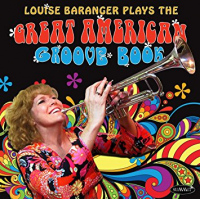
Framed here by a group of New York Studio A-Listers and via highly-creative arrangements from Tim Ouimette, trumpet artist Louise Baranger re-invigorates a dozen "Pop Tops" and gives each a savvy shine-up. That mix yields a fresh, flavorful tang to the party punch without destroying the original recipe.
The album first offers a butt-moving dance-crowd take on Marvin Gaye's "Got to Give It Up," and moves into "Camaro Willy," a contrafact of Wilson Pickett's "Mustang Sally," and on to a faster and "mis-behaved" "Soul Bossa Nova." The tone across the sound board here is "Good Times." The playing is energetic overall and the recording oozes it.
Baranger is a name immediately recognized in the trumpet world. She's performed worldwide, played lead in Harry James' Band, did extensive lead trumpet work in Las Vegas Hotel showrooms, and is also a fine jazz soloist. Her work here demos those fine chops all around. They can be heard on a hard-driving version and Miles-ish solo on Stevie Wonder's "Higher Ground." "Soulful Grazing" offers a faux version of the late Hugh Masakela's "Grazing in the Grass" and features Baranger's give-take with fellow trumpet great, Marvin Stamm. A slickly produced Latin-flavored "Love Potion No. 9" chants "Satisfaction," shouts "Oye Como Va," and moves on to mix things up for imbibing.
Tim Ouimette's slick Hippity-Hop re-work of Lee Morgan's "The Sidewinder" is an album highlight, as is the gorgeous flugelhorn-delivered "Never Can Say Goodbye." Baranger is fond of her mutes and grabs her Harmon on "Inner City Blues." As you'll hear, her solo style there shadows the aforementioned Miles Davis. "With You I'm Born Again," the only ballad-inspired piece covered on the session, is, not surprisingly, a beautiful way to end things send that well-nourished party crowd off into the night.
While attempting not to be anything but itself, Louise Baranger Plays The Great American Groove Book is a fine ride by a fabulous trumpeter and musician and her very cooking crew. Groove on, Lady Louise.
 FOLLOW Nicholas F. Mondello
and get notified whenever a new article published.
FOLLOW Nicholas F. Mondello
and get notified whenever a new article published.
Nick Mondello is a pro trumpeter, writer and marketing/production consultant to musicians worldwide.
Track Listing
Got to Give It Up; Camaro Willy; Soul Bossa Nova; Higher Ground; Soulful Grazing; Love Potion No. 9; The Sidewinder; Ain't No Sunshine; Take Me to the River; Never Can Say Goodbye; Inner City Blues; With You I'm Born Again.
Personnel

Louise Baranger
trumpetLouise Baranger: trumpet, flugelhorn; Rick Kriska: alto saxophone; Steve Moran: tenor saxophone; Gary Blu: baritone saxophone; Tony Kadleck: trumpet; Lew Soloff: trumpet; Tim Ouimette: trumpet (3); Kurt Eckardt: French horn; Dale Kirkland: Shelagh Abate: French Horn; Andy Rogers: tuba; John Cobert: keyboards; John Putnam: guitar; Lincoln Schleifer: bass; Denny McDermott: drums; Joe Bonadio: percussion; Kati Mac and Louise Baranger: background vocals; Don Braden: flute, alto flute; Marvin Stamm: trumpet; Bill Harris: tenor saxophone; David Spinozza: guitar; Gil Parris: guitar; Mark Martin: Beat Boxer; The "Ridgefield Gang" (crowd noise on "Got to Give It Up.")
Album information
Title: Louise Baranger Plays The Great American Songbook | Year Released: 2018 | Record Label: Summit Records
About Louise Baranger
Tags
PREVIOUS / NEXT


Become a Sustaining Member

Since 1995, All About Jazz has championed jazz as an art form and supported the musicians who create it. Over three decades, it has grown into one of the world's leading jazz resources, serving hundreds of thousands of readers, musicians, presenters and industry professionals each month.
Help Build the Future of All About Jazz
Your support helps us continue building All About Jazz for the next generation—expanding our editorial coverage, preserving jazz history, developing new community features and creating better ways to discover the music and the people behind it.
Become a sustaining member for as little as $20 per year and you'll immediately enjoy an ad-free experience along with access to subscriber features and future articles for a full year.
Together, we're not simply sustaining All About Jazz—we're building its future. Thank you for being part of the journey.