Home » Jazz Articles » Book Review » John Zorn: Tradition and Transgression
John Zorn: Tradition and Transgression
 John Zorn: Tradition and Transgression
 John Brackett
Hardcover; 248 pages
ISBN: 0253220254
Indiana University Press
2009
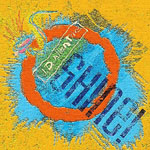
Coming to grips with the prolific and ungainly output of composer/improviser/sonic scavenger John Zorn is a Herculean task. In John Zorn: Tradition and Transgression, the first book-length treatment of this pivotal Downtown icon, scholar John Brackett moves away from the clichéd interpretation of Zorn as a postmodernist (with all the term's implications of disjuncture, pastiche and collapse of narrative and stylistic unity) to offer a more nuanced interpretation, one that considers his role as historian and caretaker of earlier artworks. Zorn's process—his "musical poetics"—Brackett suggests, is more profitably viewed as a "tradition of transgression," defined not by a desire to resist or destroy dominant institutionalized aesthetics but rather to work within these constraints to expose their limitations, an approach that "zeroes in on and exploits the spaces or 'blind spots' deemed impermissible, unacceptable and unrecognizable." (p. 88) Zorn's transgressive side is explored in the first half of the book: Chapter 1 uses Georges Bataille's ideas of homogeneous and heterogeneous as well as cultural constructs of fantasy vs. reality to examine the shocking album art from Zorn's Naked City period; Chapter 2 investigates his use of occult philosophies as compositional tools, giving detailed musical analyses of "Necronomicon" (written for string quartet) and "IAO" (an album-length suite dedicated to Aleister Crowley and occult filmmaker Kenneth Anger)—ironically concluding that such works ultimately defy analysis. The second half of the book makes the case for Zorn the traditionalist, beginning with a discussion of Marcel Mauss' theory of gifts and gift-giving, arguing that Zorn's homages to and appropriations of his artistic heroes are best viewed not as derivative borrowings but rather as creative "elaborations" that will in turn influence future artists. Chapter 3 depicts the films of Maya Deren and the sculptures of Joseph Cornell as inspirations for Zorn's In the Very Eye of Night, while Chapter 4 shows how Stravinsky's Requiem Canticles provided the specific pitch material for Aporias.
 FOLLOW Tom Greenland
and get notified whenever a new article published.
FOLLOW Tom Greenland
and get notified whenever a new article published.
Tom is a New York City based guitarist, pianist, composer, arranger, author, journalist, photographer, & educator.
About John Zorn

Tags
PREVIOUS / NEXT

John Zorn Concerts
Become a Sustaining Member

Since 1995, All About Jazz has championed jazz as an art form and supported the musicians who create it. Over three decades, it has grown into one of the world's leading jazz resources, serving hundreds of thousands of readers, musicians, presenters and industry professionals each month.
Help Build the Future of All About Jazz
Your support helps us continue building All About Jazz for the next generation—expanding our editorial coverage, preserving jazz history, developing new community features and creating better ways to discover the music and the people behind it.
Become a sustaining member for as little as $20 per year and you'll immediately enjoy an ad-free experience along with access to subscriber features and future articles for a full year.
Together, we're not simply sustaining All About Jazz—we're building its future. Thank you for being part of the journey.