Home » Jazz Articles » Album Review » Julius Gawlik: It's All in Your Head
Julius Gawlik: It's All in Your Head
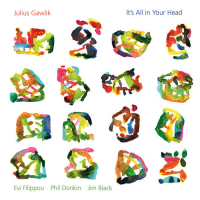
The personnel tells part of the story: drummer Jim Black brings decades of boundary-pushing work, vibraphonist Evi Filippou adds textural complexity, and bassist Phil Donkin grounds the proceedings without anchoring them too firmly. But what makes the album compelling is not the résumés—it is how these four navigate Gawlik's deliberately open-ended frameworks.
Take the compositional approach itself. Rather than presenting fully realized themes, Gawlik offers fragments: melodic cells, rhythmic motifs, harmonic suggestions. This is not minimalism for its own sake but a practical choice that prioritizes dialogue over declaration. When the band engages with these materials, the result feels less like interpretation and more like collaborative construction—each player adding, subtracting, or reconfiguring in real time. "There Are No Ugly Dogs" demonstrates the quartet's willingness to let ideas breathe and mutate, with Black's rhythmic vocabulary providing a constantly shifting backdrop that refuses to settle into predictable patterns. The interplay between Gawlik's horn and Filippou's vibraphone creates a layered dialogue where melodic lines do not so much answer each other as coexist in productive tension.
The album's emotional range is wider than might be expected from music rooted in abstraction. Some pieces simmer with quiet tension, others erupt into angular momentum. What ties these contrasts together is a consistent interest in transformation—how a whispered phrase can evolve into something urgent, how silence can feel as deliberate as sound. "Fuchs" captures this shapeshifting quality most vividly, moving through distinct energy states without losing its essential character. Gawlik's tenor work here shows his ability to maintain a clear narrative voice even when the rhythmic foundation becomes deliberately unstable. The piece rewards attention to detail—notice how the quartet negotiates transitions, each member contributing to the collective decision about where the music goes next.
Elsewhere, the album explores quieter territory. "You Wish" finds strength in restraint, building its impact through careful attention to space and harmonic color. The piece unfolds with patience, allowing each instrument's contribution to register fully before moving forward. "Glow" takes a different approach to subtlety, with Gawlik's clarinet work foregrounding the instrument's capacity for delicate articulation. "Chicago" plays with momentum itself, establishing and disrupting flow in ways that keep the ear engaged.
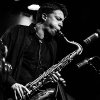
Gawlik himself moves between saxophone and clarinet with notable fluency, using each instrument's particular character to shape the music's trajectory. His clarinet work leans into the instrument's capacity for both fragility and bite, while his saxophone playing favors a middle ground between lyricism and grit. Neither approach feels showy; both serve the music's investigative spirit. On "TSCH," the closing track, Gawlik's saxophone sound takes on a warmer quality, with his phrasing suggesting careful consideration of each note's placement and duration. The piece benefits from the quartet's accumulated understanding—by this point in the album, the four musicians seem to anticipate each other's moves while still leaving room for surprise.
Black's drumming deserves particular attention for how it balances precision with unpredictability. He creates rhythmic environments that support without becoming predictable, leaving space for others to take risks. Filippou's vibraphone work alternates between melodic commentary and textural coloring, sometimes reinforcing Gawlik's lines, other times pulling against them in productive tension.
What distinguishes this debut from typical calling-card albums is its willingness to prioritize process over product. These are not pieces designed to showcase individual virtuosity or demonstrate genre mastery. Instead, they document a particular kind of creative exchange, one where form emerges from interaction rather than preceding it. The album also sidesteps some common traps for young bandleaders. There is no attempt to reconcile every influence into a tidy personal style, no overreach toward false profundity. Gawlik seems content to work within a focused aesthetic range, deepening rather than widening his approach. The result is music that feels genuinely exploratory without tipping into aimless experimentation.
Perhaps most encouragingly, It's All in Your Head suggests a young artist uninterested in shortcuts. Rather than announcing himself with maximum intensity, Gawlik has made something that unfolds gradually, revealing its depths through repeated engagement. It is a mature choice from someone still establishing his voice, and it bodes well for wherever that voice leads next.
 FOLLOW Nenad Georgievski
and get notified whenever Nenad has a new article published.
FOLLOW Nenad Georgievski
and get notified whenever Nenad has a new article published.
For as long I can remember music has been a focal point in my life.
Track Listing
There Are No Ugly Dogs; You Wish; Fuchs; Glow; Chicago; TSCH.
Personnel

Album information
Title: It's All in Your Head | Year Released: 2025 | Record Label: Self Produced
About Julius Gawlik
Tags
PREVIOUS / NEXT
Julius Gawlik Concerts
Become a Sustaining Member

Since 1995, All About Jazz has championed jazz as an art form and supported the musicians who create it. Over three decades, it has grown into one of the world's leading jazz resources, serving hundreds of thousands of readers, musicians, presenters and industry professionals each month.
Help Build the Future of All About Jazz
Your support helps us continue building All About Jazz for the next generation—expanding our editorial coverage, preserving jazz history, developing new community features and creating better ways to discover the music and the people behind it.
Become a sustaining member for as little as $20 per year and you'll immediately enjoy an ad-free experience along with access to subscriber features and future articles for a full year.
Together, we're not simply sustaining All About Jazz—we're building its future. Thank you for being part of the journey.