Home » Jazz Articles » Album Review » David Virelles: Igbó Alákọrin (The Singer’s Grove) Vol....
David Virelles: Igbó Alákọrin (The Singer’s Grove) Vol. III (Director’s Cut)
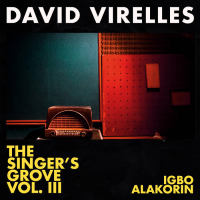
Igbó Alákorin Vol. 1 and II found Virelles fully immersed in the Santiago music community, recording alongside both local legends and young up-and-comers.
He has now issued Vol. III in two different editions, a "theatrical cut" (with 18 tracks) and a longer "director's cut" (with 31).
This is not just an extension of the previous release (Volumes I and II comprising a single CD with 14 songs), as both the recording sessions and the format differ. The primary difference is that this is a solo effort—although Virelles did record some synthesized percussion under the faux band name of Los Seres. And he also assumes the fictional character of Santiago Slim for some spoken introductions.
Perhaps more importantly, Vol. III takes the music further back—not only in time and style, but in technology itself: Virelles recorded several of the tracks to wax cylinders, before recording those digitally, preserving the extremely lo-fi quality of even a brand-new wax recording.
This technique by Virelles reminds us that recording technology deeply influenced the last 135 years of popular music: When we say Thomas Edison invented the phonograph, it is the wax cylinder to which we refer. The later developments of the shellac discs (78) with their music on both sides, and the later 45 and then long-playing (LP) formats, with their improved sound quality, all built upon what Edison had started.
But for the first decade of recorded music, the wax cylinder was the only available technology. Few could afford a player at home, so "listening booths" popped up in amusement arcades and music shops where you could listen to a recording for a few cents. Four minutes was about the maximum length a recording could be on a wax cylinder, something the shellac 78s did not change.
That four-minute limit helped shape popular music for decades, until the LP and reel-to-reel tapes came out. But the technology on which we play our favorite music is usually pretty invisible, unless someone like Virelles makes a conscious decision to focus our attention upon it.
But this is not some museum effort, nor merely a fetish to a lost time.
In addition to recording on acoustic piano, Virelles, as mentioned, fleshes out some tracks with synthesized percussion—a melding of recording techniques developed more than a century apart. And on the Director's Cut, he performs original songs on a synthesiser.
What is interesting is how Virelles adapts his playing to the historic source material, including some compositions from the 1910s that have never before been recorded.
Piano music a century or more ago was played differently—the pacing, the way the keys were struck, even in how pauses were employed.
Vireilles captures this slower, more formal—stately, even—style on the opening track on both versions, "Pulpa de Tamarindo." That playing approach holds consistently on the older Cuban songs throughout this project. He is wholly immersed in the traditions of early 20th-century Cuba when playing these pieces: There are no nods to the present, no modern motifs or cheats. He is utterly committed to playing this music in the style and manner in which those who wrote it would have played it.
A note on the two different versions, or "cuts" as Virelles cinematically describes them: He explains on his Bandcamp page that the shorter Theatrical Cut only contains the "archival Cuban repertoire," performed on acoustic piano. The longer Director's Cut includes original compositions from Virelles that are played on a UDO Super 6 synthesizer—and are closer in approach and style to his main body of work outside this project.
The period songs selected by Virelles mostly feature strong melodies and exhibit influences from American ragtime and early jazz as well as formal European dances. They are the type of songs chosen by solo pianists across the Western world last century for their ability to allow a piano to hold the attention of a room, whether a saloon, a café or a concert hall.
Those who are most interested in Virelles' performance of the historic material may prefer the shorter Theatrical Cut. However, those who dive into the Director's Cut are likely to find it interesting to hear how Virelles uses the synthesized originals as both punctuation and framework for the traditional pieces. The Director's Cut probably does a better job of illuminating how a modern jazz artist whose reputation was originally made performing in the avant-garde sphere has also come back to perform what can only be described as an homage to the music of his birthplace.
 FOLLOW Jim Trageser
and get notified whenever a new article published.
FOLLOW Jim Trageser
and get notified whenever a new article published.
I am a San Diego-based music journalist, mostly covering jazz and blues.
Track Listing
Pulpa de Tamarindo; Cocoyé Nuvó; Son de la Loma; Seco; Péndulo; Berlin; Lunes Cubanos.
Personnel

David Virelles
pianoAdditional Instrumentation
David Virelles: acoustic piano, UDO Super 6 synthesizer
Album information
Title: Igbó Alákọrin (The Singer’s Grove) Vol. III (Director’s Cut) | Year Released: 2026 | Record Label: Self Produced
About David Virelles
Tags
PREVIOUS / NEXT

Become a Sustaining Member

Since 1995, All About Jazz has championed jazz as an art form and supported the musicians who create it. Over three decades, it has grown into one of the world's leading jazz resources, serving hundreds of thousands of readers, musicians, presenters and industry professionals each month.
Help Build the Future of All About Jazz
Your support helps us continue building All About Jazz for the next generation—expanding our editorial coverage, preserving jazz history, developing new community features and creating better ways to discover the music and the people behind it.
Become a sustaining member for as little as $20 per year and you'll immediately enjoy an ad-free experience along with access to subscriber features and future articles for a full year.
Together, we're not simply sustaining All About Jazz—we're building its future. Thank you for being part of the journey.