Home » Jazz Articles » Extended Analysis » Howie Smith / Mike Nock: Howie Smith / Mike Nock: Opal Dream
Howie Smith / Mike Nock: Howie Smith / Mike Nock: Opal Dream

Although their paths didn't cross until 1988, when they first met and performed together in Sydney, Australia, saxophonist Howie Smith and pianist Mike Nock are both important figures in the development of jazz Down Under. Nock, a native of New Zealand, returned to Australia in 1985 after working 25 years in the U.S. with the likes of tenor saxophonist Coleman Hawkins, reed player Yusef Lateef and the pioneering fusion band The Fourth Way, which he helped found. A Fulbright grant brought Smith to the Sydney Conservatory of Music in 1973 to set up the first college-level jazz studies program in the country. While serving there as the Director of Jazz Studies for three years, he also composed and performed, most notably as a founding member of Jazz Co/op. But, more important than this Australian connection, the two share an affinity for musical exploration. Both have ventured far beyond the realms of jazz throughout their careers, covering everything from chamber music and ballet to rock and the outer stretches of the avant-garde.
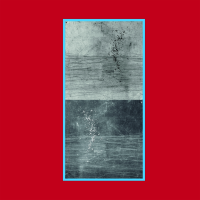
It is this love of experimentation, and the improvisational chops that enable it, that are largely on display on Opal Dream. Along with five Smith compositions, two from Nock, and one from saxophonist Charlie Mariano ("He's Gone"), the record offers 11 tracks improvised in the studio. These range from the appropriately dark and dreamlike keyboard-sax soundscapes of the album's early stages, to angular, crashing constructions like "Shadow Dancers" and "Earrational Number" that recall John Cage's work, to the traditionally infused numbers "Rag(ged) Time" and "Jamaican Rhumb," that channel—and warp—ragtime and calypso, respectively.
Nock favors a strong left hand, throughout, undergirding many of Smith's compositions and the improvisations alike with simple, repeated figures that leave plenty of open space into which cyclical right-hand lines and emphatic, jumping chords might slip beneath the twisting sax choruses. On his own tunes, "Ever Distant" and "Fallen Angel," however, Nock moves away from the minimalist approach and fashions fully fleshed, bittersweet piano melodies. Smith's soprano and alto sax playing is as emotive, searching, bluesy and whimsical as ever, with clear-throated notes lilting on melodic waves, lingering and expanding, launching into high-pitched wails, and descending as wonderfully curved streamers of metallic sound. "To Be, Ornette, To Be" and "Wayne's Whorl" (the album abounds with word, as well as sonic, play) dip into the innovations of saxophonists Ornette Coleman and Wayne Shorter, the latter tune refashioned from a composition originally penned for the 13-piece Jazz Unit with which Smith plays. The title track, recorded not in Sydney in 2012, like the rest here, but 15 years prior at Cleveland State University (where Smith has taught since 1979), fashions a dreamscape flitting the gap between depression and spring-like expectation. The tune takes its rightful place at the album's core, reflecting its wavelengths forward and back.
For all its improvisation, Opal Dream works marvelously well as a whole, with the spontaneous pieces linking the compositions into a fully realized story, plotted, as it were, through the language and logic of dreams. Like dreams, this story picks up from the life of the dreamers, freely rearranges and twists the reference material, amplifies its emotional impact, and lays it out as something at once vibrantly new and warmly familiar. Here the life is music, and, lucky for the listener, the dreamers have already heard and played earfuls.
 FOLLOW Matt Marshall
and get notified whenever a new article published.
FOLLOW Matt Marshall
and get notified whenever a new article published.
Matt Marshall is a freelance writer based in Cleveland, OH.
Track Listing
Through a Window; Ever Distant; Landscape; Sail; The Magic Garden; To Be, Ornette, To Be; Rag(ged) Time; Shadow Dancers; Opal Dream; Counterclockwise; Earrational Number; Fallen Angel; Reflections/Refractions/Then Silence; Wayne’s Whorl; Yin-Yang; Jamaican Rhumb; He’s Gone.
Personnel

Howie Smith
saxophoneHowie Smith: saxophones; Mike Nock: keyboards.
Album information
Title: Howie Smith / Mike Nock: Opal Dream | Year Released: 2013 | Record Label: Open Blue Records
About Howie Smith
Tags
PREVIOUS / NEXT


Become a Sustaining Member

Since 1995, All About Jazz has championed jazz as an art form and supported the musicians who create it. Over three decades, it has grown into one of the world's leading jazz resources, serving hundreds of thousands of readers, musicians, presenters and industry professionals each month.
Help Build the Future of All About Jazz
Your support helps us continue building All About Jazz for the next generation—expanding our editorial coverage, preserving jazz history, developing new community features and creating better ways to discover the music and the people behind it.
Become a sustaining member for as little as $20 per year and you'll immediately enjoy an ad-free experience along with access to subscriber features and future articles for a full year.
Together, we're not simply sustaining All About Jazz—we're building its future. Thank you for being part of the journey.