Home » Jazz Articles » Film Review » Herbie Hancock Trio: Hurricane
Herbie Hancock Trio: Hurricane
'Hurricane' documents Hancock in an all-too-rare natural setting at a time when he was more known to the public for electronic collaborations with Bill Laswell.
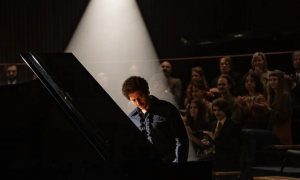
 What a difference twenty years can make. Compare pianist Herbie Hancock's recent collaboration with Wayne Shorter, Dave Holland and Brian Blade with this DVD release of a 1984 Swiss concert featuring bassist Ron Carter and drummer Billy Cobham, and the most notable and refreshing quality is that of growth and evolution. Of course Hancock has demonstrated a remarkable ability to develop his skills over a forty-odd year career, bridging the gap between the blues and swing of the American tradition with the classical impressionism of the European jazz movement. But while his current work with Shorter, Holland and Blade has its feet planted firmly in abstraction, his performance on Hurricane , while no less adventurous, is more clearly on the "inside." Equally riveting, however, there are still a number of revelations to be found.
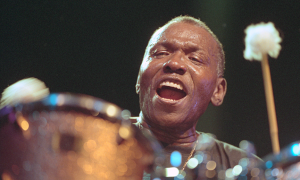
 Most insightful is how strong Cobham is, while largely associated with the fusion and funk movement at the time, in an all-acoustic trio setting. While his power and dexterity are in clear evidence - check out his solo on "Eye of the Hurricane" - he is equally capable of elegance and subtlety, as demonstrated on "Speak Like a Child," one of two bonus tracks available only on this DVD reissue of the original VHS release. What comes as no surprise is how well Carter empathizes with Hancock; given their long-standing history as members of Miles Davis' ground-breaking mid-'60s quintet, as well as the V.S.O.P. group of the late '70s, anything less than complete chemistry would be unexpected.
Each member of the trio is given plenty of solo space. View Video has carefully created numerous index points within the individual songs, so that viewers can jump specifically to the different combinations of solo, duo and trio playing during the hour-long performance and twenty-minute bonus feature. Whether it is the piano/drums interplay of "Eye of the Hurricane," Carter's solo bass introduction to "Willow Weep for Me," or the bass/drums solo of "Walking," it's all indexed and searchable.
Mind you, most people will want to just press "Play Program," and watch the entire set from start to finish. Seven cameras were used to provide everything from close-up hand shots to a back-of-the-stage perspective and, of course, a front-row-centre position that puts you in the best seat in the house. A clean digitally-mastered stereo mix creates a rich audio space, although a 5.1 surround mix might have been nice to provide some of the room ambience. This is but a small quibble though, as the quality of the DVD is uniformly excellent.
The most important bonus feature is the additional footage, featuring "Speak Like a Child" and "Little Waltz," although there are textual artist biographies, a trivia and fun fact track, and a Jazz IQ test that allows you to win a discount on your next View release. But the real reason to own this release is the opportunity to see Hancock, Carter and Cobham in action. Well conceived, recorded and presented, Hurricane documents Hancock in an all-too-rare natural setting at a time when he was more known to the public for electronic collaborations with Bill Laswell, including Future Shock. It proves that while he was busy exploring music's technological potential, he was still capable of stunning acoustic work, something that was to become more evident when he returned to a more organic setting for '95's New Standard and '97's duet record with Shorter, 1+1.
Visit View Video and Herbie Hancock on the web.
Track Listing: Eye of the Hurricane; First Trip; Willow Weep for Me; Dolphin Dance; Ili's Treasure; Princess; Walking Bonus Tracks: Speak Like a Child; Little Waltz
 FOLLOW John Kelman
and get notified whenever a new article published.
FOLLOW John Kelman
and get notified whenever a new article published.
With the realization that there will always be more music coming at him than he can keep up with, John wonders why anyone would think that jazz is dead or dying.
About Herbie Hancock

Tags
PREVIOUS / NEXT

Become a Sustaining Member

Since 1995, All About Jazz has championed jazz as an art form and supported the musicians who create it. Over three decades, it has grown into one of the world's leading jazz resources, serving hundreds of thousands of readers, musicians, presenters and industry professionals each month.
Help Build the Future of All About Jazz
Your support helps us continue building All About Jazz for the next generation—expanding our editorial coverage, preserving jazz history, developing new community features and creating better ways to discover the music and the people behind it.
Become a sustaining member for as little as $20 per year and you'll immediately enjoy an ad-free experience along with access to subscriber features and future articles for a full year.
Together, we're not simply sustaining All About Jazz—we're building its future. Thank you for being part of the journey.