Home » Jazz Articles » Album Review » Caroline Davis: Fallows
Caroline Davis: Fallows
At Ucross, her tools were minimal: an alto saxophone, an Organelle (processor, synthesizer and beat maker), a recording device (for "field recordings"). She drew inspiration from "ancestral figures," including the poet and naturalist Mary Oliver, pianist Connie Crothers, Thiền Buddhist monk and activist Thích Nhất Hạnh (with whom she had studied briefly), saxophonist and composer Steve Lacy, and pianist and composer Geri Allen, who she met through the International Association for Jazz Education's Sisters in Jazz program and who became one of her most important mentors.
Oliver's "Fall Song" (1984) was a kind of theme for the project: "Another year gone, leaving everywhere its rich spiced residues: vines, leaves, the uneaten fruits crumbling damply in the shadows, unmattering back from the particular island of this summer, this NOW, that now is nowhere except underfoot, moldering in that black subterranean castle of unobservable mysteries -roots and sealed seeds and the wanderings of water."
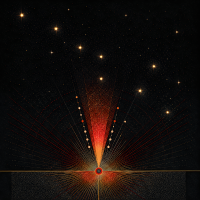
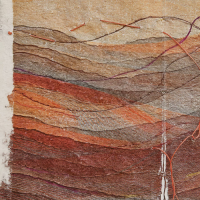
The related notion of letting farmland lie fallow for a time in order for it to right itself captured Davis' imagination as well. And she was stimulated by conversations with the other creators in residence at Ucross (visual artists, writers, poets), like Tulu Bayar, the multimedia artist who fabricated her album cover using bits of organic material gathered on the grounds. Davis, too, would sometimes leave a microphone in a field for hours, recording the songs and squawks of birds and other animals, rustlings and natural stirrings that she incorporated into her pieces.
Walking back from the dining area at night, they were frequently able to see the Red Planet clearly in the night sky, which inspired Davis' "Mars," one of the strongest tracks on the album. She imagined "heat and cosmic rays beaming over" as she observed the planet. Her musical rendering begins with a sustained, pulsating midrange electronic drone with both fixed and shifting pitches, over which she improvises a saxophone line. A couple of minutes into the track, the acoustic saxophone disappears and a higher-pitched element with faster pulsations enters (some sort of alien code? a warning? medical monitoring equipment?) interspersed with what sounds like radio static. The effect is eerie. It is easy to imagine the piece extending in live performance, something we might expect to happen on the album release tour.
Most of the dozen tracks are short vignettes, two or three minutes each. The exceptions are "Barbara Allen (for Geri)" and "Lacy Steve"—both tribute pieces—as well as "Underground," a sonic experiment in which Davis "drags an aluminum can filled with water across and inside various surfaces of her saxophone" (repair person's nightmare!). The liner notes describe it as "transportive," and it is. The saxophone, with its wet sound, moves in multiphonics along with the tin can's slidings, feeling its way through the dank aural terrain.
The music on Fallows is, like the artist, intriguing and genuinely unique; unpigeonholeable. Davis is on her own path and, with any luck, it will bring her to a venue nearby.
 FOLLOW Katchie Cartwright
and get notified whenever a new article published.
FOLLOW Katchie Cartwright
and get notified whenever a new article published.
Ethnomusicologist, singer-flutist, writer, radio host (KRTU San Antonio 91.7FM).
Track Listing
Springtails; Flower Sway; Mars; Yellow Phlox; Bongos; Knahk; Cloudburst; Holocene Rhythms; Lacy Steve; She Know She Is Water; Underground; Barbara Allen (for Geri).
Personnel
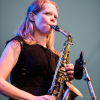
Caroline Davis
saxophoneAdditional Instrumentation
Caroline Davis: alto saxophone, Organelle, improvisations, compositions except "Barbara Allen" (traditional), samples of Thich Nhat Hanh on "She Know She Is Water" and Connie Crothers on "Cloudburst."
Album information
Title: Fallows | Year Released: 2026 | Record Label: Ropeadope
About Caroline Davis
Tags
PREVIOUS / NEXT

Caroline Davis Concerts
Become a Sustaining Member

Since 1995, All About Jazz has championed jazz as an art form and supported the musicians who create it. Over three decades, it has grown into one of the world's leading jazz resources, serving hundreds of thousands of readers, musicians, presenters and industry professionals each month.
Help Build the Future of All About Jazz
Your support helps us continue building All About Jazz for the next generation—expanding our editorial coverage, preserving jazz history, developing new community features and creating better ways to discover the music and the people behind it.
Become a sustaining member for as little as $20 per year and you'll immediately enjoy an ad-free experience along with access to subscriber features and future articles for a full year.
Together, we're not simply sustaining All About Jazz—we're building its future. Thank you for being part of the journey.