Home » Jazz Articles » Album Review » The Necks: Bleed
The Necks: Bleed

It is a compelling if imperfect notion: Jackson Pollack's "action painting" was famously fueled by his jazz LP collection, after all, and Ornette Coleman described his music as "something like the painting" of Pollack. The Necks' latest LP, which perhaps does not fit neatly into any obvious artistic movement, works on the mind in the same way as much non-representative art—the same sense of controlled chaos and heroic disorder, the same splattering of jarringly unrelated elements that are mentally pieced together into something if not immediately beautiful, then certainly stirring, haunting and memorable.
As violent as its title might be, Bleed, exists perpetually on the edge—in a liminal space between calm and anger, rest and action, between a fight breaking out and a truce being called. It is the typically bold latest work from veteran Australian experimental trio The Necks, arriving 35 years after the equally viscerally named debut, Sex (Spiral Scratch, 1989), and comprised of one single, unnervingly pregnant 42-minute track. First, a distant distorted piano strikes bold, discordant notes, ringing out anxiously, both serene and somehow spelling disruption to come. Electronic buzzing enters the frame, screeching like metal, while twinkling wind chimes hint at a more natural world. With a brighter sense of harmony, this could be new-age meditation music. Instead it leans closer to contemporary classical, although one suspects this arrangement of elements was a studio concoction, its tapestry of sonics delicately threaded together electronically.
A sense of control pervades; things curve and contort, but never twist or turn. The band's organic live instruments slowly fade in and out—rolling percussion, lumbering acoustic bass notes and a ringing detuned guitar —but never set into any kind of regular parts, appearing instead as random splashes of colour landing on the sonic canvas. Crucially, Bleed lacks the grounding drive of 2023's Travel (Northern Spy). Halfway through the first side, an electronic pulse offers the first sense of any rhythm, but soon dissipates, descending into a gloomy passage of glacial piano runs. Next, a processed keyboard spars with a single bass note that refuses to lock into step with its two two-chord dance.
Like abstract art, The Necks' music is also easy to compare to the weather, because it is so elemental, so untethered, so lacking in reason—yet following in familiar paths and cycles. Moving into side two brings a slow thaw, as the piano returns with something resembling a major harmony. Soon the bass outlines the root of a warming two-chord riff that will return later, the first rays of sunlight groping through the clouds. But we are not there yet, the brighter airspace soon becomes overwhelmed with metallic clanging (church bells? gongs? engines? train tracks? The ambiguity asks and answers its own questions). In the distance, the piano fights to be heard through the claustrophobic cacophony, but loses to some disorientating synth stabs and electronic swirls. Finally, the bass again spells out those two resolving notes—a second to a first—and in the closing minutes the piano and guitar arrive in the same place, ringing out those two big, bold chords which might signal (why not?) a rainbow! Or a survival from all the harsh elements that came before, and an arrival at whatever is next.
 FOLLOW Rob Garratt
and get notified whenever a new article published.
FOLLOW Rob Garratt
and get notified whenever a new article published.
UK-born, HK-based jazz fan and writer
Track Listing
Bleed.
Personnel
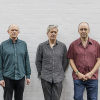
The Necks
band / ensemble / orchestraAlbum information
Title: Bleed | Year Released: 2024 | Record Label: Northern Spy
About The Necks
Tags
PREVIOUS / NEXT


Become a Sustaining Member

Since 1995, All About Jazz has championed jazz as an art form and supported the musicians who create it. Over three decades, it has grown into one of the world's leading jazz resources, serving hundreds of thousands of readers, musicians, presenters and industry professionals each month.
Help Build the Future of All About Jazz
Your support helps us continue building All About Jazz for the next generation—expanding our editorial coverage, preserving jazz history, developing new community features and creating better ways to discover the music and the people behind it.
Become a sustaining member for as little as $20 per year and you'll immediately enjoy an ad-free experience along with access to subscriber features and future articles for a full year.
Together, we're not simply sustaining All About Jazz—we're building its future. Thank you for being part of the journey.