Home » Jazz Articles » Album Review » Chris Lightcap Quartet: Bigmouth
Chris Lightcap Quartet: Bigmouth
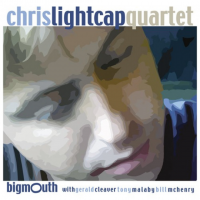
Saxophiles unfamiliar with Tony Malaby and Bill McHenry are missing out on two major young talents. Only now getting deserved acknowledgement as a "new" star on the instrument, Malaby coalesces lush, warm sound with crystalline technique over the entire range of the horn, from its baritone-lowlands to its altissimo-multiphonic-laced stratosphere. Physically, he's a fireplug-like force that's mastered, down to a zen-like ritual science, the mechanics of making air move. McHenry not only socializes well with Malaby, but takes the more vital and imperative higher road of standing up to him with his own darker, but no less informed, sound.
A great measure of helmsmanship falls on the shoulders of Lightcap and drummer Gerald Cleaver, who display a cohesion and discerning intuition that make them a formidable, ultra-contemporary section. Lightcap's "sound" is defined, more than any other acoustic bassist I've heard, by his well-honed ability to change it up: from cavernous, to velvety/buttery, to vibratingly abrasive, to taut, doghouse-busting pizzicato - sometimes within the context of a single tune.
It's the writing and the bent, loopy, but very cool arranging that will bring new ears to linger at Bigmouth's soapbox. Borne out of giggers' necessity in New York's pianoless second-tier jazz clubs and cafes, the arrangements make the fact that there's no comping instrument and a mini-horn section, using the same damn horn, downright hip. While you'd think that, given the cast and their inside/outside edge, these tunes would have a tendency to break apart into exploratory mayhem (which they occasionally do, as on "Pacifico"), they turn out to be hook-laden, vamp-based gems.
"Neptune" has a funky, looping Latin groove in three that will have you shaking your hips mambo-style with an effective, one-minute head that precedes the tenorists negotiating their solo handoffs. The rhythm section's shift from three-feel to swing at the beginning of McHenry's second solo provides unexpected kick, precisely because it slams up against the previous rhythm. Lightcap's sound morphs from taught intro pizzi to walking boom, as though some post-session reverb had been added in the mix - it wasn't. Dig the way the yeoman bass ostinato is used throughout to set up these infectious grooves.
Don't let the title of the record, Bigmouth, fool you. Lightcap and Co. have bigger ears and an even bigger sound, but most importantly, some very big ideas.
 FOLLOW Phil DiPietro
and get notified whenever a new article published.
FOLLOW Phil DiPietro
and get notified whenever a new article published.
Phil wishes he was a musician (well, he is one, but he wishes he were a good one) but he's not frustrated by it. He's frustrated with a lot of other aspects of the so-called biz. Therefore, he's excited by independently released jazz.
Track Listing
1. Neptune, 2. Big Mouth, 3. Celebratorial, 4. Dig a Pony, 5. Pacifico, 6. Loopy, 7. Blues for Carlos, 8. Music Minus One.
Personnel


Album information
Title: Bigmouth | Year Released: 2003 | Record Label: Blue Moon
About Chris Lightcap
Tags
PREVIOUS / NEXT

Become a Sustaining Member

Since 1995, All About Jazz has championed jazz as an art form and supported the musicians who create it. Over three decades, it has grown into one of the world's leading jazz resources, serving hundreds of thousands of readers, musicians, presenters and industry professionals each month.
Help Build the Future of All About Jazz
Your support helps us continue building All About Jazz for the next generation—expanding our editorial coverage, preserving jazz history, developing new community features and creating better ways to discover the music and the people behind it.
Become a sustaining member for as little as $20 per year and you'll immediately enjoy an ad-free experience along with access to subscriber features and future articles for a full year.
Together, we're not simply sustaining All About Jazz—we're building its future. Thank you for being part of the journey.