Home » Jazz Articles » Roberto Magris
Jazz Articles about Roberto Magris
About Roberto Magris

Roberto Magris: Mating Call

by C. Michael Bailey
For the contemporary jazz composer, inclusion of standards on a recording can sweeten the offering for those more traditional tastes. If the standard is treated with invention and grace, it can also inform those tastes, encouraging further listening. Italian pianist/composer Roberto Magris achieves both with Tadd Dameron's “Mating Call." Dameron's performance of his composition appeared on the same-titled album made with saxophonist John Coltrane in 1956 and released of Prestige Records. Squarely a hard bop anthem, in ...
Continue Reading...Roberto Magris Quintet: Mating Call
by Edward Blanco
In 2008, Italian jazz pianist Roberto Magris came to Kansas City to record Kansas City Outbound (PCAMI 2008) in a trio setting with the late bassist, Dr. Art Davis. Mating Call builds on that success; a straight-ahead project reconnecting with the area on the upstart Kansas City-based J-Mood Records, another evolution from Paul Collins of PCAMI Records. This time, Magris returns to the area, bringing with him jazz drummer Idris Muhammad from New York, saxophonist Paul Carr from Washington, D.C., ...
Continue Reading...Roberto Magris and The Europlane Orchestra: Current Views
by Jack Bowers
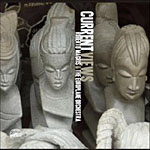
Although barely known here in the States, Italian composer/arranger/pianist Roberto Magris has been making a name for himself in Europe with a number of rewarding enterprises, among which is his Europlane Orchestra, formed in 1998 to embrace musicians from throughout central Europe. On Current Views, Magris's seventh recording for Soul Note Records, the sidemen hail from Italy, Slovakia, the Czech Republic, Slovenia, Poland, Hungary, Switzerland, Austria, Croatia and the U.S (even though the lone American, vibraphonist Bill Molenhof, has lived ...
Continue Reading...Roberto Magris and The Europlane Orchestra: Current Views
by Raul d'Gama Rose
Redefining his relationship with contemporary music. Roberto Magris' Current Views finds the artist in a renewed setting with his Europlane Orchestra, but this time the ensemble is slightly smaller--featuring at any given time, anything from a septet to an octet. The album title suggests new perspectives on Magris' philosophy with regard to the use of sound in music. Here, the pianist/composer uses mainly brass to paint the canvases that soak in the very depths of sound, resonating with bell-like clarity ...
Continue Reading...Roberto Magris & The Europlane Orchestra: Current Views
by Edward Blanco
Italian pianist Roberto Magris--originally from Trieste--has been a busy artist of late, having both recorded and produced seven albums in the past five years, including Current Views , a selection of live recordings made in Italy from 2001 to 2003. This album finds Magris with The Europlane Orchestra, a group he founded in 1998 as a central European venture and with whom he recorded two previous discs for the Soul Note label. The core Europlane Orchestra is augmented to a ...
Continue Reading...Album Review
Roberto Magris: Kansas City Outbound
by AAJ Italy Staff
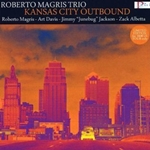
Roberto Magris è più conosciuto nel suo ruolo di leader e compositore che in quello di pianista e non è casuale visto che da vent'anni non pubblicava un disco come principale solista. Questo lavoro colma la lacuna e ci ricorda le pregevoli doti di Magris anche in quest'ambito. Il suo piano trio s'è formato negli Stati Uniti e nasce dall'incontro nel 1986 col grande contrabbassista Art Davis, durante una serie di concerti tenuti dall'artista triestino al Catalina Jazz Club di ...
Continue Reading...Roberto Magris / Big Band Ritmo Sinfonica Citta di Verona: Restless Spirits

by Raul d'Gama Rose
Even if pianist and composer Roberto Magris could have performed Restless Spirits with a small ensemble, he probably would not have done so. Here is the conundrum: might Magris have created this music in a large ensemble because he intended it to reflect a secret narrative that ponders the journey of the soul? The trick is to follow the sequence of the repertoire. This is a musical suite, which could very well have been cleverly developed to mirror that dramatic ...
Continue Reading...Album Showcase






Trending
 Inside AAJ
Giving Thanks & Spreading the Jazz Joy
 Preview
Record Store Day Black Friday 2026 Jazz Releases
 History of Jazz
A Chronological History of Jazz
 Opinion
Bomb Shelter Bebop
 Radio & Podcasts
Six new releases from Michael Pagan Big Band, Ron Vincent,...
 Interview
Avishai Cohen on "Jack Johnson"
 Live Review
Gregory Porter and China Moses at JAZZMI 2026: Two Voices,...
Featured Video
Premium
VOTE!