Home » Jazz Articles » Abdullah Ibrahim
Jazz Articles about Abdullah Ibrahim
About Abdullah Ibrahim

Abdullah Ibrahim: African Piano

by John Kelman
Chick Corea and Keith Jarrett are widely thought to have represented ECM Records' initial solo piano forays with Piano Improvisations, Vol. 1 & 2 (1971/1972) and Facing You (1972), respectively, but a lesser-known recording from 1969, unreleased until 1973 on ECM's sister label, JAPO, could be considered its true first. Originally released under Dollar Brand's birth surname as the South African pianist had yet to convert to Islam and become Abdullah Ibrahim, African Piano's reissue as part of ECM's Re:solutions ...
Continue ReadingAbdullah Ibrahim & Ekaya: Sotho Blue
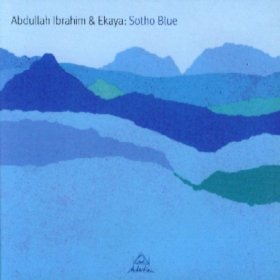
by Raul d'Gama Rose
The music of pianist Abdullah Ibrahim has lit up the world, shining brightly in the darkest recesses of the mind for decades. It has sung proud through the apartheid era, helping to clench the fist of protest tighter and the voice of human freedom sing louder. Now that the walls of segregation (at least in South Africa) have come tumbling down, Ibrahim's elementally beautiful melodies have begun to sound more tempered, his husky harmonies more bronzed, glowing with burnished colors. ...
Continue ReadingAbdullah Ibrahim: Perpetual Change
by Ian Patterson
For legendary pianist/composer Abdullah Ibrahim, music is always in a state of evolution. This philosophy is common to nearly all great composers, from [pianist] Duke Ellington to [trumpeter] Miles Davis and from [saxophonist] John Coltrane and [pianist] Ahmad Jamal to [guitarist] Bill Frisell. A piece of music is born, it grows and gradually matures but it never withers.And, like the Lesotho mountains, which, in part, inspired Ibrahim to revisit compositions--some of which he penned a quarter of a ...
Continue ReadingAlbum Review
Abdullah Ibrahim & Ekaya: Sotho Blue
by AAJ Italy Staff
Sono trascorsi quasi tre decenni da quando Abdullah Ibrahim presentò il progetto Ekaya nel disco omonimo del 1983: un settetto formato da tre sassofoni, un trombone ed una sezione ritmica con il leader al pianoforte. I componenti dell'organico originale sono ovviamente cambiati (ricordate? c'erano Dick Griffin al trombone, Carlos Ward, Ricky Ford e Charles Davis ai sassofoni mentre la ritmica comprendeva Cecil McBee al contrabbasso e Ben Riley alla batteria) e non è il caso di fare confronti. Lo spirito ...
Continue ReadingAbdullah Ibrahim & Ekaya: Sotho Blue
by Dan McClenaghan
The pianist's name was Dollar Brand. He came out of a nascent South African jazz scene in 1959 with The Jazz Epistles, a group that included trumpeter Hugh Masekela. Though his profile has never reached Masekela-like heights--the trumpeter's fame shot sky high with a huge number one pop chart hit in 1968, “Grazin' in the Grass"--Dollar Brand, now known as Abdullah Ibrahim, has been creating vibrant jazz infused with African folk hues and rhythms for more than a half century.
Continue ReadingAbdullah Ibrahim & Ekaya: Sotho Blue
by Ian Patterson
Pianist Abdullah Ibrahim's Ekaya is more an expression of the South African's musical philosophy than a fixed combo; musicians have come and gone and his collaborators have changed completely since its inception in 1983. Ekaya is not about personalities, but about music born of South Africa and the Afro-American experience. Speaking of Ekaya, Ibrahim states, “Its center is a universal code; regardless of where you go you remain at home." The septet clearly feels right at home with this reworking ...
Continue ReadingAlbum Review
Abdullah Ibrahim & WDR Big Band Cologne: Bombella
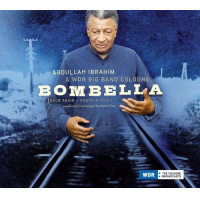
by AAJ Italy Staff
Il brano di apertura, “Green Kalahari," è un'improvvisazione per solo piano, dedicata al luogo in cui il pianista ha realizzato la sua M7 Academy per i musicisti sudafricani. Si tratta di un brano di cui è stata realizzata una sola take, e mai più suonato. Un'applicazione del principio no mind, che Ibrahim ha mutuato dalle arti marziali, e che prevede che l'artista dedichi tutto se stesso alla magia del momento, “dimenticando" quella componente razionale (lavoro, esercizi, apprendimento) che gli ha ...
Continue ReadingAlbum Showcase




Trending
 Interview
Lou Marini: A Solo Career Starting At The Age Of 80
 History of Jazz
John Coltrane in Detroit: A Brief History
 Live Review
Detroit Jazz Festival 2026: A Gathering in a Great Jazz City
 Live Review
The Tension Is Where the Music Lives: Miles Davis at 100,...
 Radio & Podcasts
Sullivan Fortner, Jim Rotondi & Dena DeRose, Ardeshir,...
 Reanimating Conversations Past
Charlie Haden: Anatomy of a Jazz Classic
 History of Jazz
His Name was Tommy Sims. He played Trumpet. Too Bad You...
Premium
VOTE!