Jazz Articles
Our daily articles are carefully curated by the All About Jazz staff. You can find more articles by searching our website, see what's trending on our popular articles page or read articles ahead of their published dates on our Coming Soon page. Read our daily album reviews.
Sign in to customize your My Articles page —or— Filter Article Results
Michel Lambert: Le Passant (The Wanderer)
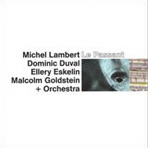
by Troy Collins
Montreal-based and conservatory-trained percussionist Michel Lambert conceived the suite on Le Passant as a conceptual conflict, pitting a chamber orchestra against a small group of jazz improvisers. In the liner notes Lambert describes the piece as more struggle than collaboration, an argument as opposed to discussion, improvisation versus composition.
The first half of the recording embodies this aesthetic at its most combative, with the improvisers weaving in and out of the massed ensemble. Sometimes they struggle to be ...
Continue Reading...Michel Lambert: Le Passant (The Wanderer)
by John Kelman
The usual meeting place of improvisation and orchestra works around firm structure where the improvisers solo within the rigid confines of the orchestral arrangements, or the orchestra acts as an underlying support, scored in and around pre-existing extemporization. But in rare cases, daring composers have found ways to allow improvisers to remain untethered while at the same time broadening the sonic palette with a larger ensemble. Howard Shore's collaborative soundtrack with Ornette Coleman for David Cronenberg's film Naked Lunch was ...
Continue Reading...Michel Lambert: Le Passant (The Wanderer)
by Jerry D'Souza
Michel Lambert began working on the music on Le Passant (The Wanderer) in 1992. Time, however, brought about changes. He reduced his original symphonic work to its current instrumentation. He calls it a meeting of the two forces and a confrontation between music that is through-composed and freely improvised. The latter is seen in complete detail on the last seven pieces, which are improv-based. The first five (together comprising “Le Passant") have the improvisers and the orchestra meeting and finding ...
Continue Reading...
Trending
 Interview
Bill Bruford And Pete Roth: A One-Of-A-Kind Juxtaposition
 Interview
Scott Kinsey: Thought Distortions and the Art of the Left...
 Groove Orbit
801 Live at 50: A Short-Term Experiment with a Long-Lasting...
 From the Inside
The Quiet Cruelty of the Music Business
 Live Review
Arcanum at Victoria Nasjonal Jazzscene, Oslo
 Radio & Podcasts
Six new releases from Michael Pagan Big Band, Ron Vincent,...
 Interview
Enrico Rava: The Secret Corners of a Master
Featured Video
VOTE!