Home » Jazz Articles » Album Review » Ran Blake & Anthony Braxton: A Memory Of Vienna
Ran Blake & Anthony Braxton: A Memory Of Vienna

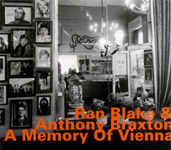
Ranging from such chestnuts as "You Go To My Head" and "I'm Getting Sentimental Over You," to bop archetypes like "Yardbird Suite" and "Four," the duo waxes poetic, interpreting eight venerable classics with respectful restraint and a few unorthodox twists. Braxton plays alto saxophone exclusively on these timeless songs, plying sonorous phrases that are among his most lyrical. Occasionally launching into brisk staccato runs, he avoids signature extended techniques like altissimo, multiphonics and over-blowing entirely, playing it straight by sticking close to the harmonic center of the tunes. Blake ranges slightly further afield, dropping icy accents and dissonant clusters at unusual intervals without veering too far beyond conventional melody and harmony. Although his oblique cadences and re-harmonized chords are somewhat ambiguous, he never fails to swing, lending the date a far more nostalgic air than one would have expected from such a pairing.
Though admired for their uncompromising, avant-garde innovations, the most surprising aspect of the session is not the duo's relative lack of cacophonous pyrotechnics, but the incredible level of intuitive empathy and conceptual foresight displayed—despite the ad hoc nature of the recording. A Memory Of Vienna demonstrates Blake and Braxton's longstanding reverence for standard material, bringing new life to timeless classics with understated creativity and soulful conviction.
Visit Ran Blake and Anthony Braxton on the web.
Track Listing
'Round Midnight; Yardbird Suite; You Go To My Head; Just Friends; Alone Together; Four; Soul Eyes; I'm Getting Sentimental Over You.
Personnel

Ran Blake
pianoRan Blake: piano; Anthony Braxton: alto saxophone.
Album information
Title: A Memory Of Vienna | Year Released: 2010 | Record Label: Hat Hut Records
About Ran Blake
Tags
PREVIOUS / NEXT


Become a Sustaining Member

Since 1995, All About Jazz has championed jazz as an art form and supported the musicians who create it. Over three decades, it has grown into one of the world's leading jazz resources, serving hundreds of thousands of readers, musicians, presenters and industry professionals each month.
Help Build the Future of All About Jazz
Your support helps us continue building All About Jazz for the next generation—expanding our editorial coverage, preserving jazz history, developing new community features and creating better ways to discover the music and the people behind it.
Become a sustaining member for as little as $20 per year and you'll immediately enjoy an ad-free experience along with access to subscriber features and future articles for a full year.
Together, we're not simply sustaining All About Jazz—we're building its future. Thank you for being part of the journey.