Home » Jazz Articles » Album Review » Swedish Chamber Orchestra / Michael Collins: Works for C...
Swedish Chamber Orchestra / Michael Collins: Works for Clarinet and Orchestra
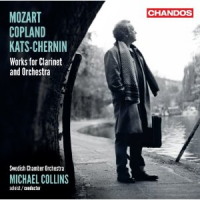
Collins (playing the prescribed basset clarinet) keeps his Mozart brisk but unhurried. His tone is sharp as citrus and precise as a timepiece. His modulations in the Allegro are fluid and sumptuous, characteristics telegraphed to the bright "Rondo. Allegro." The modern instrument Swedish Chamber Orchestra was well-primed for the concerto, responding to Collins' gentle direction and capturing the composer's pathos and ethos in the performance. Mozart was experiencing his final illness while composing the concerto for his friend, virtuoso Anton Stadler, and Collins manages to capture the mixed emotions of the music, particularly in the famous Adagio," which is played slowly and with majesty.
Collins' Copland is pastoral, with equal parts brains, brawn, and emotion. His tone is dryer than on the Mozart, an aural vision of a New England autumn. The concerto's second movement is modernism beyond Late Romantic, with Copland's trademark American touches. As if in a continuum, the premiere recording of Elena Kats-Chernin's "Orchestral Air" brings the state of clarinet performance into the now, at once looking back at a jazz and classical landscape while progressing forward into the new. The piece reveals sharp dynamics and plenty of complex drama. Collins sounds more than comfortable with the contemporary piece, capturing its whimsy and imagination.
 FOLLOW C. Michael Bailey
and get notified whenever Michael has a new article published.
FOLLOW C. Michael Bailey
and get notified whenever Michael has a new article published.
I'm Sanctified and Southern Fried / Mama tried and daddy cried / I tell the truth 'cept when I've lied / And like my huevos on the side.
Track Listing
Mozart: Clarinet Concerto, KV 622 in A Major; Copland: Concerto for Clarinet and String Orchestra, with Harp and Piano; Kats-Chernin: Ornamental Air for Basset Horn and Orchestra.
Personnel
Swedish Chamber Orchestra
band / ensemble / orchestraMichael Collins: clarinet, basset clarinet, conductor.
Album information
Title: Works for Clarinet and Orchestra | Year Released: 2013 | Record Label: Chandos Records
About Michael Collins

Tags
PREVIOUS / NEXT
Become a Sustaining Member

Since 1995, All About Jazz has championed jazz as an art form and supported the musicians who create it. Over three decades, it has grown into one of the world's leading jazz resources, serving hundreds of thousands of readers, musicians, presenters and industry professionals each month.
Help Build the Future of All About Jazz
Your support helps us continue building All About Jazz for the next generation—expanding our editorial coverage, preserving jazz history, developing new community features and creating better ways to discover the music and the people behind it.
Become a sustaining member for as little as $20 per year and you'll immediately enjoy an ad-free experience along with access to subscriber features and future articles for a full year.
Together, we're not simply sustaining All About Jazz—we're building its future. Thank you for being part of the journey.