Home » Jazz Articles » Bailey's Bundles » With Time No Longer an Issue: The Rolling Stones' Hackne...
With Time No Longer an Issue: The Rolling Stones' Hackney Diamonds and Foreign Tongues
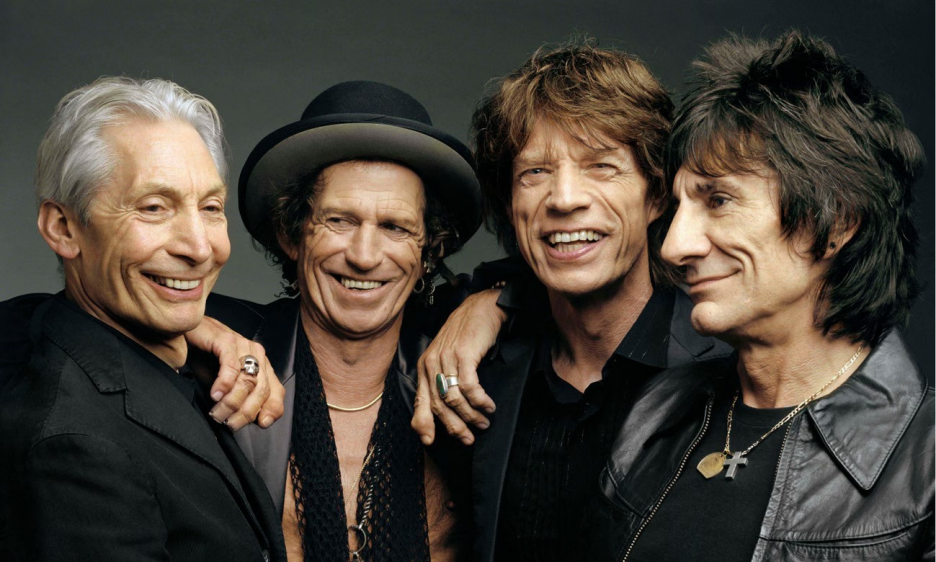
Courtesy Mark Seliger
That claim requires more than another declaration of resilience. The Rolling Stones have been proving their durability for so long that longevity has ceased to explain anything about their music. Age belongs to the story, but it cannot be the story. The more useful question is not how they continue, but what they have become.
A provisional history of the band might be organized around four creative grammars:
- The Brian Jones Era (1964-1968): Discovery—the band searches for its identity.
- The Mick Taylor Era (1968-1974): Definition—the classic Stones vocabulary is created.
- The Ronnie Wood Era (1975-2022): Conversation—the art of guitar weaving, live chemistry, and long-form evolution.
- The Fourth Stones Era (2023-): Renewal—the focus changes from the inertia of age to "what's next?"
The third period began uncertainly when Taylor left the band and the Glimmer Twins when shopping for a second guitarist while recording Black and Blue (Rolling Stones Records, 1976). In so many ways, Ronnie Wood was the perfect replacement, considering the parts he played in The Faces and then the early Rod Stewart recordings, who, with the Rolling Stones, defined a blues-based, rollicking flavor of rock and roll that manifested in more modern acts like the Black Crowes and Blackberry Smoke. Wood's guitar style is more closely compared to Richards,' setting up an ear-to-ear dialog between the two guitarists. Wood restored the conversational guitar style first glimpsed in the Brian Jones years but transformed it into something more elastic and improvisational. This is the lengthiest of periods, one where the band consolidated its position as "the greatest rock and roll band in the world." This period produced arguably the last canonical Rolling Stones releases: Some Girls (Rolling Stones Records, 1978) and the hodge-podge surprise Tattoo You (Rolling Stones Records, 1981)
The Fourth Stones Era could have just as easily been named, "After Charlie." Yet Watts' death removed more than a drummer. It disturbed the band's internal balance and forced the survivors to decide whether the Rolling Stones would become an object of commemoration or remain a means of creation. They chose creation. The group has not entered an age-defined final chapter so much as a post-Charlie chapter, one in which Andrew Watt serves as catalyst and Steve Jordan helps establish a new rhythmic center.
These divisions are not meant to seal sixty years into tidy compartments. Personnel alone do not cause an artistic period, and a useful framework should open inquiry rather than end it. This is to be sure the case of this last era is already two recordings old, with more promised. For the simple sake of seeing this music for what it is—not a "new" beginning, but an artistic turn away from the riff-laden swagger of the Stones' innate language toward something harmonically new, evidence that the band had new things to explore. What this calls for is something similar to Coleridge's call, in his Biographia Literaria (1817), for "that willing suspension of disbelief for the moment, which constitutes poetic faith." It is the permission allowing readers and viewers to experience genuine emotional truth and catharsis from a fictional narrative without constantly judging it by the rules of everyday real life.
What the present evaluation of the Rolling Stones' two newest recordings would benefit from a "willing suspension of complete chronology," so that these recordings may be considered on their present merits and impending future and not on the age of the musicians nor the long look back to the beginning. Hackney Diamonds and Foreign Tongues signal nothing of an end except that of the Rolling Stones continually having to reestablishing itself to a significant evolution where the band updates its sound with contemporary production methods and philosophies without neglecting the previous 60 years of creativity.
 Hackney Diamonds announced this renewal with the force of a public reintroduction. It was the first album of original Stones material since A Bigger Bang (Virgin, 2005), and its compressed schedule, bright surfaces, and emphatic performances made it sound intentionally declarative. Watt supplied deadlines, momentum, and a contemporary recording environment. The result did not merely demonstrate that the band could still make a convincing Rolling Stones album. It showed that they could alter the conditions under which such an album was made.
 That distinction matters. Hackney Diamonds is often described as a comeback, a perfectly understandable label after an eighteen-year interval between albums of original material. But "comeback" makes the achievement sound restorative, as though the objective were simply to recover a former state. The album instead establishes a new working method: faster writing, fewer opportunities to dismantle songs through over-consideration, and a producer willing to preserve spontaneity while giving it modern definition. Its polish is not camouflage. It is part of the argument.
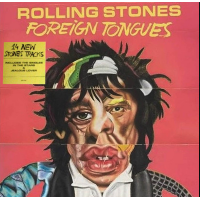 Foreign Tongues begins where that argument leaves off. Four of its songs originated in the Hackney Diamonds sessions, and Richards has described the two projects as something close to a double album. Their kinship is audible, but the second record is no collection of leftovers. If Hackney Diamonds is the concentrated reassertion—the proof that the new method works—Foreign Tongues is what happens after proof is no longer necessary. It is looser, broader, more rhythmically venturesome, and less concerned with presenting a single, polished front.
 The two albums should not be arranged as winner and runner-up. They describe a progression. Hackney Diamonds creates the opening; Foreign Tongues inhabits it. The former regathers the band around an external deadline and a renewed studio discipline. The latter trusts that discipline enough to wander. What seemed on the first album like a successful intervention now sounds like a continuing artistic direction.
The key to that direction is the way the Stones now use their past. Blues, country, soul, dance music, and rock and roll remain everywhere in these songs, but rarely as exercises in reproduction. They function as structural memories: forms and gestures detached from any obligation to recreate the conditions in which the band first encountered them. The Stones no longer need to sound old in order to sound like themselves.
This is what allows their harmonic and rhythmic language to become more contemporary without becoming generic. The changes are not announced as radical departures. They occur inside the band's established syntax: in the spacing of a chorus, the relationship between programmed and live rhythm, the way a riff divides into several competing lines, or the way a familiar form is allowed to strain without breaking. The continuity is real, but so is the development.
"Rough and Twisted" makes the method plain at the outset. Its nearest useful predecessor is not a canonical album from the early 1970s but the raw blues engagement of Blue & Lonesome (Polydor, 2016). What begins as an overdriven blues proposition refuses to remain a single-riff exercise. Richards and Wood fracture the line into overlapping figures while Jagger's harmonica pushes against the guitars and the rhythm section keeps the performance just inside coherence. The song embraces entropy, then returns to a logical resolution. Its drama lies not in faithfully observing the blues form but in testing how much pressure that form can absorb.
"In the Stars" reaches the same destination by different means. Suspended verses open into a wide, melodic chorus while Jordan's drumming keeps the transition from settling into ordinary pop-rock symmetry. The recording is bright and immediate, but its spaciousness matters more than its gloss. Jagger's voice does not sit above a dense wall of historical signifiers; it moves through a composition whose older materials have been reorganized for the present.
Rhythm becomes the principal experimental field on "Jealous Lover" and "Mr. Charm." Jagger began the former with a simple preset beat he calls "hip-hop three," then built its piano figure and hard-driving falsetto around a pulse that does not originate in conventional rock. Jordan, Darryl Jones, Steve Winwood, Richards, and Wood transform that schematic beat into something bodily and unmistakably collective. On "Mr. Charm," Jagger's near-spoken phrasing locks into the hi-hat while the guitars move more freely across the groove. This is not the adoption of contemporary devices as decoration. It is the band discovering what those devices permit its own rhythmic language to do.
That rhythmic emphasis helps explain why Foreign Tongues feels more expansive than Hackney Diamonds. Darryl Jones and Jordan do not merely stabilize the songs beneath the famous principals. They create the conditions in which the guitarists and Jagger can move. Watt's production brings detail to that movement without confusing detail with control. The most successful tracks sound organized but not predetermined—still capable of tipping sideways in the instant before the beat gathers them back.
The album's renewal is thematic as well as musical. "Ringing Hollow," "Covered in You," and "Mr. Charm" are not generalized gestures toward the turbulent era in which the Stones once became culturally central. They address the political and emotional disorder of the world immediately before them. "Ringing Hollow" disguises a troubled love song to America inside a country-inflected ballad. "Covered in You," driven by Paul McCartney's deliberately blunt bass, turns contemporary authoritarian spectacle into punk abrasion. "Mr. Charm" converts public disgust into clipped rhythmic satire. The Stones are not revisiting their relevance; they are writing in the present tense.
The guests assist that purpose without becoming the album's subject. McCartney, Robert Smith, Steve Winwood, Chad Smith, and the others are used for musical function rather than ceremonial prestige. Their presence widens the available palette, but the record does not ask the listener to admire a gathering of monuments. Even Charlie Watts' performance on "Hit Me in the Head," recorded during the band's final session with him in 2021, is placed inside the album's forward motion. The track is not presented as a reliquary. Watts remains what he always was in the Stones: an active rhythmic intelligence.
Quite performances prevent that forward motion from hardening into a compulsory display of vigor. Richards' vocal on "Some of Us" carries vulnerability without converting it into farewell, while "Back in Your Life" gives Wood room for an extended solo that develops as part of the song's emotional architecture rather than as a guest turn inside his own band. These moments are important because renewal is not the same as acceleration. The album can make room for tenderness, doubt, and duration without treating them as symptoms of decline.
The two cover songs make the record's historical logic especially clear. On "You Know I'm No Good," the Stones interpret Amy Winehouse, a twenty—first-century artist whose music had already absorbed and transformed much of the blues, soul, and British rhythm-and-blues tradition the Stones helped transmit. Influence no longer travels in one direction. The band receives its language back after it has passed through another imagination.
"Beautiful Delilah," the Chuck Berry song that closes the album, might appear to complete an easy circle. It does something more interesting. Paired with the unvarnished "Rolling Stone Blues" at the end of Hackney Diamonds, it establishes a recurring point of origin without turning origin into destiny. Muddy Waters and Berry remain sources, but sources are places from which music moves. These performances do not bring the Stones home for a final ceremony. They leave the door open for whatever might be made from those materials next.
Watt's importance to this period is therefore best understood as linguistic rather than cosmetic. He does not modernize the Stones by replacing their identity with contemporary production. He creates a space in which their existing vocabulary can enter new relationships. His deadlines prevent accumulated history from becoming hesitation; his production clarifies the band's internal motion; his enthusiasm applies the pressure necessary to keep familiar gestures from becoming automatic. A catalyst does not become the reaction, but it changes what the reaction can produce.
This also explains why the absence of Watts, though decisive, has not left the band defined by absence. Jordan does not imitate him, and the Stones do not attempt to reconstruct a balance that no longer exists. Instead, Richards, Wood, Jagger, Jones, Jordan, and Watt establish another balance—related to the old one, certainly, but not beholden to it. Renewal begins when continuity no longer requires replication.
The critical temptation will remain to ask whether Foreign Tongues is the final great Rolling Stones album, or whether these songs can stand beside records that history has already made mythic. Both questions subordinate the present work to endings. They also miss the more consequential development. From A Bigger Bang through Blue & Lonesome, the Stones could still be heard negotiating with their own institutional weight. With Hackney Diamonds and Foreign Tongues, that negotiation has changed. The past is no longer the standard they must satisfy. It is material they can use.
There will, inevitably, be a last Rolling Stones album. Nothing in Foreign Tongues requires us to decide that this is it, or to hear every loosened string and weathered voice as foreshadowing. The album's achievement is not that it denies time, but that it refuses to let chronology determine artistic meaning. It points outward: toward songs already written, recordings still unheard, and forms the band has not finished testing.
The Rolling Stones have chosen creation over commemoration. They have stopped competing with their history and begun composing with it. They have become a living language.
Hackney Diamonds
Tracks: Angry, Get Close, Depending On You, Bite My Head Off, Whole Wide World, Dreamy Skies, Mess It Up, Live By The Sword, Driving Me Too Hard, Tell Me Straight, Sweet Sounds Of Heaven, and Rolling Stone Blues.
Personnel: Mick Jagger: lead vocals, guitar, percussion, harmonica, Keith Richards: guitar, bass, backing vocals, lead vocals, Ronnie Wood: guitar, bass, backing vocals; Charlie Watts: drums; Steve Jordan: drums; Bill Wyman: bass; Darryl Jones: bass; Matt Clifford: keyboards, piano, Wurlitzer; Benmont Tench: Hammond organ, Andrew Watt: bass, guitar, keyboards, backing vocals, production, Karlos Edwards: percussion; Ron Blake: trumpet; James King: saxophone; Lady Gaga: vocals, Stevie Wonder: keyboards, piano, Paul McCartney: bass guitar, and Elton John piano.
Foreign Tongues
Tracks: Rough and Twisted; In the Stars; Jealous Lover; Mr. Charm; Divine Intervention; Ringing Hollow; Never Wanna Lose You; Hit Me in the Head; You Know I'm No Good; Some of Us; Covered in You; Side Effects; Back in Your Life; Beautiful Delilah.
Personnel: Mick Jagger: lead vocals, guitar, percussion, harmonica, Keith Richards: guitar, bass, backing vocals, lead vocals, Ronnie Wood: guitar, bass, backing vocals;. Charlie Watts: drums; Steve Jordan: drums; Darryl Jones: bass, Matt Clifford: piano/organ; Paul McCartney: Robert Smith: guitar; Steve Winwood: piano, keyboards; Chad Smith: drums, Bruno Mars: vocals, Ron Blake: trumpet; James King: saxophone; Benmont Tench: keyboards.
 FOLLOW C. Michael Bailey
and get notified whenever a new article published.
FOLLOW C. Michael Bailey
and get notified whenever a new article published.
I'm Sanctified and Southern Fried / Mama tried and daddy cried / I tell the truth 'cept when I've lied / And like my huevos on the side.
About The Rolling Stones

Tags
PREVIOUS / NEXT
Become a Sustaining Member

Since 1995, All About Jazz has championed jazz as an art form and supported the musicians who create it. Over three decades, it has grown into one of the world's leading jazz resources, serving hundreds of thousands of readers, musicians, presenters and industry professionals each month.
Help Build the Future of All About Jazz
Your support helps us continue building All About Jazz for the next generation—expanding our editorial coverage, preserving jazz history, developing new community features and creating better ways to discover the music and the people behind it.
Become a sustaining member for as little as $20 per year and you'll immediately enjoy an ad-free experience along with access to subscriber features and future articles for a full year.
Together, we're not simply sustaining All About Jazz—we're building its future. Thank you for being part of the journey.