Home » Jazz Articles » Album Review » Bill Cole & William Parker: Two Masters: Live at the Prism
Bill Cole & William Parker: Two Masters: Live at the Prism
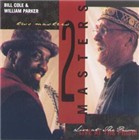
The nageswaram is a double reed used in South Indian music, its counterpart being the shehnai, which is used in North Indian music. Both musicians play the nageswaram on "Election Funeral Dance, one articulating in the stronger intonation of the South Indian style, varying the pitch and playing long flittering lines, the other using a deeper tone, in modulation that would sit well in any improvised circumstance, including the Indian elements which it loops into along the way. Their assimilation of the instrument is mesmerizing.
The shehnai finds its soulmate in the Indonesian flute on "Bird and Branch. The intuitive relationship that Cole and Parker have elevates this composition as well—in the interplay, the entwining of lines that snake in and then sidle against each other, and the call and response communication. "Angels in Golden Mud heralds a balmy air that wafts on the strings of the harp-like doson ngoni as Cole sets up the drone on the didgeridoo for the base. Parker brings in a natural fluency as he shifts tempo and emphasis using the range of the doson ngoni.
At the end of it all, this record serves as an illuminating example of the intuitive relationship that Cole and Parker share.
 FOLLOW Jerry D'Souza
and get notified whenever a new article published.
FOLLOW Jerry D'Souza
and get notified whenever a new article published.
From Bombay, India to Toronto and into the third dimension.
Track Listing
Angels in Golden Mud; Ojibwa Song; Waterfalls of the South Bronx; Bird and Branch; Election Funeral Dance; Ending Sequence and Sunset
Personnel
Bill Cole (didgeridoo (Australia), flute (Ghana), voice, sona (China), shenai (India), nagaswarm (India), hojok (Korea)), William Parker (bass, voice, doson ngoni (Mali), flute (Indonesia), nagaswarm (India), dunno (talking drum), whistle)
Album information
Title: Two Masters: Live at the Prism | Year Released: 2005 | Record Label: Boxholder Records
About Bill Cole & William Parker
Tags
PREVIOUS / NEXT


Become a Sustaining Member

Since 1995, All About Jazz has championed jazz as an art form and supported the musicians who create it. Over three decades, it has grown into one of the world's leading jazz resources, serving hundreds of thousands of readers, musicians, presenters and industry professionals each month.
Help Build the Future of All About Jazz
Your support helps us continue building All About Jazz for the next generation—expanding our editorial coverage, preserving jazz history, developing new community features and creating better ways to discover the music and the people behind it.
Become a sustaining member for as little as $20 per year and you'll immediately enjoy an ad-free experience along with access to subscriber features and future articles for a full year.
Together, we're not simply sustaining All About Jazz—we're building its future. Thank you for being part of the journey.