Home » Jazz Articles » Album Review » Teiku: Klang
Teiku: Klang
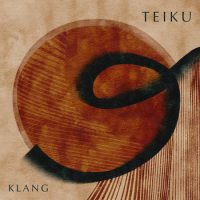
Five of the album's six tracks are settings of the exact same liturgical text—"Ki Lo Naeh"—each filtered through a different melody. Rather than feeling repetitive, the sequence unfolds as a compelling study in variation and the tenacity of a living tradition.
The album opens with the cheery "Ki Le Noeh (Krumholz Melody)." Harlow's piano enters with sparse, open voicings—implying the melody rather than imposing it—while Barahal holds time with a pulse that feels more ritualistic than strictly rhythmic. The Krumholz lineage surfaces as an austere, searching modal thread before Jason Stein's bass clarinet begins quietly destabilizing the mood, tugging the improvisation toward darker, unresolved terrain. Even so, Harlow launches a brisk line of attack during the bridge that touches on bop via cyclical passages, and his lengthy solo builds energy through hammering chord clusters.
On "Khasul Seydur Peysakh (Chasman Melody)," the energy shifts. The source material carries a more propulsive, ceremonial drive, and Stein leans into it with focused urgency, his lines cutting through the texture with near-vocal directness. Bassist Jaribu Shahid—whose decades with the Sun Ra Arkestra and Art Ensemble Of Chicago have cultivated extraordinary structural patience—anchors the bottom end while the group builds and releases tension with intuitive collective timing. Here, Harlow switches to the Fender Rhodes, deploying it as a colorful harmonic base that shades the surrounding instruments before the track erupts into a frenetic improvisational free-for-all.
The closer, "Odir Bimlikhe (Lunski Melody)," is an expansive statement, drawn from a community whose traces now survive mostly in old manuscripts. The quartet locks into a passage of sustained intensity as Stein's haunting lines radiate spiritual weight, eventually raising the ceiling through a scorching breakdown before the opening melody returns to seal things off.
Klang is liberation music in the truest sense—made by serious musicians with real skin in the game.
 FOLLOW Glenn Astarita
and get notified whenever a new article published.
FOLLOW Glenn Astarita
and get notified whenever a new article published.
Glenn is a senior writer and editor at All About Jazz.
Track Listing
Ki Le Noeh (Krumholz melody); Ki Lo Naeh (Fendrick melody); Khasul Seydur Peysakh (Chasman melody); Ki Le Noeh (Shlita melody); Ki Le Noeh (Gerster melody); Odir Bimlikhe (Lunski melody).
Personnel
Teiku
band / ensemble / orchestra
Josh Harlow
piano
Jason Stein
clarinet, bass
Jaribu Shahid
bass, acousticJonathan Barahal
percussionAdditional Instrumentation
Josh Harlow: Piano, Synth, Fender Rhodes, Percussion, Composer, Arranger; Jonathan Barahal: Vibraphone, Electronics, Drums, Composer, Arranger; Jason Stein: Percussion; Jaribu Shahid: Bass Ukulele, Percussion.
Album information
Title: Klang | Year Released: 2026 | Record Label: Ginkgo Records
About Teiku
Tags
PREVIOUS / NEXT

Become a Sustaining Member

Since 1995, All About Jazz has championed jazz as an art form and supported the musicians who create it. Over three decades, it has grown into one of the world's leading jazz resources, serving hundreds of thousands of readers, musicians, presenters and industry professionals each month.
Help Build the Future of All About Jazz
Your support helps us continue building All About Jazz for the next generation—expanding our editorial coverage, preserving jazz history, developing new community features and creating better ways to discover the music and the people behind it.
Become a sustaining member for as little as $20 per year and you'll immediately enjoy an ad-free experience along with access to subscriber features and future articles for a full year.
Together, we're not simply sustaining All About Jazz—we're building its future. Thank you for being part of the journey.