Home » Search Center » Results: Tony Williams
Results for "Tony Williams"
Archival Finds: Dave Brubeck, Bill Evans and Chet Baker

by Jerome Wilson
Here are three releases of newly discovered material by iconic jazz musicians from the '50s and '60s. Two fall in line with the leaders' established legacies while the third presents its subject in surprising company. The Dave Brubeck Quartet Time OutTakes Brubeck Editions 2020 This CD consists ...
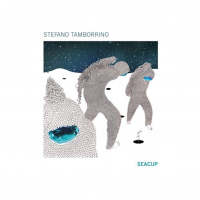
Stefano Tamborrino: Seacup
by Giuseppe Segala
Seacup nasce dalla profonda e sincera esigenza, da parte del batterista fiorentino Stefano Tamborrino, di allargare la propria tavolozza, i propri orizzonti espressivi e artistici, mettendo in scena un organico con quattro archi. Il contrabbasso, invece del secondo violino di un quartetto d'archi classico, compie la somma. Dal lavoro scaturisce uno Stefano Tamborrino inedito e lontano ...
Quintet Session
By Chet Baker
Label: Dot Time Records
Released: 2020
Track listing: Mr. Biko; Balzwaltz; The Latin One; Rue Gregoire Du Tour; Here’s That Rainy Day; Toku Do; Rue Gregoire Du Tour (rehearsal); Balzwaltz (alternate take).
Allison Miller: Driving the Balance

by John Pietaro
Allison Miller sits at the vintage Camco drumkit in her Brooklyn home, playing post-bop over a rolling samba. Within the shimmer of an age-darkened cymbal, she switches from sticks to brushes, filling the room with the shush of summer rain, then a sudden hailstorm as her arms, aerial, traverse snare, tom-toms and cymbals in a blurring, ...
Jazz Musician of the Day: Tony Williams

All About Jazz is celebrating Tony Williams' birthday today! Born in Chicago and growing up in Boston, Williams began studies with master drummer Alan Dawson at an early age and began playing professionally at the age of 13 with saxophonist Sam Rivers. Jackie McLean hired Williams at 16. At 17 Williams found considerable fame with Miles ...
Friedrich Kunzmann's Best Releases Of 2020

by Friedrich Kunzmann
Coronavirus, lockdown, election recount, fake news, inspector Javert, Hans Gruber and Lord Voldemort. So, now that most of the uncomfortable topics are dealt with, let's get to the joyful part of 2020, namely the music. As is increasingly the case during the course of the 21st century, the year was filled to the brim with it. ...
Chet Baker / Wolfgang Lackerschmid: Quintet Session
by Chris May
Quintet Session is the second of two albums the trumpeter Chet Baker recorded in Stuttgart, Germany with the vibraphonist Wolfgang Lackerschmid in 1979. It was originally released as Chet Baker / Wolfgang Lackerschmid (Sandra Music, 1980). The combination worked well on the first session, which produced the lovely Ballads For Two (Sandra Music, 1979), and almost ...
Joe Farnsworth: Friends In High Places

by R.J. DeLuke
Joe Farnsworth is one of the top jazz drummers working today, with a resume that includes some of the absolute greats. His muscular swing and precise timekeeping have been attractive to employers like Wynton Marsalis, Diana Krall, McCoy Tyner, George Coleman, Pharoah Sanders, Eric Alexander, Benny Golson and many more. He likes to say ...
Tim Berne: The Deceptive 4—Live

by Mark Corroto
The difference between disc one and disc two of Tim Berne's Snakeoil release The Deceptive 4, two live recordings made eight years apart, might be the same difference between Miles Davis' first and second great quintets. Where Davis' The Legendary Prestige Quintet Sessions (Prestige, 2006) with John Coltrane from 1955-56 are stellar, they lack the complex ...
Michael Cuscuna: In The Vault Playing God

by AAJ Staff
From the 1995-2003 archive: This article first appeared at All About Jazz in December 2000. Michael Cuscuna is one of the most important figures in the jazz reissue field today. He has been responsible for hundreds of releases for many companies, and he was fortunate to meet and befriend Alfred Lion during the final ...
Album Showcase





Trending
 Interview
Lou Marini: A Solo Career Starting At The Age Of 80
 History of Jazz
John Coltrane in Detroit: A Brief History
 Live Review
The Tension Is Where the Music Lives: Miles Davis at 100,...
 Live Review
Detroit Jazz Festival 2026: A Gathering in a Great Jazz City
 Radio & Podcasts
Sullivan Fortner, Jim Rotondi & Dena DeRose, Ardeshir,...
 Reanimating Conversations Past
Charlie Haden: Anatomy of a Jazz Classic
 Profile
The Discreet Charm of Tete Montoliu
VOTE!