Home » Search Center » Results: Peter Brotzmann
Results for "Peter Brotzmann"
Machine Gun

In May, 1968, the German saxophonist Peter Brötzmann brought together seven emerging European experimental musicians for what is now considered to be one of the most critical recording sessions in the history of improvised music. The “Machine Gun Sessions” featured several improvisers whose soon-to-be-celebrated careers were just beginning: the British saxophonist Evan Parker, the Dutch reedsman ...
Freeform in the U.K.

by Sammy Stein
Freeform and improvised jazz is having a hard time at the moment. Venues have to make tough choices between pleasing what is a smaller cohort of customers and bringing new, maybe transient, but paying clients who are attracted by big names, standards and music they know. Customers have less cash in these difficult economic times, so ...
Louis Sclavis: Maps of the Mind
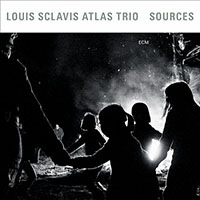
by Ian Patterson
"My music? I know what it is, and I don't know what it is. It's a paradox." Now entering his fifth decade as a recording artist, multi-reedist/composer Louis Sclavis may not have a clear handle on the music he makes, but he has absorbed the lessons of all the music he has turned his hand to, ...
Pori Jazz Festival: Pori, Finland, July 19-21, 2012

by Anthony Shaw
Pori Jazz Festival uLTRA mUSIC nIGHTSPori, FinlandJuly 19-21, 2012 On a scale of 1-10, summertime activity in the capital of this northerly European nation barely registers a “1," whilst in the normally sleepy western coastal town of Pori it is topping out for the penultimate week of July. It's the ...
Wolfram Trio: Wolfram

by Eyal Hareuveni
Wolfram Trio is a new Norwegian outfit that adds its own version to the existing European mix of acoustic free jazz and free improvisation. The trio claims its roots in the pioneering work of saxophonists Peter Brötzmann and Evan Parker, as well as bassist Barry Guy--saxophonist Albert Ayler, even--but does not demonstrate any overt reverence to ...
Free Form Evolution
by Sammy Stein
Since free form tentatively emerged during the 1940s and '50s it has evolved with both the times and changing audiences. Now, free form elements cross genre boundaries and many musicians use elements from free form in their works. Because it is music which draws on the spiritual feelings of the players, social dramas and the atmosphere ...
Yes. But Is It Jazz?
by Mark Corroto
Jazz comes at you from so many directions these days, that to rely on just one definition, is not enough. Sure, it can be a blues-based rhythmic music but it is also minimalist free improvisation. Pigeonholing something, such as jazz, always separates and eventually segregates supporters, creating conflicts and in the end lessening the whole.
Why Do I Write These Articles?

by Mort Weiss
The following will be an exercise in candor. I like to see my name in print on a Major--the major jazz web site. And I hope it will further better my record sales. I like to think that folks/people are finding things of interest in my remembrances that I've accumulated within my persona over a long ...
Rodrigo Amado: Burning Live At Jazz AO Centro
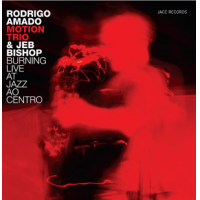
by Mark Corroto
Rodrigo Amado's improvising Motion Trio might be better described as The Confluence Trio or Conflux, because its sound is a meeting of rivers. Like the three rivers of Pittsburgh, where the Monongahela and Allegheny Rivers join to create the Ohio River, or Sangam, India where the Ganges, Yamuna and Saraswati meet, the music of the Motion ...
Ballister Trio: Mechanisms
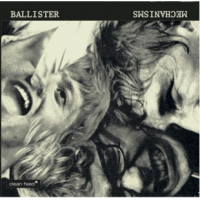
by Mark Corroto
Stop me if you've heard this one before. A free improvising trio walks into a club and begins a live performance by ripping the ears off its listeners. No joke here, just that flexing muscular music isn't for the faint-at-heart. And certainly the trio of saxophonist Dave Rempis, cellist Fred Lonberg-Holm and drummer Paal Nilssen-Love is ...
Album Showcase



Trending
 Jazz Raconteurs
Julius Hemphill: Marty Ehrlich and Tim Berne Remember a...
 In Tribute To...
John Coltrane At 100: A Global Perspective
 History of Jazz
John Coltrane in Detroit: A Brief History
 Live Review
Detroit Jazz Festival 2026: A Gathering in a Great Jazz City
 Profile
Sequoia Snyder: Growing in the Light of the Masters
 Interview
Jasur Khalilov: From Falak to Fusion
 Profile
The Discreet Charm of Tete Montoliu
VOTE!