Home » Search Center » Results: Braithwaite & Katz Communications
Results for "Braithwaite & Katz Communications"
Ehud Asherie: Shuffle Along

by Dan McClenaghan
Israeli-born pianist Ehud Asherie delves deep into a quintessentially American Music on Shuffle Along. The score for the 1921 Broadway musical--tunes that were crafted before the beginning of a true “Popular" recording industry--was groundbreaking. Written by Eubie Blake and Noble Sissle, Shuffle Along, with an all-black cast, was the first Broadway production that treated African Americans ...
The Jazz Composers’ Workshop Orchestra Performs New Works By NEC Jazz Composition Students - Tuesday, April 26 In Jordan Hall

The Jazz Composers’ Workshop Orchestra presents a concert featuring new works by NEC jazz composition students on Tuesday, April 26. Coached by renowned pianist/composer and NEC jazz faculty member Frank Carlberg, the ensemble gives its composers the opportunity to learn how to rehearse and conduct a band, as well as have their works heard. The concert ...
New England Conservatory Presents The NEC Gospel Ensemble And The NEC Jazz Composers Ensemble In Concert On Thursday, April 7 At 8:00 P.M.
New England Conservatory showcases two of its exceptional student ensembles–The NEC Gospel Ensemble and The NEC Jazz Composers Ensemble–in concert on Thursday, April 7 at 8 p.m. at NEC’s Brown Hall, 290 Huntington Avenue, Boston. The concert is free and open to the public. For more information, go to: necmusic.edu or call 617-585-1122. The NEC Gospel ...
Noah Preminger: Pivot: Live At The 55 Bar

by Budd Kopman
The first thing that should be said about tenor saxophonist Noah Preminger's Pivot: Live At The 55 Bar is the extremely exciting you-are-there feeling of the recording. Recording engineer Jimmy Katz has managed to capture the sound and visceral feel of a jazz quartet in full cry with no net. Many jazz listeners can remember a ...
Discover The Musical Innovators Of Tomorrow With CI Salon Nights A Free Series Of Concerts At New England Conservatory, April 5 – 19
Discover the best improvisers of tomorrow with CI Salon Nights, ten one-hour concerts, Tuesday, April 5, Monday, April 11 and Monday-Tuesday April 18-19, 2016 at New England Conservatory in Boston. These concerts, featuring students from NEC’s Contemporary Improvisation department, take place at 7, 8 and 9 p.m. and are free and open to the public. Each ...
Jon Lundbom & Big Five Chord: Bring Their ‘A’ Game

by Karl Ackermann
Bring Their 'A' Game is the second of guitarist Jon Lundbom's Big Five Chord, four-part series of 2016 EPs which will be offered as individual discs and as a box set. Each of the releases, on Moppa Elliott's Hot Cup Records label, runs approximately one half-hour and like the preceding entry, Make Magic Happen, the three ...
Discover The Jazz Innovators Of Tomorrow With 'in The Mix' A Free Series Of 27 Concerts Showcasing New England Conservatory's Exceptional Jazz Ensembles Monday, April 11 – Wednesday, May 4
Discover the jazz innovators of tomorrow with In the Mix, 26 free 1-hour concerts, Monday, April 11 – Wednesday, May 4, 2016 at New England Conservatory in Boston. These concerts, featuring NEC’s jazz ensembles, take place at 7, 8 and 9 p.m. each evening and are free and open to the public. Go to necmusic.edu or ...
Danny Green Trio: Altered Narratives

by Mark Corroto
The old adage, that you know you're a jazz musician when you realize that there are actually two 9 o'clocks in a day, has been replaced with the revelation that jazz is a musical omnivore. It can consume every style of music from classical to pop as sustenance for a performance. Pianist Danny Green's proves that ...
Jon Lundbom & Big Five Chord: Bring Their 'A' Game

by Dan McClenaghan
Bring Their 'A'Game is an EP release, download only (for now), from the fertile musical imagination of guitarist Jon Lundbom & Big Five Chord. It is the second in a four part set--following Make Magic Happen. Lundbom's plan is to release four of these download EPs in 2016, then collect them into a four disc box ...
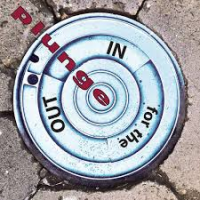
Plunge: In For The Out
by Dave Wayne
Trombonist Mark McGrain is one of those guys who follows his own muse. Though he's not particularly prolific, each of his albums as a leader feature some truly profound music-making. In for the Out is no exception. On his fourth album as a leader, McGrain has re-invented himself, playing with an expanded New Orleans-based group and ...
Album Showcase





Trending
 Interview
Lou Marini: A Solo Career Starting At The Age Of 80
 Jazz Raconteurs
Julius Hemphill: Marty Ehrlich and Tim Berne Remember a...
 History of Jazz
John Coltrane in Detroit: A Brief History
 Live Review
Detroit Jazz Festival 2026: A Gathering in a Great Jazz City
 Live Review
The Tension Is Where the Music Lives: Miles Davis at 100,...
 Radio & Podcasts
Sullivan Fortner, Jim Rotondi & Dena DeRose, Ardeshir,...
 Reanimating Conversations Past
Charlie Haden: Anatomy of a Jazz Classic
VOTE!