Home » Jazz Articles » Album Review » Julian Lage: Scenes From Above
Julian Lage: Scenes From Above

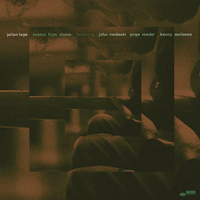
Produced by Joe Henry, the album resists any attempt to remake Speak to Me. Instead, Lage sought to create an egalitarian session, explicitly avoiding a leader-centric approach. As he has suggested, this was not about "I'm the leader—let's build something around me," but rather about fostering a genuinely collaborative musical environment.
Scenes from Above unfolds with an almost contemplative character. Lage's formidable technique is never in doubt, yet his intent is not to dazzle but to integrate, to become part of a shared musical language. The album is best judged on those terms: as a document of collective music-making among musicians who have worked together in various configurations over many years and clearly relish that interaction.
All compositions are by Lage, conceived as frameworks for conversation once the group convened. The project is dedicated to his father, Mario Lage, with whom he shares a remarkable musical bond, having learned the guitar together.
The core trio is expanded here with organist John Medeski and drummer Kenny Wollesen, alongside long-time collaborator Jorge Roeder on bass. On six tracks, the ensemble broadens further with the addition of pianist Patrick Warren, who contributes bells, dulcitone, percussion, and string textures. Wollesen's role is especially significant: his rhythmic conception shapes the album's flow, from the propulsive undercurrent of "Talking Drum" to the more ephemeral shimmer of "Solid Air," both contributing to the music's gradual, organic evolution.
Roeder, a presence on numerous Lage recordings since 2009, remains characteristically self-effacing. He navigates harmonic movement with fluency, maintaining openness while providing a warm, resonant counterbalance to some of Lage's more incisive tonal edges.
"Opal" possesses a striking elegiac beauty, its atmosphere deepened by organ sonorities and bell-like textures. The clarity of Lage's guitar line lends the piece a luminous quality, while its introduction and coda subtly frame its emotional arc.
Improvisation comes more fully to the fore on "Red Elm," which leans toward a soul-jazz sensibility. Roeder's bass initiates the discourse before guitar, drums, and organ enter, establishing a fluid, exploratory momentum. By contrast, "Talking Drum" is the album's most assertive statement, its driving pulse and Medeski's animated contributions giving it a comparatively direct, even accessible character.
"Havens" draws on hand percussion in a manner reminiscent of Richie Havens, with Medeski shaping the rhythmic fabric as Lage propels the piece forward on acoustic guitar. "Night Shade," the album's longest track, unfolds with a gospel-inflected introduction from Medeski that ushers Lage into a blues-oriented space, building gradually toward a measured yet emphatic conclusion.
Ultimately, while the expected hallmarks of Lage's playing remain intact, they are intentionally restrained. The album's aesthetic is one of discipline and collective sensitivity rather than individual display. It remains to be seen whether this carefully calibrated studio intimacy will translate into the same atmosphere in live performance.
Track Listing
Opal; Red Elm; Talking Drum; Havens; Night Shade; Solid Air; Oscala; Storyville; Something
Personnel

Julian Lage
guitar, electric
John Medeski
organ, Hammond B3
Jorge Roeder
bass, acoustic
Kenny Wollesen
drums
Patrick Warren
pianoAlbum information
Title: Scenes From Above | Year Released: 2026 | Record Label: Blue Note Records
About Julian Lage
Tags
PREVIOUS / NEXT


Julian Lage Concerts
Become a Sustaining Member

Since 1995, All About Jazz has championed jazz as an art form and supported the musicians who create it. Over three decades, it has grown into one of the world's leading jazz resources, serving hundreds of thousands of readers, musicians, presenters and industry professionals each month.
Help Build the Future of All About Jazz
Your support helps us continue building All About Jazz for the next generation—expanding our editorial coverage, preserving jazz history, developing new community features and creating better ways to discover the music and the people behind it.
Become a sustaining member for as little as $20 per year and you'll immediately enjoy an ad-free experience along with access to subscriber features and future articles for a full year.
Together, we're not simply sustaining All About Jazz—we're building its future. Thank you for being part of the journey.