Home » Jazz News » Award / Grant
How Can Album Notes Compete For A Grammy Nomination?
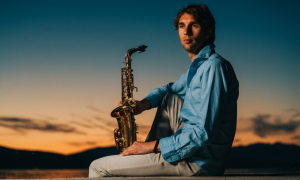
Courtesy Marina Sino

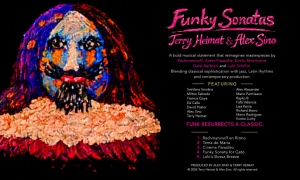
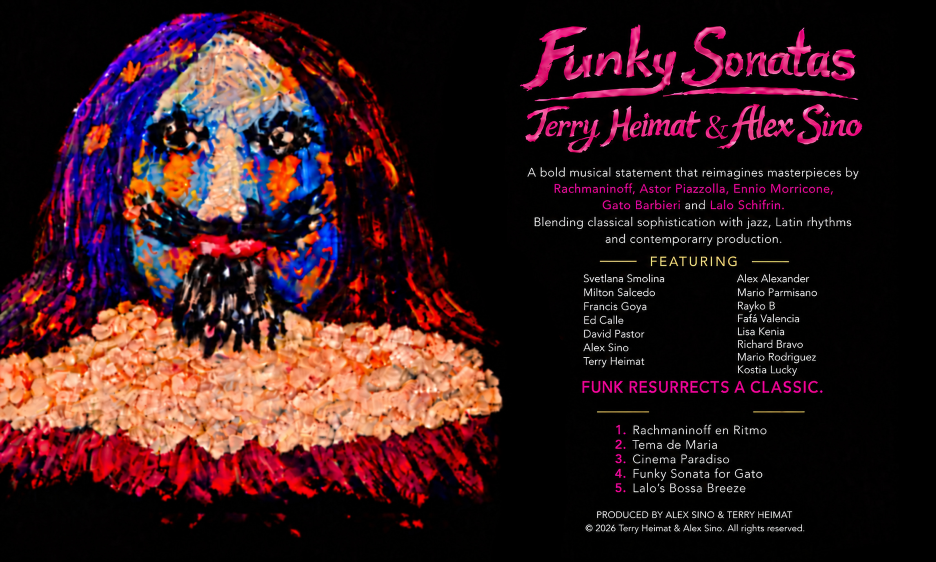
The Story Behind Funky Sonatas. The music ends. Its story doesn't.
—Alex Sino, GRAMMY Winner
Five compositions, five histories—and a 16-page booklet that argues that the story surrounding music can be part of the work itself.
Most people think of a GRAMMY as an award for something they can hear: a performance, a song, an album, an arrangement.
But there is a GRAMMY category in which the principal work being considered isn't heard at all.
It is read.
Best Album Notes recognizes the writer of liner notes accompanying a recording. The Recording Academy describes the category in terms that make clear this is not an award for attractive packaging or an unusually long set of credits. The writing itself is considered, including its literary quality, originality, communication, and relevant exposition of the recording.
For the 2027 GRAMMY Awards, the 16-page booklet accompanying Alex Sino and Terry Heimat Funky Sonatas has been submitted for consideration in Album Notes.
So what exactly is there to write about?
Quite a lot.
The booklet doesn't attempt to manufacture a convenient genre connecting them.
Instead, it asks why these composers can inhabit the same album.
Its answer appears near the beginning: the sonata can “breathe, syncopate, and groove without losing its backbone.” Classical listeners can recognize the architecture while jazz and global-music listeners encounter rhythm, improvisation, and another kind of musical freedom.
That premise becomes the narrative structure of the notes.
Instead, it creates a scene.
Two grand pianos face one another “like fencers.”
At one is classical pianist Svetlana Smolina, bringing rubato, long melodic arcs and the Russian Romantic tradition. At the other is Colombian-American pianist, composer and arranger Milton Salcedo, approaching the music through clave, montuno, tumbao and Latin jazz.
The booklet reduces the musical confrontation to two phrases: Clave vs. rubato. Rhythmic precision vs. expressive elasticity.
And then makes an important distinction: this isn't intended as “fusion.” Each pianist is allowed to defend an individual musical identity while responding to the other.
Suddenly, the liner notes aren't telling the listener what the track sounds like.
They are proposing how to listen to it.
Drummer Alex Alexander recorded the track at Sammy Merendino's Harlem Parlour Studios using a Black Beauty snare which, according to the booklet, had also been recorded on albums by Pat Benatar and Bob Dylan.
It's a tiny detail.
It is also exactly the sort of detail that can vanish from musical history unless somebody writes it down.
That is one of the functions of album notes.
“Tema de María” draws inspiration from Astor Piazzolla's María de Buenos Aires, the 1968 tango operita in which tango, theater, classical music and jazz already inhabited the same unusual world.
The contemporary recording brings together another improbable group: Richard Bravo and Jerry Bravo, trumpeter David Pastor, Argentine pianist Mario Parmisano and guitarist Francis Goya, with an arrangement by Andrei Pushkarev.
A personnel list could tell us those names.
The album notes attempt something different: explaining why putting those musicians together changes the musical story.
What do you do with Morricone?
“Cinema Paradiso” creates another problem.
What can musicians possibly add to a melody that millions of listeners already know?
The booklet's answer is unusually restrained.
Don't try to improve it.
The notes compare the process to restoring a fresco: preserve Morricone's “emotional pigment” while allowing different contours to become visible.
Milton Salcedo introduces harmonic movement; Terry Heimat provides the orchestral dimension; Francis Goya's guitar adds what the notes describe as human warmth.
The resulting interpretation is presented not as a replacement for Morricone but as a conversation between European musical lineage, Latin American rhythm and improvisation.
There is history: Argentina, jazz, Last Tango in Paris, the unmistakable tenor sound.
But then the notes reveal a human connection.
Mario Rodriguez, who performs on the Funky Sonatas homage, had been Barbieri's longtime bassist and musical director. The booklet describes the experience of playing this music again as profoundly emotional for him.
Without the notes, Rodriguez is another name in the personnel.
After reading them, his bass carries a different history.
Lalo Schifrin's 1966 instrumental “Bossa Antique” becomes the starting point for “Bossa Breeze,” after Sino writes lyrics to music composed six decades earlier.
The resulting recording crosses another collection of borders, bringing together Georgian-born singer Liza Kenia, Cuban-born rapper and singer Rayko B. Batista, Ukrainian-born violinist Kostia Lucky and Colombian pianist Milton Salcedo.
Here the notes move beyond recording history into memory and inheritance: how music survives migration, changes language, crosses generations and acquires meanings its composer could not necessarily have predicted.
Near the end comes a sentence that could serve as the thesis for the entire booklet:
“Tradition is not a museum piece but a living rhythm.”
So why can album notes compete for a GRAMMY nomination?
Because Album Notes is not a consolation category for words attached to music.
The writing has its own job.
A recording can tell us what the musicians played.
Credits can tell us who played it.
But good album notes can tell us why Mario Rodriguez's presence matters; why two pianists approach the same Rachmaninoff from opposite rhythmic traditions; why an old snare drum has a story; why Morricone should be transformed carefully rather than overwhelmed; and why a Schifrin melody written in 1966 can acquire new words sixty years later.
That is the case Funky Sonatas makes for itself in Album Notes consideration.
Five tracks occupy thirty-one minutes.
The stories behind those thirty-one minutes required sixteen pages.
And perhaps that is the simplest answer to the question in the headline: The music ends. Its story doesn't.
Most people think of a GRAMMY as an award for something they can hear: a performance, a song, an album, an arrangement.
But there is a GRAMMY category in which the principal work being considered isn't heard at all.
It is read.
Best Album Notes recognizes the writer of liner notes accompanying a recording. The Recording Academy describes the category in terms that make clear this is not an award for attractive packaging or an unusually long set of credits. The writing itself is considered, including its literary quality, originality, communication, and relevant exposition of the recording.
For the 2027 GRAMMY Awards, the 16-page booklet accompanying Alex Sino and Terry Heimat Funky Sonatas has been submitted for consideration in Album Notes.
So what exactly is there to write about?
Quite a lot.
Five tracks, but five different stories
Funky Sonatas contains only five tracks, but the musical distance between their origins is enormous: Sergei Rachmaninoff, Astor Piazzolla, Ennio Morricone, Gato Barbieri and Lalo Schifrin.The booklet doesn't attempt to manufacture a convenient genre connecting them.
Instead, it asks why these composers can inhabit the same album.
Its answer appears near the beginning: the sonata can “breathe, syncopate, and groove without losing its backbone.” Classical listeners can recognize the architecture while jazz and global-music listeners encounter rhythm, improvisation, and another kind of musical freedom.
That premise becomes the narrative structure of the notes.
Rachmaninoff meets clave
The booklet's discussion of “Rachmaninoff en Ritmo” doesn't begin with a conventional biography of Rachmaninoff.Instead, it creates a scene.
Two grand pianos face one another “like fencers.”
At one is classical pianist Svetlana Smolina, bringing rubato, long melodic arcs and the Russian Romantic tradition. At the other is Colombian-American pianist, composer and arranger Milton Salcedo, approaching the music through clave, montuno, tumbao and Latin jazz.
The booklet reduces the musical confrontation to two phrases: Clave vs. rubato. Rhythmic precision vs. expressive elasticity.
And then makes an important distinction: this isn't intended as “fusion.” Each pianist is allowed to defend an individual musical identity while responding to the other.
Suddenly, the liner notes aren't telling the listener what the track sounds like.
They are proposing how to listen to it.
Then there is a snare drum
The same chapter abruptly shifts from musical theory to recording-room archaeology.Drummer Alex Alexander recorded the track at Sammy Merendino's Harlem Parlour Studios using a Black Beauty snare which, according to the booklet, had also been recorded on albums by Pat Benatar and Bob Dylan.
It's a tiny detail.
It is also exactly the sort of detail that can vanish from musical history unless somebody writes it down.
That is one of the functions of album notes.
Piazzolla: following María
The second track leads backward to Buenos Aires.“Tema de María” draws inspiration from Astor Piazzolla's María de Buenos Aires, the 1968 tango operita in which tango, theater, classical music and jazz already inhabited the same unusual world.
The contemporary recording brings together another improbable group: Richard Bravo and Jerry Bravo, trumpeter David Pastor, Argentine pianist Mario Parmisano and guitarist Francis Goya, with an arrangement by Andrei Pushkarev.
A personnel list could tell us those names.
The album notes attempt something different: explaining why putting those musicians together changes the musical story.
What do you do with Morricone?
“Cinema Paradiso” creates another problem.
What can musicians possibly add to a melody that millions of listeners already know?
The booklet's answer is unusually restrained.
Don't try to improve it.
The notes compare the process to restoring a fresco: preserve Morricone's “emotional pigment” while allowing different contours to become visible.
Milton Salcedo introduces harmonic movement; Terry Heimat provides the orchestral dimension; Francis Goya's guitar adds what the notes describe as human warmth.
The resulting interpretation is presented not as a replacement for Morricone but as a conversation between European musical lineage, Latin American rhythm and improvisation.
Gato Barbieri—and somebody who was there
The chapter devoted to Gato Barbieri is different again.There is history: Argentina, jazz, Last Tango in Paris, the unmistakable tenor sound.
But then the notes reveal a human connection.
Mario Rodriguez, who performs on the Funky Sonatas homage, had been Barbieri's longtime bassist and musical director. The booklet describes the experience of playing this music again as profoundly emotional for him.
Without the notes, Rodriguez is another name in the personnel.
After reading them, his bass carries a different history.
And finally, Lalo Schifrin
The final chapter may be the booklet's most personal.Lalo Schifrin's 1966 instrumental “Bossa Antique” becomes the starting point for “Bossa Breeze,” after Sino writes lyrics to music composed six decades earlier.
The resulting recording crosses another collection of borders, bringing together Georgian-born singer Liza Kenia, Cuban-born rapper and singer Rayko B. Batista, Ukrainian-born violinist Kostia Lucky and Colombian pianist Milton Salcedo.
Here the notes move beyond recording history into memory and inheritance: how music survives migration, changes language, crosses generations and acquires meanings its composer could not necessarily have predicted.
Near the end comes a sentence that could serve as the thesis for the entire booklet:
“Tradition is not a museum piece but a living rhythm.”
So why can album notes compete for a GRAMMY nomination?
Because Album Notes is not a consolation category for words attached to music.
The writing has its own job.
A recording can tell us what the musicians played.
Credits can tell us who played it.
But good album notes can tell us why Mario Rodriguez's presence matters; why two pianists approach the same Rachmaninoff from opposite rhythmic traditions; why an old snare drum has a story; why Morricone should be transformed carefully rather than overwhelmed; and why a Schifrin melody written in 1966 can acquire new words sixty years later.
That is the case Funky Sonatas makes for itself in Album Notes consideration.
Five tracks occupy thirty-one minutes.
The stories behind those thirty-one minutes required sixteen pages.
And perhaps that is the simplest answer to the question in the headline: The music ends. Its story doesn't.
For more information contact Two for the Show Media.
About Alex Sino

Tags
Award / Grant
Two for the Show Media
Dr. Alex Sino
United States
New York
Alex Sino
Grammy
Terry Heimat
Funky Sonatas
Rachmaninoff
Astor Piazzolla
Ennio Morricone
Gato Barbieri
Lalo Schifrin
Milton Salcedo
David Pastor
Francis Goya