Home » Jazz Articles » Album Review » Quinsin Nachoff: Magic Numbers
Quinsin Nachoff: Magic Numbers

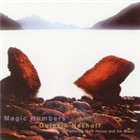
Toronto-based saxophonist Quinsin Nachoff is no stranger to establishing common ground between seemingly unrelated musical styles, with earlier albums like Intersection combining an improvisational piano/sax duo and string trio to create something not exactly jazz or classical, but a bit of both. Magic Numbers may be his most successful border-busting album yet, seamlessly blending string quartet with a sax-led trio featuring bassist Mark Helias and drummer Jim Black. Much of the music was written before Nachoff had met Black, but it feels tailor-made for Black's aversion to stylistic pigeonholing. Strong performances abound. Nachoff's conception is what clearly gives the album weight, but Black's contribution almost single-handedly elevates Magic Numbers into one of the most innovative chamber jazz recordings in recent years.
Black's raucous and rock-ish playing—he's as likely to lay down a solid backbeat as delicate shadings—sometimes feels at odds with its lush surroundings. "There & Back features Nachoff's lyrical soprano and the string quartet providing a firm harmonic foundation, but Black's funk-like pulse creates a strange confluence that somehow works; Helias provides the necessary glue to tie it all together.
And while the saxophone trio gets the most freedom, violinist Nathalie Bonin—a versatile player heard most recently on saxophonist Ted Nash's La Espada De La Noche (Palmetto, 2005)—proves once again that a younger generation of classically-trained players is often just as comfortable in extemporaneous settings. "To Solar Piazza opens with a passionate solo from Bonin that leads into a softer pseudo-tango referencing Astor Piazolla's integration of 20th Century classical constructs into the folks music of his own culture.
Nachoff's writing tends to complex through-composition, often linking surprising dichotomies. "How Postmodern of Me brings together passages that suggest everything from Bartok's String Quartets, with rich counterpoint between the string quartet, Nachoff, and Helias, to brief moments of sheer chaos and firmer rhythmic pulses.
What's most remarkable about Magic Numbers is how cohesively Nachoff's often multiple personality-like writing ultimately plays out. It's also surprising how much beauty can be found, despite his often opaque melodies. Nachoff's detailed arrangements manage to breathe in a jazz-centric way, despite there being few direct reference points other than the trio's (and Bonin's) clearly sophisticated improvisational prowess.
Aside from having strong appeal for jazz fans with more adventurous leanings, Magic Numbers could also serve as a compelling entry point for fans of contemporary classical music looking for a way into jazz's more open-ended musical aesthetic.
Track Listing
There & Back; To Solar Piazza; How Postmodern of Me; October; Branches; Circles & Waves; Whorls; Sun-Day.
Personnel

Quinsin Nachoff
saxophoneQuinsin Nachoff: tenor and soprano saxophones; Mark Helias: bass; Jim Black: drums; Nathalie Bonin: violin; No
Album information
Title: Magic Numbers | Year Released: 2006 | Record Label: Songlines Recordings
About Quinsin Nachoff
Tags
PREVIOUS / NEXT


Become a Sustaining Member

Since 1995, All About Jazz has championed jazz as an art form and supported the musicians who create it. Over three decades, it has grown into one of the world's leading jazz resources, serving hundreds of thousands of readers, musicians, presenters and industry professionals each month.
Help Build the Future of All About Jazz
Your support helps us continue building All About Jazz for the next generation—expanding our editorial coverage, preserving jazz history, developing new community features and creating better ways to discover the music and the people behind it.
Become a sustaining member for as little as $20 per year and you'll immediately enjoy an ad-free experience along with access to subscriber features and future articles for a full year.
Together, we're not simply sustaining All About Jazz—we're building its future. Thank you for being part of the journey.