Home » Jazz Articles » Building a Jazz Library » Frank Sinatra: An Iconic Voice in American Music
Frank Sinatra: An Iconic Voice in American Music

Frank Sinatra released hit albums for half a century. His career began to take off when he was singing in swing bands led by Harry James and Tommy Dorsey; near its end, he recorded duets with Luther Vandross and with Bono. Fans who consider Sinatra a pop singer point mainly to his repertoire; those who consider him a jazz singer point mainly to the phrasing and timing of his delivery. In his prime, Sinatra dominated the pop musical landscape in a way that very few artists ever do—not just by skilled technique but by force of personality and will.
Sinatra endured all the changes in popular music from the mid-1940s through the early '90s, from the end of the big band era, into and then past the rock and roll age, into the age of hip-hop and digital sampling. He worked with the best bandleaders, musicians and arrangers, including Count Basie, Nelson Riddle, Jobim, Billy May, and Claus Ogerman. He drew mainly from the classic American songbook of Porter, Gershwin, Berlin, and others. To borrow an expression from another time, he was as nasty as he wanna be. He was the Chairman of the Board. When he took that stage, he took it.
In the 1950s and '60s, there erupted into the world's consciousness a series of celebrities so unique and identifiable, from several different public arenas, that they were known by only one name. It was as if those were names were mythical and could not possibly be mistaken for anyone else. Elvis. Martin and Malcolm. Marilyn. John Paul George and Ringo. Ali. And Sinatra.
Frank Sinatra released hit albums for half a century. His career began to take off when he was singing in swing bands led by Harry James and Tommy Dorsey; near its end, he recorded duets with Luther Vandross and with Bono. Fans who consider Sinatra a pop singer point mainly to his repertoire; those who consider him a jazz singer point mainly to the phrasing and timing of his delivery. In his prime, Sinatra dominated the pop musical landscape in a way that very few artists ever do—not just by skilled technique but by force of personality and will.
Sinatra endured all the changes in popular music from the mid-1940s through the early '90s, from the end of the big band era, into and then past the rock and roll age, into the age of hip-hop and digital sampling. He worked with the best bandleaders, musicians and arrangers, including Count Basie, Nelson Riddle, Jobim, Billy May, and Claus Ogerman. He drew mainly from the classic American songbook of Porter, Gershwin, Berlin, and others. To borrow an expression from another time, he was as nasty as he wanna be. He was the Chairman of the Board. When he took that stage, he took it.

Tommy Dorsey & Frank Sinatra
The Fabulous Frank Sinatra and Tommy Dorsey
Representative of his big band roots before he stepped out solo, alongside an instrumentalist who greatly influenced his sense of swing.

Frank Sinatra
In The Wee Small Hours
An early glimpse: A small band, a collection of ballads arranged by Nelson Riddle, and vocal weariness so profound it magically melts into strength.

Frank Sinatra
Songs for Swingin' Lovers
More classics swaddled in Nelson Riddle, rockin' through "I've Got You Under My Skin" and more favorites. Generally considered Frank's best swing set.

Frank Sinatra
Only The Lonely
Papa John DeFrancesco: "I don't think there's a bad tune on there. Nelson Riddle, man, is just ridiculous." One of the best broken-heart albums ever.

Frank Sinatra
With The Red Norvo Quintet: Live in Australia 1959
The great white whale of Sinatra jazz: Norvo & crew enthusiastically reshape the classic pop canon, allowing Sinatra to jump, jive and wail. Worth finding.

Frank Sinatra
Come Swing With Me!
Billy May's arrangements of up-tempo classics sway and stomp, supporting the sound of a singer just stretching into his prime.

Frank Sinatra & Count Basie
Sinatra-Basie
The first Chairman-Count collaboration, orchestrated by Neil Hefti. A great singer and band, great tunes and charts—simply great big band swing.

Frank Sinatra
Sinatra At The Sands
In an intimate Vegas room, with the rockin' Basie Band arranged and conducted by Quincy Jones, and the Chairman coolly in charge—Artistry in rhythm.
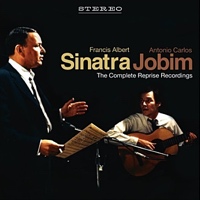
Frank Sinatra & Antonio Carlos Jobim
Francis Albert Sinatra and Antonio Carlos Jobim
Claus Ogerman sets Sinatra adrift in soft Brazilia, including "The Girl from Ipanema" and "Once I Loved." Tender and lush and delicate and gorgeous.

Frank Sinatra
Sinatra Reprise: The Very Good Years
All the hits from his two-decade run as the best in the business—"That's Life," "Summer Wind," "My Way," and more—under one cover.

Frank Sinatra
Everything Happens To Me
Handpicked compilation full of rage, tenderness, remorse and bittersweet, plus the triumphant yet mysteriously rare studio version of "The Gal Who Got Away / It Never Entered My Mind."
About Frank Sinatra

Tags
PREVIOUS / NEXT


Become a Sustaining Member

Since 1995, All About Jazz has championed jazz as an art form and supported the musicians who create it. Over three decades, it has grown into one of the world's leading jazz resources, serving hundreds of thousands of readers, musicians, presenters and industry professionals each month.
Help Build the Future of All About Jazz
Your support helps us continue building All About Jazz for the next generation—expanding our editorial coverage, preserving jazz history, developing new community features and creating better ways to discover the music and the people behind it.
Become a sustaining member for as little as $20 per year and you'll immediately enjoy an ad-free experience along with access to subscriber features and future articles for a full year.
Together, we're not simply sustaining All About Jazz—we're building its future. Thank you for being part of the journey.