Home » Jazz Articles » Album Review » Dan Clucas's Lost Iguana Ensemble: Do You Know The Ways
Dan Clucas's Lost Iguana Ensemble: Do You Know The Ways
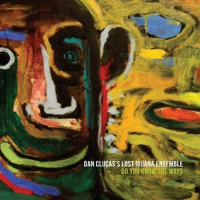
"Chaparral," which clocks in at about 25 minutes, begins with an assured cornet solo. Clucas' playing (later on flute) is full of urgency but, at the same time, very gentle, stressing long melodic lines. Cellist Jessica Catron, drummers Brian Christopherson and Dave Wayne—who add light electronics—and tubaist Mark Weaver encompass Clucas' instruments with restrained, minimal gestures, building quiet, dramatic tension. This tension is never resolved, however, throughout the changing, arresting episodes of this dark composition.
"Ask Possum" is a free-form collective improvisation, moving between energetic moments and distant, atmospheric segments, while still focusing on mutual listening and tight interplay. Here, Clucas features his extended techniques on cornet and breadth of his musical vocabulary, referencing influential players such as Bill Dixon and Don Cherry.
Clucas' second composition, "Boulevard," develops patiently. Beginning with the leader sketching long, simple lines on cornet and changing into a slow, microtonal cello and tuba duet energized by spare drumming, it concludes with Clucas' distorted playing, which blurs the delicate, fragmented interplay previously built by the other players. The freely improvised "Ask Peacock" closes, sticking to the same vein of patient interplay, though here it is more energetic and playful, alternating solos on a simple theme.
Dan Clucas's Lost Iguana Ensemble's debut is a highly rewarding musical journey.
 FOLLOW Eyal Hareuveni
and get notified whenever Eyal has a new article published.
FOLLOW Eyal Hareuveni
and get notified whenever Eyal has a new article published.
Eyal Hareuveni is an Israeli journalist who lives in Jerusalem.
Track Listing
Chaparral; Possum; Boulevard; Ask Peacock.
Personnel
Jessica Catron: cello; Brian Christopherson: drums, percussion; Dan Clucas: cornet, flute; Dave Wayne: drums, percussion, electronics; Mark Weaver: tuba.
Album information
Title: Do You Know The Ways | Year Released: 2012 | Record Label: Plutonium Records
Tags
PREVIOUS / NEXT


Become a Sustaining Member

Since 1995, All About Jazz has championed jazz as an art form and supported the musicians who create it. Over three decades, it has grown into one of the world's leading jazz resources, serving hundreds of thousands of readers, musicians, presenters and industry professionals each month.
Help Build the Future of All About Jazz
Your support helps us continue building All About Jazz for the next generation—expanding our editorial coverage, preserving jazz history, developing new community features and creating better ways to discover the music and the people behind it.
Become a sustaining member for as little as $20 per year and you'll immediately enjoy an ad-free experience along with access to subscriber features and future articles for a full year.
Together, we're not simply sustaining All About Jazz—we're building its future. Thank you for being part of the journey.