Home » Jazz Articles » Album Review » Ekep Nkwelle: Caged Bird
Ekep Nkwelle: Caged Bird
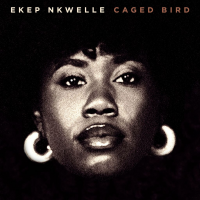
Nkwelle built up an imposing résumé before any major recording release, but has finally recorded her debut album. Titled Caged Bird, on the record Nkwelle mostly explores the African-American musical heritage—gospel, jazz, R&B, blues—but with a fresh, youthful perspective. She frequently shows off her impressive, dynamic vocal range but without overwhelming the material or her accompaniment. For such a young vocalist (27 at the time of the album's release), Caged Bird is remarkably self-assured, blooming with the promise of a long career to come and bursting with present-day immediacy.
Caged Bird begins with Nkwelle's versions of two beloved classics—the traditional gospel hymn "His Eye is on the Sparrow" and Abbey Lincoln's "Caged Bird." Together, the two songs form a mini-suite, creating a seamless connection between a timeless spiritual anthem and a more modern political statement. Nkwelle successfully proves that, despite the passage of time, musicians continue to paint on the same, ever-expanding sonic canvas, drawing on the same themes and customs across generations. On "Caged Bird," Nkwelle takes a minimalist approach, beginning the track simply with soft vocalization over a subtle drumbeat by Brian Richburg Jr. Luther Allison and Russell Hall eventually join in on piano and bass, respectively, but for most of the song Nkwelle eschews Lincoln's emotional, passionate crescendos, which not only highlights Lincoln's brilliant lyrics, but also demonstrates Nkwelle's ability to convey power without resorting to emotional crescendos. When the climax finally comes, it is all the more effective because of its contrast with her singing style during the rest of the song.
Julius Rodriguez assumes the piano accompaniment on the album's version of Djavan's "Amazon Farewell" (that Nkwelle can employ two of the most in-demand young pianists between Rodriguez and Allison is an accomplishment in itself), and Rodriguez's virtuosic keyboards and Richburg's Brazilian-style percussion provide a rhythmic complement to Nkwelle's high-powered vocals that, through all their energy, only emphasize the darkness and dire nature of the subject matter.
"Good Morning, Heartache" is a tour-de-force, an old-fashioned double-hankie ballad, where Nkwelle and her band let it rip. Nkwelle conveys the world-weariness that the song demands, her youth no obstacle in the emotional resonance created by Nkwelle's performance. A relative youngster himself, Rodriguez's piano accompaniment is nevertheless enchanting, and both matches and accentuates Nkwelle's sentiments.
There have been many variations of Pharoah Sanders' "The Creator Has a Master Plan," an instrumental spiritual jazz classic that has become somewhat of an unlikely standard since its original 1969 release (vocal and otherwise). Nkwelle interprets the song as a spiritual R&B ballad, with the focus, appropriately, being on the voice. The version is gorgeous, the tempo slow and soft, and Rodriguez, Hall and Richburg on accompaniment are pointed, deliberate and direct. This is one of the more accessible versions of the song, and it is quite effective.
Caged Bird's closer, the classic standard "See See Rider," is a fairly straightforward blues, but in Nkwelle and her group's hands, not only is it not tired, but it sounds fresh and joyful. Rodriguez, in particular, has a blast on piano, and Hall gets a chance to cook on bass. It is an exciting end to a debut album that not only signals the promise of a long career, but also the potential origin of a superstar.
 FOLLOW Andrew Schinder
and get notified whenever a new article published.
FOLLOW Andrew Schinder
and get notified whenever a new article published.
Music writer and appreciator
Track Listing
His Eye Is on the Sparrow; Caged Bird; Night Song; Amazon Farewell; Good Morning, Heartache; Early One Mornin’; The Sad Ones; The Creator Has A Master Plan; See See Rider.
Personnel

Ekep Nkwelle
vocals
Julius Rodriguez
piano
Luther Allison
piano
Russell Hall
bass
Brian Richburg Jr
drumsAlbum information
Title: Caged Bird | Year Released: 2026 | Record Label: Mack Avenue Records
About Ekep Nkwelle
Tags
PREVIOUS / NEXT


Ekep Nkwelle Concerts
Become a Sustaining Member

Since 1995, All About Jazz has championed jazz as an art form and supported the musicians who create it. Over three decades, it has grown into one of the world's leading jazz resources, serving hundreds of thousands of readers, musicians, presenters and industry professionals each month.
Help Build the Future of All About Jazz
Your support helps us continue building All About Jazz for the next generation—expanding our editorial coverage, preserving jazz history, developing new community features and creating better ways to discover the music and the people behind it.
Become a sustaining member for as little as $20 per year and you'll immediately enjoy an ad-free experience along with access to subscriber features and future articles for a full year.
Together, we're not simply sustaining All About Jazz—we're building its future. Thank you for being part of the journey.