Home » Jazz Articles » Album Review » Sonar: Black Light
Sonar: Black Light
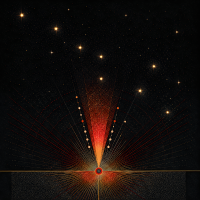
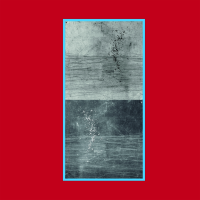
California born guitarist Stephan Thelan, the principle composer of the group, is the practitioner of a democratic process of creation and participation. A PhD in mathematics with extensive classical training, Thelan studied with guitarist Robert Fripp. Fripp, one of the most influential artists in progressive music history, and a founding (and ubiquitous) member of King Crimson, had a significant impact on Thelan and the halo effect of King Crimson's shadowy intensity looms large on Black Light.
Guitarist Bernhard Wagner, a software developer as well as musician, combines those skills in evolving repeated melodies and rhythmic patterns. Wagner has worked as a backup act for Nik Bärtsch's Ronin for many years. Bassist Christian Kunter has strong ties to free jazz including having played with two of John Tchicai's groups. Drummer Manuel Pasquinelli has played in numerous regional bands covering an eclectic mix of styles from punk to chamber. The unique sound of SONAR is due, in large part, to the tritone tuning (C / F# / C / F# / C / F#) of the guitars and bass adding a surprisingly pleasant dissonant quality.
As Thelan relates in John Kelman's extensive liner notes, King Crimson's Larks' Tongues in Aspic (Island, 1973), is a particularly key influence on the content of Black Light. That said, there are other forces at work here, even if unintended. Listen to "Enneagram" or "Orbit 5.7" and there is more than a trace element of the late, great Esbjorn Svensson Trio, circa the Leucocyte (ACT, 2008) era, arguably, that trio at their best. Both aforementioned pieces emit a unique pulsing energy and mystery balanced with equal parts modern progressive music and sophisticated jazz. Positioned between those two tracks is the title track refers to the opposing forces of darkness and light rather than the familiar long-wave bulbs. Here—as on "Angular Momentum," "String Geometry" and "Critical Mass" the King Crimson impact couldn't be clearer though SONAR does not come off as emulating the classic band but rather as taking the band's vocabulary and technique to another level.
SONAR speaks to a wide-range of listeners with intelligently constructed tunes and an appealing blend of atmosphere, melody and process. Not surprising for a group whose name is a fractured acronym for "sonic architecture" and who craft compositions of surprising complexity without technical overindulgence. The music—written by Thelan with the exception of the Pasquinelli co-authored "Angular Momentum"—is difficult to describe but thoroughly enjoyable to listen to.
 FOLLOW Karl Ackermann
and get notified whenever Karl has a new article published.
FOLLOW Karl Ackermann
and get notified whenever Karl has a new article published.
New York based contributor. Author of: "A Map of Jazz: Crossroads of Music and Human Rights" and keynote speaker/host of Pearson Jazz Foundation's International Jazz Day event (2018, 2019)
About Sonar

Tags
PREVIOUS / NEXT
Become a Sustaining Member

Since 1995, All About Jazz has championed jazz as an art form and supported the musicians who create it. Over three decades, it has grown into one of the world's leading jazz resources, serving hundreds of thousands of readers, musicians, presenters and industry professionals each month.
Help Build the Future of All About Jazz
Your support helps us continue building All About Jazz for the next generation—expanding our editorial coverage, preserving jazz history, developing new community features and creating better ways to discover the music and the people behind it.
Become a sustaining member for as little as $20 per year and you'll immediately enjoy an ad-free experience along with access to subscriber features and future articles for a full year.
Together, we're not simply sustaining All About Jazz—we're building its future. Thank you for being part of the journey.