Home » Jazz Articles » Album Review » Paul Bley: Barrage
Paul Bley: Barrage

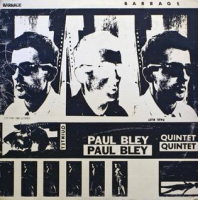
The intensity of the rapid-fire pace of bebop sticks around. Even when pianist Bley assumes the lead, or bassist Eddie Gomez splurges in a solo, or drummer Milford Graves splits off the mainline, the tempo remains unchanged. The texture seems to be the focus ("Ictus," "Around Again," "Barrage").
When the music actually does slow down a bit, each instrument establishes its own sonic principles, albeit contributing to the group effort. Bassist Gomez in "Ictus" and trumpeter Johnson and reedist Marshall Allen in "And Now the Queen" shift the tide by shaping the music so it can breathe a little.
But the pace is omnipresent. The musicians sustain their bebopifying on "Around Again." The vast difference between the music's bebop nature and what it becomes is that the musical intent defines itself in terms of the phraseology. The melody comes through only when instruments synchronize and the remainder falls into the realm of the abstract. Allen pushes his tenor to extremes within the set of parameters posed by the compositions; he does not go beyond them, as again on "Around Again."
Trumpeter Johnson and Allen hand the music back and forth, emphasizing how the exchange of phrasing works ("Walking Woman," "Barrage"). Graves and Bley perform at the same exchange rate, however, keeping it light the whole way through ("Walking Woman, "Barrage"). This "just-below-line" intensity, demonstrated by the steadily struck pizzicato energy of the bass and the tender, though tight and direct drum work ("Barrage"), characterize the modernization of the music.
As composer, Carla Bley (then Paul's wife) has lifted the music that Charlie Parker and his cohorts carved out and blasted it into a bevy of abstractions. Arpeggiations on the horns and scattered polyphony from the piano and drums transform the music to fit a completely contemporary framework. That framework seems to transcend its historical backdrop of hard bop and cordon off a zone all its own. It is too bad that the technology presented by the format for vinyl restrict the improvisations from going further off into space. This record exemplifies some defining moments for distinguishing the purpose of future music, not only from any musician in this group, but also among the numbers of musicians whose work at that time altered the direction in which music would go. Where freedom of expression overrode expectations and music aligned itself appropriately with human instinct.
Track Listing
Batterie; Ictus; And Now the Queen; Around Again; Walking Woman; Barrage.
Personnel

Paul Bley
piano
Marshall Allen
saxophoneDewey Johnson
trumpet
Eddie Gomez
bass
Milford Graves
drumsAlbum information
Title: Barrage | Year Released: 2008 | Record Label: ESP Disk
About Paul Bley
Tags
PREVIOUS / NEXT

Become a Sustaining Member

Since 1995, All About Jazz has championed jazz as an art form and supported the musicians who create it. Over three decades, it has grown into one of the world's leading jazz resources, serving hundreds of thousands of readers, musicians, presenters and industry professionals each month.
Help Build the Future of All About Jazz
Your support helps us continue building All About Jazz for the next generation—expanding our editorial coverage, preserving jazz history, developing new community features and creating better ways to discover the music and the people behind it.
Become a sustaining member for as little as $20 per year and you'll immediately enjoy an ad-free experience along with access to subscriber features and future articles for a full year.
Together, we're not simply sustaining All About Jazz—we're building its future. Thank you for being part of the journey.